By Maverick
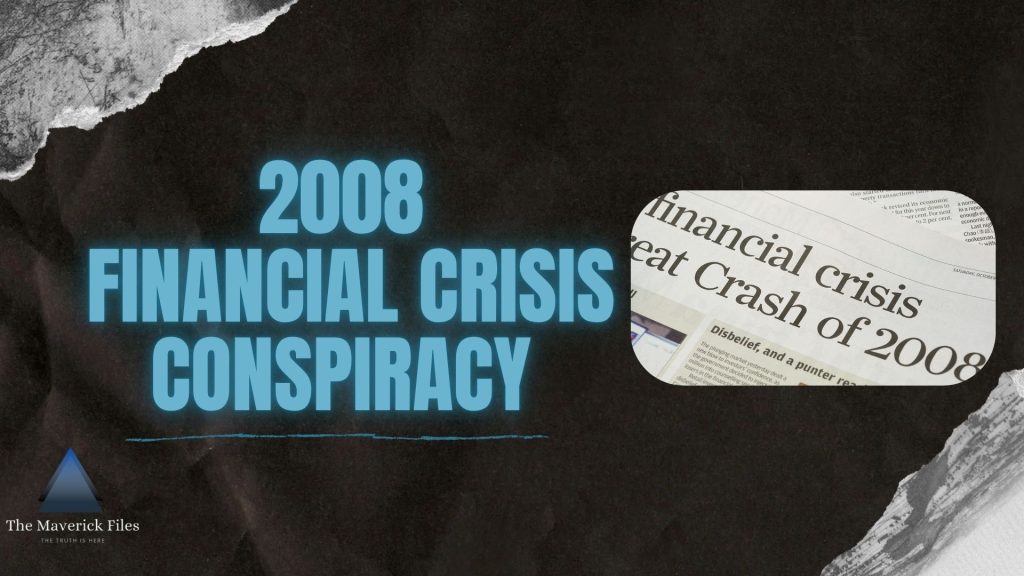
The 2008 financial crisis was a watershed moment in modern history, plunging the global economy into chaos and leaving millions unemployed, homeless, and destitute. On the surface, it appeared to be the result of reckless lending practices, greedy bankers, and a lack of regulatory oversight. But beneath this conventional narrative lies a darker, more sinister possibility. Was the 2008 financial crisis engineered by the financial elite to consolidate power and wealth? That seems to be the case here.
The official story we’ve been spoon-fed is that the housing market crash was due to risky subprime mortgages, which were irresponsibly bundled into mortgage-backed securities (MBS) and sold to investors worldwide. But was this just an unfortunate outcome of bad decisions, or was it a calculated move?
Conspiracy theorists argue that the financial institutions knew exactly what they were doing since it’s all one big game and the house always wins, meaning the bank. The creation of complex financial instruments like collateralized debt obligations (CDOs) and credit default swaps (CDS) was not just a gamble gone wrong, but a deliberate setup. By promoting these toxic assets, the banks could ensure massive profits in the short term while setting the stage for a market collapse that they were prepared to profit from through bets against the very securities they were selling.
The Federal Reserve, or Fed, played a crucial role in both the lead-up to the crisis and its aftermath. Some argue that the Fed’s policies of low interest rates and easy credit fueled the housing bubble, making it inevitable that the market would eventually collapse. But was this just poor policy, or was it part of a broader, sinister plan?
The timing of the crisis is suspicious at best. As the economy crumbled, the Fed quickly swooped in to the rescue with massive bailouts, funneling trillions of dollars to the very banks that had caused the crisis. This move not only prevented these institutions from failing but also further entrenched their power. In the aftermath of the crisis, the political landscape shifted dramatically. The crisis provided a convenient excuse for the government to implement sweeping reforms and regulations that, while ostensibly aimed at preventing future crises, also had the effect of centralizing economic power. The Dodd-Frank Act, for example, was billed as a measure to protect consumers, but some argue it also entrenched the dominance of the largest banks by imposing regulations that smaller institutions could not easily meet.
Furthermore, the 2008 financial crisis allowed for a massive transfer of wealth from the public to the private sector. While ordinary Americans lost their homes and savings, the stock market eventually rebounded, benefiting those with the resources to invest. In other words, the rich always get richer and the poor get poorer.
As with any conspiracy theory, one must ask the simple question of who benefited most from the crisis. The answer points to a small group of elite bankers, investors, and policymakers who not only survived the crisis but emerged more powerful than ever. Figures like Goldman Sachs and JP Morgan not only weathered the storm but thrived in its wake, consolidating their control over the financial system. The revolving door between Wall Street and Washington only fuels speculation that the crisis was less a failure of the system and more a successful reconfiguration of it to serve the interests of the 1%.
I’ll give you the macroscopic breakdown for those that are still reading this. The 2008 financial crisis was not an isolated event. Throughout history, crises have often been used as opportunities for the powerful elite to reshape society in ways that benefit them. Whether it’s wars, economic collapses, or pandemics, the pattern remains the same: order out of chaos. Chaos creates opportunity, and those who are prepared to exploit it can emerge stronger than before. Never let a good crisis go to waste seems to be their modus operandi. What do you think about this so-called financial crisis, which seemed more like a gimmick for the already rich and powerful to benefit tenfold from this event? Please share your thoughts in the comment section. Be well.