By Maverick
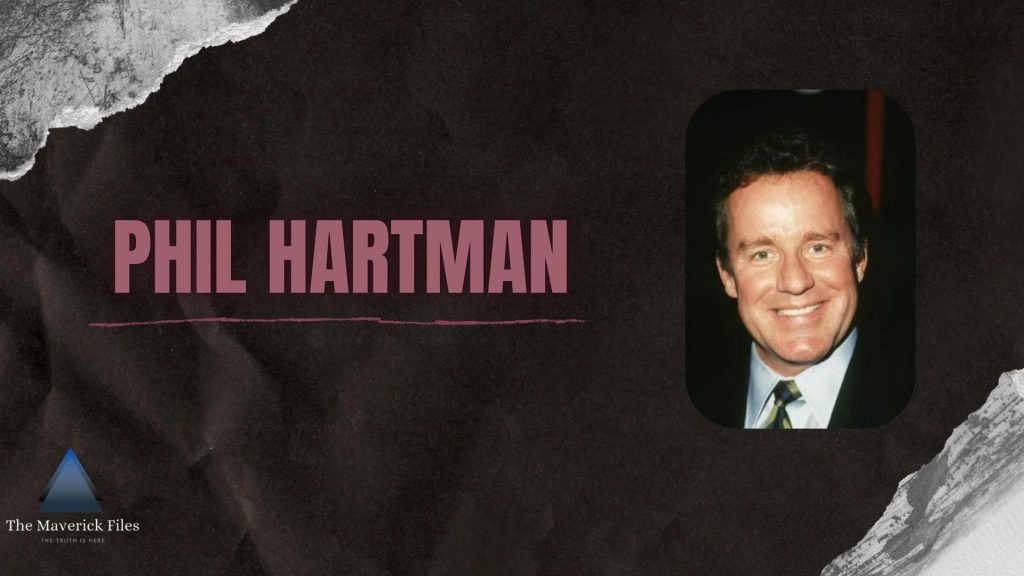
The tragic death of Phil Hartman on May 28th, 1998, sent shockwaves through Hollywood and among fans worldwide. Born Philip Edward Hartman on September 24th, 1948, in Brantford, Canada, Phil was known for his incredible talent as a comedian, actor, and impressionist on “Saturday Night Live” and “NewsRadio.” Hartman was a beloved figure whose sudden passing left many searching for answers. While the official story points to a murder-suicide carried out by his wife, Brynn Hartman, the nature of the event has fueled various conspiracy theories over the years.
According to the official story and police reports, Brynn Hartman shot and killed Phil Hartman while he slept in their Encino, California, home. She then drove to a friend’s house, confessed to the killing, and returned home. By the time police arrived, she had barricaded herself in the bedroom and subsequently took her own life with a .38 caliber handgun. Toxicology reports later revealed that Brynn had cocaine in her system and a blood alcohol level of 0.16, twice the legal limit for driving. Her history of substance abuse and marital problems with Phil were widely reported, painting a picture of a troubled individual driven to a desperate act. Seems pretty cut and dried, right? Let’s jump into the conspiracy theories and controversies surrounding his death.
Despite the seemingly straightforward official explanation, several aspects of the case have led some to question the narrative and propose alternative theories. One of the most persistent theories suggests that Brynn Hartman was not acting alone or that someone else was involved in Phil’s death. Proponents of this theory find it suspicious that Brynn left the house after shooting Phil, went to a friend’s house, and then returned. Why didn’t she immediately call for help or try to cover her tracks more effectively if she intended to commit murder-suicide? Could she have been meeting someone or receiving instructions?
On the surface, anyone with little knowledge of the case can accept it at face value in that their marriage was in trouble, and she had a history of substance abuse, which could drive anyone past their breaking point. It’s because Phil was a high-profile figure that makes it peculiar to us regular folks. Murders happen every day, and celebrities can suffer the same fate. It doesn’t mean that there always has to be a conspiracy behind it, but due to the details presented, it does make people objectively inquire about what led to this.
While Brynn’s struggles with addiction and jealousy were known, some argue that these alone don’t fully explain such a violent act against a seemingly devoted husband. What was different about that night? Did Phil threaten to finally leave her? Was there an external catalyst or manipulator egging her on? Some early, unconfirmed rumors suggested that there might have been other individuals at the Hartman residence in the hours leading up to the shooting. While never substantiated by official investigations, these whispers fueled speculation about third-party involvement. Again, nothing has ever been confirmed. Brynn’s friend and former lover, Ron Douglas, went to the Harman residence with her after she confessed to what she had allegedly done to Phil. From there, Ron alerted the police, and she supposedly confessed to another friend before killing herself. It seems like this was all her doing, but it’s what drove her to do it that has caused further scrutiny.
Another theory touted by conspiracy theorists delves into the darker side of Hollywood and powerful figures. Phil Hartman was known for his uncanny impressions of political figures, most notably Bill Clinton, Donald Trump, David Rockefeller, and others. He was also a highly intelligent and observant individual. Some conspiracists believe that Hartman may have stumbled upon sensitive information or secrets related to powerful individuals in entertainment or politics. His ability to mimic and subtly satirize figures could have made him a perceived threat if he held compromising knowledge, especially if said information were to come out of his performance acts, but then again, that’s what the industry is skilled at, throwing subtle innuendos in your face, while the viewers negate it as comedy. He wouldn’t have even been allowed to be on TV if he were a threat to these political elites.
Skeptics assert that the police investigation was rushed or deliberately incomplete to quickly close the case and avoid a deeper look into potentially uncomfortable truths. While Brynn’s substance abuse was undeniable, some believe that it was overly emphasized to simplify the motive and avoid exploring other possibilities. For example, Brynn’s toxicology reports confirmed she had the antidepressant Zoloft (sertraline) in her system, along with alcohol and cocaine. Zoloft became a focal point in legal actions surrounding the case. The executor of the Hartmans’ estate, which happened to be Brynn’s brother, Gregory Omdahl, filed a wrongful death lawsuit against Pfizer, the manufacturer of Zoloft, and her psychiatrist, Arthur Sorosky. The suit alleged that the drug caused adverse reactions, specifically that it induced violent and suicidal behavior, and that the psychiatrist did not properly warn her of these potential side effects. The lawsuit against Pfizer was eventually settled out of court for an undisclosed amount, with no admission of wrongdoing on their end. Go figure. In all fairness, if you mix cocaine and alcohol with other pharmaceuticals, that’s a recipe for disaster.I’m not a doctor nor do I have a medical license, but I don’t need one to confirm that SSRIs aren’t for everyone and can affect people differently. Based on my own experience, I had an adverse reaction trying just one of them and immediately stopped. Experts say it takes time to work. Ok, but at what cost until then? My apologies for going off on a tangent there, but I just find it comical and egregious when these big pharma execs and doctors will lie right to your face about the safety of these drugs and continue getting away with it while you, the guinea pig, potentially pay a price to their lucrative band-aid “solutions.”
It should also be mentioned here that actor and comedian Jon Lovitz has alleged that in 1997, Andy Dick gave cocaine to Phil Hartman’s wife, Brynn, who was a recovering addict. This reportedly caused her to relapse, culminating in her killing Phil Hartman and committing suicide that night. When Lovitz joined the cast of NewsRadio as a replacement for Phil Hartman, he confronted Dick, shouting, “I wouldn’t be here if you hadn’t given Brynn coke in the first place”. Fast forward nearly a decade, and in 2007, the feud escalated at the Laugh Factory in Los Angeles. Lovitz demanded an apology from Dick for comments regarding the “Phil Hartman hex” (where Dick allegedly told Lovitz he was the next to die). When Dick refused, Lovitz grabbed him and slammed him into a bar. While Lovitz later apologized for his initial comment, he has maintained that Dick was responsible for triggering the events that led to the tragedy. You could tell Jon loved both Phil and Brynn and hated their poignant fate.
As in all of my other blogs on controversial celebrity deaths, there’s always the prevalent theory which suggests powerful forces in Hollywood, that are allegedly tied to the secret society the Illuminati, will carefully select someone with immense talent and success in the movie or music industry, and sacrifice them, while simultaneously deceiving the public into believing that the celebrity died of natural causes, suicide, or murdered by someone that may not have did it alone, of their own free will, or at all. All this just to appease their false God from that fiery place everyone calls hell. It’s pretty fucked up if that’s the case, but to a court of law, it’s merely outlandish and insane.
With that, let’s delve right into the so-called “SNL curse,” which refers to a pattern of premature or tragic deaths among former cast members on Saturday Night Live, particularly in the 1980s and 1990s. First, you had John Belushi, who died at age 33 of a drug overdose in 1982. The more peculiar incident was the death of Chris Farley, who also died at the age of 33 from a drug overdose in December 1997, less than 6 months before Phil’s death. Many view the “curse” as a dark myth surrounding the high-pressure, drug-influenced, and intense, fast-paced nature of the comedy world, rather than a supernatural or conspiratorial event. At the end of the day, there’s no way to know for sure what really happened.
Phil Hartman was universally liked and respected. It’s difficult for people to accept that such a kind and talented individual could die in such a brutal and senseless manner, especially at the hands of someone close to him. Even with an official explanation, the emotional shock of such a loss can leave people searching for more satisfying answers, especially if they perceive the official ones as incomplete or too simple. There’s also a evergrowing societal distrust of government, law enforcement, and media institutions. With that, you will almost always have conspiracy theories about an event that has a myriad of plot holes and unanswered questions. It’s becoming more common to challenge the official account for any major event, and that isn’t a bad thing. It’s high time people question what their state, local, and federal governments are doing. Continuing to put blind faith and trust in them is not the solution. For instance, it’s ok for banks to audit, for Internal Affairs to investigate corrupt police activity. We need to hold their feet to the fire if we ever want to see real change. Please share your thoughts in the comment section. Be well.