By Maverick
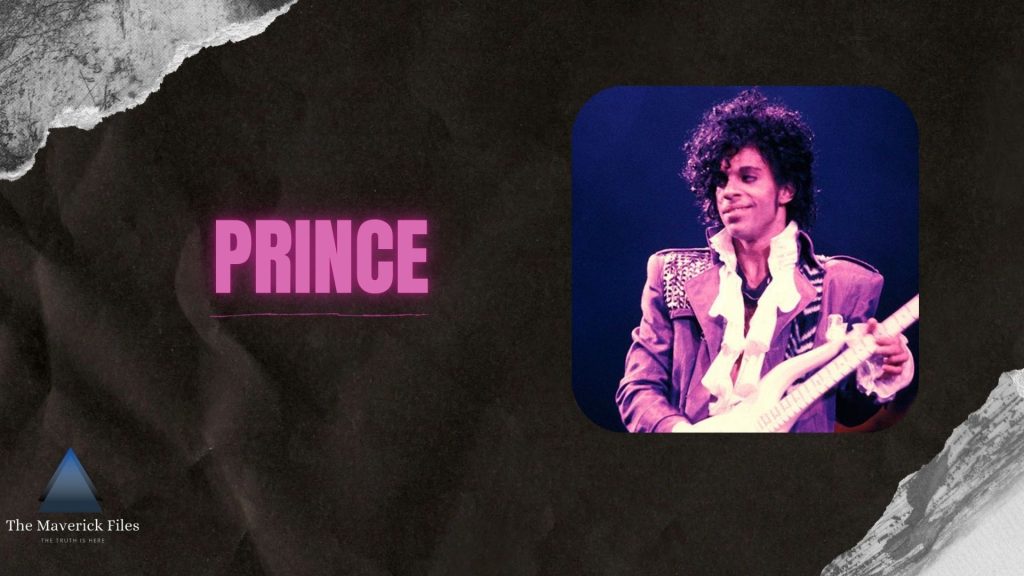
Prince Rogers Nelson was born on June 7th, 1958, in Minneapolis, Minnesota. A self-taught musical prodigy, he mastered the piano by age seven and was signed to Warner Bros. Records by nineteen. He didn’t just play music; he was music incarnated, famously playing all 27 instruments on his debut album, “For You.”
Throughout the ’80s, he pioneered the “Minneapolis Sound”, a blend of funk, rock, and synth-pop, and became a global icon with the 1984 film and soundtrack “Purple Rain.” Beyond the hits, Prince was a fierce advocate for artist rights, famously changing his name to an unpronounceable symbol to protest his contract with his record label. He remained a prolific force until his final days, leaving behind a “Vault” containing thousands of unreleased songs.
In 2014, Prince reached a deal with Warner Bros. Records to regain ownership of his master recordings and publishing rights, effectively ending a long-standing feud with the label. As part of this, by 2015, his NPG Records label took control of his catalog, allowing for new, remastered releases of his music.
Here is where things take a turn for the worse. On April 21st, 2016, Prince was found unresponsive in an elevator at his Paisley Park estate. The Midwest Medical Examiner’s Office ruled the death an accidental overdose of fentanyl. Investigations revealed that Prince likely believed he was taking Vicodin for chronic hip pain but had actually ingested counterfeit pills laced with fentanyl, a synthetic opioid 50 times stronger than heroin. In 2018, Carver County officials closed the case without filing criminal charges, as they could not determine who supplied the lethal pills since it was reported that he obtained those particular pills on the black market. Go figure. Now one may see why conspiracy theories emerge, because many of these historical narratives make little to no fuckin sense unless you get a glimpse of it at face value.
According to investigators and legal documents, Prince did not have a valid prescription for Vicodin at the time of his death. Dr. Michael Schulenberg, a family physician who saw Prince twice before he died, was involved in prescribing medication intended for Prince shortly before his death. Dr. Schulenberg admitted to prescribing oxycodone to Prince but wrote the prescription in the name of Kirk Johnson, Prince’s bodyguard, to conceal that they were for Prince. How is that not suspicious AF? Who would find out about it, that they needed to keep that lid sealed air-tight? The day before Prince’s death, Dr. Schulenberg saw him again and prescribed Clonidine, a medication used to treat opioid withdrawal symptoms, since it’s clear he appeared to develop an addiction, and it’s also reported that he was abusing painkillers for years. One grounded in logic would think he would’ve overdosed long before April 2016, if he really had a problem, but perhaps addicts can last a long time without suddenly overdosing.
While the medical report was definitive, the mysterious nature of Prince’s life led many to look for alternative explanations. Just like in my other blogs, let’s get into the nitty-gritty of what could have happened to this once-thriving legend. One popular theory suggests Prince was targeted for his vocal stance against corporate greed and his reported interest in natural healing. Proponents of this theory argue that his influence was a threat to the entertainment and pharmaceutical industry, and his “accidental” overdose was a staged hit to silence a powerful critic. I guess the bigger question is: why not take him out sooner, as Prince has always been outspoken about the corporate paradigm, exhibiting a clean and healthy vegan lifestyle despite the drugs, which anyone can get addicted to?
Another theory is tied to Prince and the true ownership of his music, a common issue in the music industry. Prince spent decades fighting for the ownership of his master recordings. Some theorists believe his death was orchestrated by industry “shadow figures,” ergo, presumably, the music execs in the Illuminati, who wanted to maintain control of his lucrative catalog and the legendary “Vault,” which is estimated to be worth hundreds of millions of dollars. I mean, considering the police didn’t bother to investigate and trace who issued him the counterfeit pills, it’s not out of the realm of possibilities to suspect he was murdered or at least demand a new investigation. People are killed over money all the time. The fact that he had to fight tooth and nail to gain control of his masters says it all right there. The industry likely wasn’t happy with that, and these days, artists are worth way more dead than alive.
As with many high-profile celebrity deaths, some corners of the internet claim Prince was an “Illuminati sacrifice” by a secret elite. They point to a purple outfit he wore on April 14th, 2016, for what would be his final performance at the Fox Theatre in Atlanta, Georgia. Skeptics claim that color is indicative to them as associated with the occult and dark magic, hinting that an imminent sacrifice is on the table. I mean, in all fairness, he wore purple a lot, but of course, the timing is peculiar. However, on April 7th, 2016, Prince had to cancel a couple of shows in Atlanta, and at the time, it was reported as the flu. He was apparently quite sick; he had a fever, fatigue, and he was really low-energy. But in hindsight, some think that those flu-like symptoms might have been masking the early signs of the unintended opioid use or even a combination of factors, like fatigue from the tour and the chronic pain he was dealing with.
Then on April 15th, 2016, his private jet was forced to make an emergency landing in Moline, Illinois, after he became unresponsive, and he was treated with naloxone, aka Narcan spray, the opioid antagonist to restore breathing and counter the drugs, but it must be used as soon as possible. The better question is, what did he overdose on that day, and when did he get a chance to acquire the counterfeit pills laced with fentanyl that led to his death? As I mentioned earlier, the day before Prince’s death, Dr. Schulenberg prescribed Clonidine, a medication used to treat opioid withdrawal symptoms. I’m guessing the doctor assumed he was taking too many Vicodin painkillers, without also realizing it was possibly fentanyl?
It was on April 16th, 2016, during what was his final public appearance at his Paisley Park estate, he said something eerie, such as, “Wait a few days before you waste any prayers.” Did he suspect he was going to die because he knew he was addicted and couldn’t stop? Or was it a reference to something else?
Conspiracy theorists will often claim that celebrities have inside information about major upcoming events, including their own demise. It wouldn’t be the first time Prince had a clairvoyant experience. On December 24th, 1998, at Tivoli, Utrecht, Netherlands, Prince was performing his New Power Soul Tour concert, when he improvised a freestyle addition to the 1982 song, “1999”, which is a song that prophesied what life would be like by the time that year came around. This remix referenced the year 2001 in 1998 where Prince freestyled the lyrics “I’ve gotta go home y’all. I’ve gotta go back to America. I’ve gotta go get ready for the bomb. Osama Bin Laden getting ready to bomb. America, you better watch out, 2001″ which sounded like a prediction of what was to happen less than three years later on 9/11/2001. Of course, you’ll have skeptics claim it was an eerie coincidence, forcing one to refrain from saying otherwise because it’s more taboo to say something that hasn’t been officially confirmed. What do you think? Was it just a bizarre coincidence?
Speaking of eerie coincidences, during The Simpsons 2011 Season 23 Episode 10 titled “The Falcon and the D’ohman”, there was a dream sequence that people tied to Prince, because in the dream, Homer is coerced by these men in suits into killing Prince where he strangles him, stabs him in the back, and hits him in the head with a guitar. His body lay flat in the cartoon five years earlier, similar to how he looked when he collapsed suddenly the day he died. Is this a prime example of what is known as predictive programming, subtle covert subliminal messages planted intentionally by the insiders to mentally prime the public of what was to come? Sure seems that way.
By 2016, the estate had begun systematically releasing music from the Vault. While this has delighted fans, it has also kept the debate over his intentions and “post-mortem control” alive. In 2018, Prince’s family sued Dr. Michael Schulenberg for wrongful death, alleging he failed to properly treat the singer for an opioid addiction and played a substantial part in the late star’s death. The family’s lawsuit alleges that Dr. Schulenberg’s actions had played a part in the fact that he failed to appropriately evaluate, diagnose, and treat Prince for his blatant opioid addiction, and failed to take appropriate steps to prevent the tragic result of that addiction. The family sought $50,000 in damages.
The lawsuit also named North Memorial Health Care, where Dr. Schulenberg worked, Walgreens stores, which dispensed the medication, and UnityPoint Health, where he was treated on April 15th, 2016. It’s one thing to sue the doctor and the pharmacy for wrongful death, but it still doesn’t explain why or how the hell Prince got access to counterfeit painkillers laced with fentanyl, the real cause of his death, and from whom, if he could’ve simply just gotten more authentic Vicodin from Dr. Schulenberg. Unless the Doctor wouldn’t prescribe Vicodin anymore, due to him almost overdosing on the prescribed painkillers days before, in which the Dr. had to prescribe Clonidine as mentioned earlier to counter the withdrawal side effects from the “Vicodin.” Could the first near-death experience have been the result of fentanyl?
If Prince had no knowledge that he was taking fentanyl instead of Vicodin, and that’s what he almost died from on April 15th, then why get pills from the black market if he was still getting supply from the Doc, and this was before the discontinuation period? Perhaps it was because he ran through his supply quickly and didn’t think the Doc would refill the prescription in a short window of time? Let me ask this: why then? If he had been abusing painkillers for years, wouldn’t he have overdosed sooner? What’s to say he even overdosed on many pills, as it takes a small amount of fentanyl for it to be lethal? The dude could’ve just taken his normal dose since he assumed it was his regular prescription. Schulenberg, of course, has denied any wrongdoing, and prosecutors never charged him with being directly responsible for Prince’s untimely death.
Schulenberg wrote a prescription for oxycodone in the name of Prince’s bodyguard, Kirk Johnson, violating the Controlled Substances Act. By 2019, the lawsuit was dismissed as Schulenberg settled with Prince’s family for a total of $30,000. Schulenberg also agreed to a two-year period of increased monitoring of his prescribing practices.
Ultimately, the most profound mystery of Prince wasn’t how he died, but how he lived. He was a man who existed in the spaces between categories: between black and white, male and female, sacred and profane. While conspiracy theories offer a way to process the shock of losing a “superhuman” figure, they often distract from the human reality of a man who gave his life to his art, often at the cost of his physical well-being. Prince’s true legacy isn’t found in a toxicology report or a secret society’s lore. It’s found in every guitar riff that breaks a heart and every dance floor that brings strangers together. He didn’t just leave us with questions; he left us with a soundtrack for eternity. He will always be a legend. Please share your thoughts in the comment section. Be well.