By Maverick
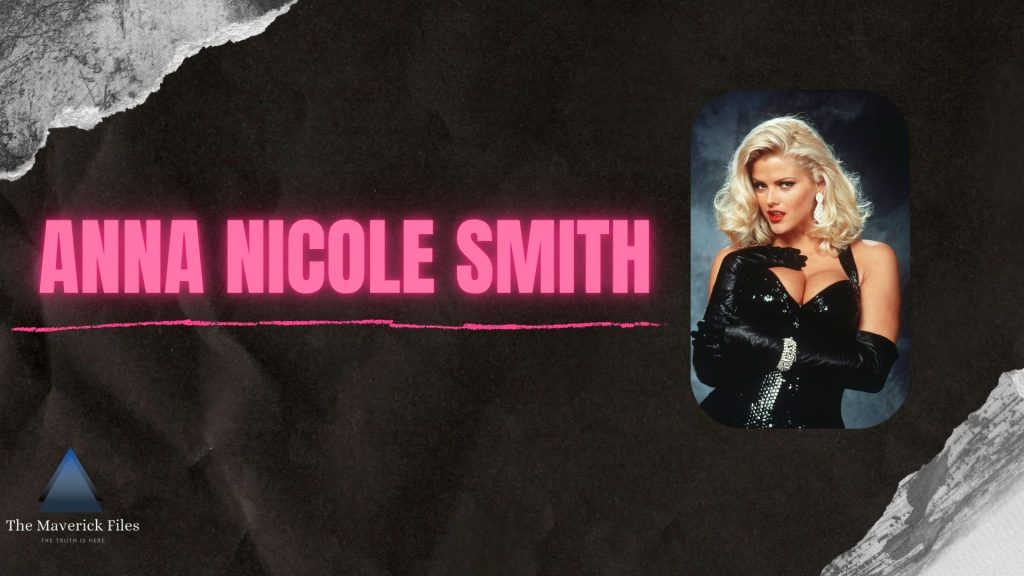
Anna Nicole Smith lived a life that felt almost scripted for tabloid mythology, small-town beginnings, explosive fame, a billionaire marriage, courtroom battles, personal tragedy, and ultimately a sudden death that ignited years of speculation. Born Vickie Lynn Hogan in Houston, Texas, on November 28th, 1967, and raised in the small town of Mexia, she left high school early, married young, and had a son, Daniel. Working low-wage jobs, she eventually turned to modeling, where her platinum-blonde bombshell look drew comparisons to Marilyn Monroe. In 1993, she became a Playboy Playmate of the Year and later modeled for Guess, skyrocketing into pop culture fame almost overnight.
Her life changed dramatically in 1994 when she married oil tycoon J. Howard Marshall, who was 89 at the time and more than six decades her senior. When Marshall died the following year in 1995, Smith became embroiled in one of the most publicized estate battles in modern legal history. She claimed he had promised her a substantial share of his fortune, but Marshall’s son fiercely contested that assertion. The case eventually wound its way through courts for years, even reaching the U.S. Supreme Court. To critics, she was portrayed as a gold digger; to supporters, she was a vulnerable woman exploited and vilified by powerful interests.
By the early 2000s, Smith’s public image had shifted from glamorous model to chaotic reality television figure. Her E! show, The Anna Nicole Show, showcased a version of her that many viewers found erratic, heavily medicated, and emotionally fragile. Her speech sometimes appeared slurred, and her behavior unpredictable. Still, she retained a loyal fanbase who saw her as misunderstood and constantly under siege by media scrutiny.
Tragedy struck in September 2006 when her 20-year-old son, Daniel Smith, died suddenly in her hospital room in the Bahamas, just days after the birth of her daughter, Dannielynn. His death was later ruled an accidental overdose involving methadone and antidepressants. The loss appeared to devastate her. Observers noted that she seemed inconsolable in the weeks that followed, deepening public concern about her physical and emotional stability.
On February 8th, 2007, Anna Nicole Smith was found unresponsive in her room at the Seminole Hard Rock Hotel & Casino in Hollywood, Florida. Emergency responders were unable to revive her. She was 39 years old. The official autopsy later concluded that her death was the result of an accidental drug overdose, a “combined drug intoxication.” The medical examiner identified multiple prescription medications in her system, including chloral hydrate (a powerful sedative), benzodiazepines such as Valium and Ativan, and other substances. No illegal drugs were found. The ruling stated that the death was not suicide but accidental, caused by the cumulative depressant effects of the medications, compounded by an infection and general physical stress.
Despite the official explanation, conspiracy theories quickly flourished as they typically do in most celebrity death cases that appear suspicious. One prominent theory suggested foul play related to the ongoing legal battle over J. Howard Marshall’s estate. At the time of her death, her claim to part of his fortune was still a matter of intense litigation. Some speculated that powerful financial interests may have wanted her permanently removed from the equation. However, no evidence ever emerged linking her death to any coordinated plot or financial sabotage. Plus, why would there be any evidence left behind for investigators to find if powerful interests had her killed?
Another theory centered on the swirl of individuals in her inner circle, lawyers, doctors, and romantic partners, who were deeply involved in her life and had access to medications. Her attorney, Howard K. Stern, became a focal point of suspicion. Stern, who was also named as the father of her daughter before paternity testing later established photographer Larry Birkhead as the biological father, faced intense media scrutiny. Questions were raised about who prescribed Smith’s medications, who administered them, and whether enablers contributed to her dependency. While several doctors were investigated and legal actions were pursued regarding improper prescribing practices, no murder charges were ever filed, and convictions related to overprescribing were later overturned.
Some conspiracy-minded observers drew eerie parallels between her death and that of her son just months earlier. The proximity of the two tragedies fueled speculation that something larger was at work, whether intentional targeting, pharmaceutical misconduct, or even a curse-like narrative popular in tabloid storytelling. In reality, both deaths were officially ruled accidental overdoses involving different substances, but the emotional weight of losing her son so soon before her own death intensified suspicions not just pointing to foul play, but the degradation of her fragile mental state.
There was also controversy about her physical appearance in the years leading up to her death. Once known for her statuesque modeling physique and glamorous styling, she appeared markedly different in later public appearances, often heavier, visibly fatigued, with fluctuating facial features. Critics speculated about plastic surgery complications, prescription drug swelling, or secret illnesses. Supporters pointed to the combined effects of grief, medications, hormonal changes following pregnancy, and stress. The contrast between her polished 1990s Guess campaigns and her later reality-TV image amplified the perception that she had dramatically changed. People were noticing this as it happened in real time.
Ultimately, the official record attributes her death to accidental combined drug intoxication, with no evidence of homicide or suicide. Yet the blend of wealth disputes, sudden family tragedy, celebrity lawyers, and prescription drug culture ensured that alternative explanations would thrive in public discourse. Distrust towards officials also fuel the flames where conspiracy theories are concerned. Anna Nicole Smith’s life had always existed at the intersection of fame, fortune, vulnerability, and spectacle. In death, that intersection became even more magnified.
Nearly two decades later, her story remains both cautionary and tragic, a portrait of how celebrity can amplify personal struggles into public theater. Whether viewed through the lens of conspiracy or documented medical findings, her death underscores the destructive potential of prescription drug dependency, emotional trauma, and relentless media scrutiny. What endures beyond the speculation is the image of a woman who chased the American dream in its most glittering form, and paid a devastating price for living it in full view of the world. Please share your thoughts in the comment section. Be well.