By Maverick
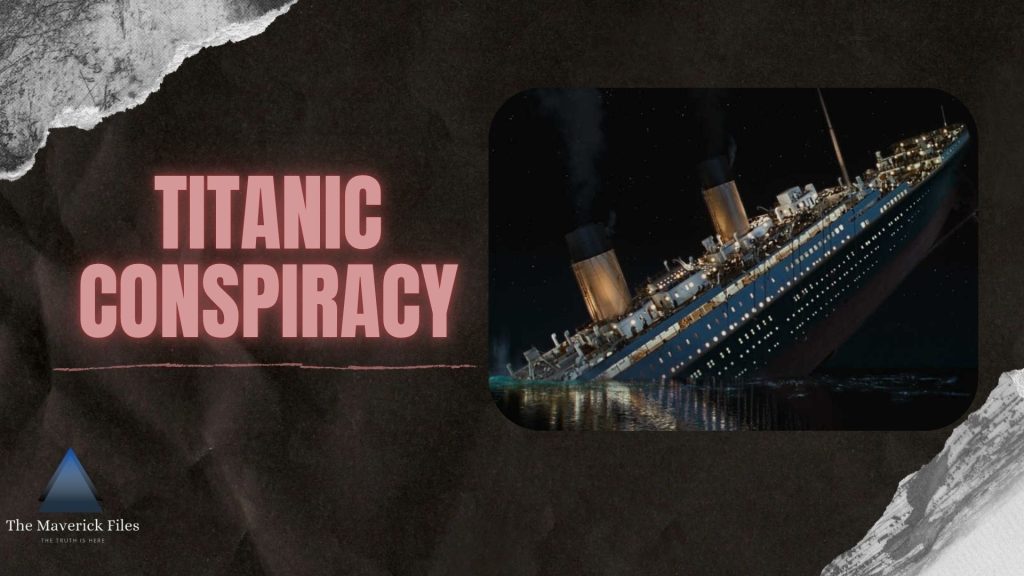
The sinking of the Titanic remains one of the most studied, mythologized, and controversial disasters in modern history. More than a century later, it still captures the public imagination because it sits at the intersection of wealth, technology, hubris, tragedy, and unanswered questions. Today, marking the 114th anniversary of the sinking, is a fitting time to revisit not only what officially happened, but also the many theories that continue to surround it. In the early hours of April 15th, 1912, the RMS Titanic, then the largest and most luxurious passenger liner in the world, once deemed as an “unsinkable” ship, slipped beneath the icy waters of the North Atlantic after striking an iceberg late the previous night. More than 1,500 people died, while roughly 700 survived, making it one of the deadliest peacetime maritime disasters in history.
The Titanic was operated by White Star Line, one of the most prominent transatlantic shipping firms of its era. White Star had built its reputation on size, comfort, and prestige rather than raw speed, competing with rivals like Cunard. Titanic was the second of three Olympic-class liners: Olympic, Titanic, and Britannic. By 1912, White Star Line was controlled through the International Mercantile Marine Company, a giant trust created by bankster J. P. Morgan. Although Morgan did not personally captain or operate the ship, his financial empire sat above the corporate structure that owned White Star. That connection has made him central to many Titanic conspiracy theories ever since. We’ll dive into that throughout this blog.
The official account is well-known. Approximately 3,000 people who worked at the Harland and Wolff shipyard in Belfast, Ireland, built the Titanic, which began construction on March 31st, 1909, and was completed in over two years in 1911 to debut in 1912. Titanic departed Southampton, England, on April 10th, 1912, stopped at Cherbourg, France, to embark an additional 274–281 passengers and pick up luxury goods to transport. It then went to Queenstown, Ireland, before its main voyage to New York. On the night of April 14th, despite multiple iceberg warnings, the ship continued at high speed through dangerous waters. At 11:40 p.m., lookouts spotted an iceberg ahead. The ship turned, but not in time. The iceberg scraped along the starboard (right) side, destroying the rivets and opening the hull below the waterline across multiple compartments. Titanic had been designed to survive flooding in four compartments, and five to six were breached. The watertight bulkheads, which weren’t capped, did not reach higher than E deck, allowing for the spillage from one compartment to the next without anything stopping it, pumps included, since it bought a small window of time. Water entered the forepeak tank, cargo holds, and boiler rooms in sequence. As flooding advanced over the next two hours and forty minutes, the bow sank deeper, stresses on the hull increased, electrical systems gradually failed, and the ship’s angle became more severe until structural breakup at the keel plates or the lowest structural elements of the ship failed under immense compression and tension forces. The forces of the bow (filled with water) pulled against the stern, which caused it to buckle before the final plunge at approximately 2:20 a.m. on April 15th, and sank to the bottom of the Atlantic Ocean in two massive sections.
The tragedy was made worse by human error and outdated regulations. Titanic carried only 20 lifeboats, enough for about (1,100 out of 2,200) half of those aboard, because maritime rules were based on tonnage formulas that had not kept pace with giant new liners. Not to mention the Titanic’s designers and owners limited lifeboats to avoid crowding the promenade decks and maintain a luxurious aesthetic. With that being said, Thomas Andrews Jr, the managing director of the shipbuilding firm Harland and Wolff in Belfast, Ireland, was the lead designer of the ship. He oversaw all structural plans and was on board during the maiden voyage to identify improvements. He was also responsible for the sister ships, the Olympic and Britannic. Andrews initially advocated for more lifeboats, but again, White Star Line got the final say and turned it down. They were clearly counting on the ship truly being unsinkable, but we all know how that turned out.
Andrews designed the ship with a double hull and additional watertight compartments, anticipating a breach of multiple compartments to mitigate the potential for sinking. He truly was ahead of the game, but human designing and engineering could only go so far, especially during that time. Following the iceberg collision on April 14th, 1912, after calculating the damage, Andrews informed Captain Edward Smith that the ship was doomed and is credited with helping passengers to lifeboats before losing his own life in the sinking. Confusion, class barriers, poor communication, and disbelief that the ship could truly sink all cost lives. Nearby ships failed to respond quickly enough, while the RMS Carpathia eventually arrived and rescued survivors. Official inquiries in the United States and Britain blamed excessive speed, insufficient lifeboats, and failures in seamanship and emergency response.
Yet for many, the story never ended there. One of the most famous theories is the “Olympic switch” hypothesis. According to this claim, the Titanic never sank at all. Its older sister ship, RMS Olympic, had been damaged in an earlier collision on September 20th, 1911, with the Royal Navy cruiser HMS Hawke in the Solent, near Southampton. The cruiser rammed the Olympic’s starboard side, creating a 40-foot, two-compartment breach and twisting a propeller shaft. The repairs were costly, and according to conspiracy lore, the Olympic was later secretly disguised as the Titanic and sent to sea as part of an insurance scam. The idea argues that White Star Line could not fully recover losses from Olympic’s damage, so the company allegedly swapped the identities of the ships, then staged a disaster to collect insurance money. The problem with that is that having the Titanic as the lost ship equated to a greater financial liability to White Star Line. Olympic and Titanic both cost about $7.5 million to construct. Titanic was worth more than Olympic due to it being a bit bigger, newer, more amenities, upgrades, and Titanic was underinsured at $5 million, which would’ve meant over a $2.5 million loss for the company. It would’ve been less of a loss if the Olympic actuary sank. Skeptics also point to similarities between the sister ships, porthole arrangements, and reported inconsistencies in fittings or windows.
Critics of that swap theory note major problems. The two ships, while similar, had numerous structural and interior differences that would have required an enormous and highly visible reconstruction. Thousands of shipyard workers, crew members, inspectors, and suppliers would have had to stay silent. Documentation from the wreck, discovered in 1985, also aligns with the Titanic’s known construction details. More differences included Titanic’s partially enclosed forward A-Deck promenade, a revamped B-Deck featuring private promenades and the Café Parisien, extended bridge wings, and a slightly higher gross tonnage. Equipment and debris found in the wreck bear the specific identification number 401 for the Titanic, while Olympic bore the number 400. Still, the switch theory remains popular because it transforms a tragic accident into a deliberate fraud orchestrated by powerful interests, a breeding ground for conspiracy theories.
Closely related is the broader insurance fraud theory. Even without a literal ship swap, some theorists argue Titanic may have been knowingly sent to sea with unresolved defects or under dangerous conditions because financial pressures were immense. White Star and IMM had invested heavily in prestige liners, and competition on the Atlantic was fierce. In this view, the sinking becomes less an unforeseeable accident and more a disaster enabled by profit motives, overconfidence, and corporate recklessness. This version does not require a planned sinking; only that risk was knowingly tolerated and blatantly disregarded.
Then there is the most politically charged theory of all: that the Titanic was intentionally sunk to eliminate wealthy and influential men who opposed the creation of a central bank in the United States. The names most often cited are John Jacob Astor IV, Benjamin Guggenheim, and Isidor Straus, all of whom died in the disaster. Some conspiracy theorists claim these men opposed the future Federal Reserve and that removing them cleared the path for the Federal Reserve Act, signed in 1913. Because J. P. Morgan’s name is tied to the ship’s ownership structure, he is often cast as a mastermind in this narrative, especially since he canceled his own planned passage before the voyage.
However, historians point out that this theory rests on weak evidence. The political views of those passengers were more complex than internet lore suggests, and there is little direct documentation proving they were decisive blockers of the Federal Reserve. We don’t know what was actually going on inside their heads, but that’s irrelevant since that can’t be proven beyond conjecture. Many other powerful industrialists and financiers were not on the Titanic, and the creation of the Federal Reserve involved years of political negotiation beyond any three individuals. Also, to be fair, J.P. Morgan’s last-minute cancellation, while suspicious AF, is not unusual in elite travel circles where plans changed frequently.
Other conspiracies focus on sabotage by the crew. Some suggest a coal bunker fire weakened the hull before departure, making the ship more vulnerable. There was indeed a coal fire in one of the bunkers before sailing, something not unheard of in steamships, but whether it significantly contributed to the sinking remains debated. Others suspect deliberate steering mistakes, a cover-up involving nearby ships like the SS Californian, or even that the Titanic was cursed by fate due to the arrogance of declaring it “unsinkable.” These stories blend real details with myth, helping keep the disaster alive in popular culture.
Then you had J. Bruce Ismay, who was one of the most controversial figures connected to the sinking of the Titanic because he served as chairman and managing director of White Star Line. As the senior company representative aboard Titanic’s maiden voyage, Ismay was closely associated with the vessel’s prestige, commercial ambitions, and public image. After the disaster, he became a lightning rod for criticism because he survived by boarding a lifeboat while many passengers and crew perished, leading some to accuse him of cowardice and of abandoning the “women and children first” principle. He was also blamed in popular culture for allegedly pressuring Captain Smith to maintain high speed through iceberg waters in order to generate headlines and prove the ship’s superiority, though definitive evidence of direct orders remains disputed. Official inquiries did not find him criminally responsible, but his reputation was permanently damaged. In conspiracy circles, Ismay is often portrayed as a key insider who knew more about the risks facing the Titanic than was ever publicly admitted, making him a central figure in theories involving corporate negligence, insurance motives, or broader schemes tied to the ship’s fate. Bottom line, he knew he fucked up but still had to save his sleaze bag ass.
Then you have the ship’s first officer, William McMaster Murdoch, as he remains one of the most scrutinized crew members in the sinking of the Titanic because he was the officer on watch when the iceberg was sighted at 11:40 p.m. on April 14th, 1912. According to surviving testimony, lookout Frederick Fleet rang the warning bell and phoned the bridge, after which Murdoch ordered evasive action, traditionally described as “hard-a-starboard” (which, under the steering commands of the time, turned the ship’s bow to port/left) along with an engine order intended to reduce forward thrust. Debate has continued for decades over whether these actions helped or harmed the ship. Some argue that if the Titanic had struck the iceberg head-on, fewer compartments might have flooded, and the ship could have remained afloat longer. Others note that Murdoch had only seconds to react and was following standard seamanship by trying to avoid collision entirely, which makes sense. I mean, we’ve all seen the 1997 James Cameron movie, and from that POV, you really didn’t have time to thoroughly think it through on how to avoid collision. Additional scrutiny falls on broader crew procedures: there were no binoculars in the crow’s nest, iceberg warnings earlier in the day were not fully prioritized, wireless traffic was congested, and coordination during the evacuation was uneven, with some lifeboats launched under-filled despite being tested for max capacity. These issues have fueled claims of incompetence or questionable decision-making, although most historians view them as a combination of human error, outdated protocols, and the chaos of an unprecedented emergency, rather than deliberate misconduct.
What makes the Titanic fertile ground for conspiracy theories is that it involved all the ingredients people instinctively distrust: immense wealth, corporate power, elite passengers, missing lifeboats, ignored warnings, last-minute cancellations, and catastrophic loss of life. This was this generation’s 9/11, if you will. When the rich and powerful are connected to tragedy, many assume there must be more behind the curtain than simple incompetence or chance. Is that really so difficult to believe, though? I’ll leave that for you all to decide. I’m just here to convey the information, whether right or wrong, and you get an idea of what the true story is.
In the end, the most evidence-backed explanation remains the traditional one: the Titanic struck an iceberg, suffered fatal flooding, and sank because of a chain of design limitations, human misjudgment, and inadequate safety practices. But the conspiracies endure because the Titanic was never just a ship. It was a symbol of an age that believed technology and money could conquer nature. Its fall was so dramatic that many people still struggle to accept that something so grand could be destroyed by something as simple as ice, darkness, and human error. Does this remind you of 9/11, folks? Please share your thoughts in the comment section. Be well.