By Maverick
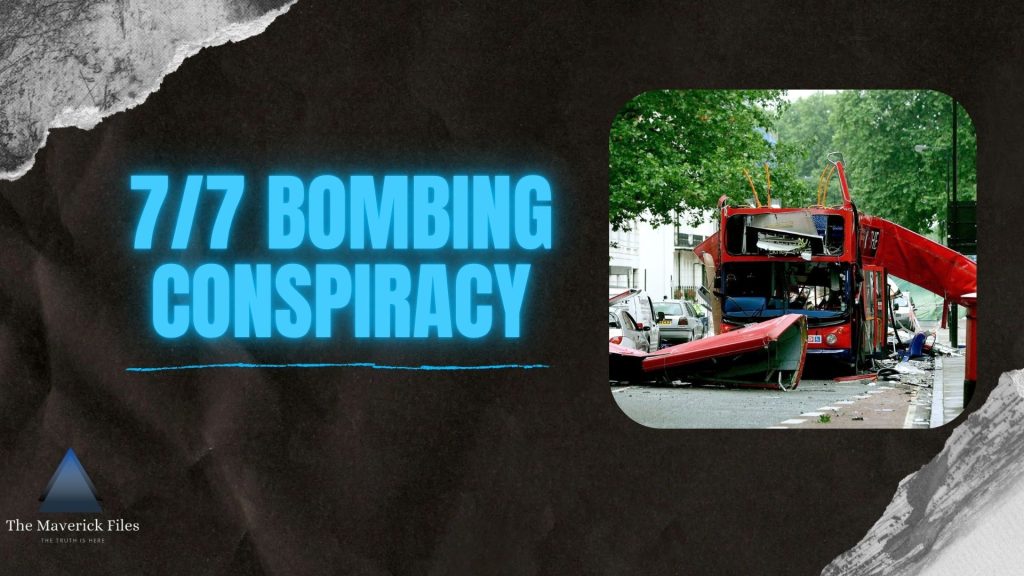
On July 7th, 2005, London experienced one of the deadliest terrorist attacks in modern British history. Four coordinated explosions struck the city’s public transportation network during the morning rush hour, targeting three Underground trains and a double-decker bus. The 4 suicide bombers, all London citizens, were Mohammad Sidique Khan, 30, Shehzad Tanweer, 22, Germaine Lindsay, 19, and Hasib Hussain, 19. Khan was the ringleader and suicide bomber on the Edgware Road-bound train, and Tanweer was the bomber on the Aldgate-bound train. Lindsay bombed the King’s Cross-bound train, and Hussain bombed the number 30 bus at Tavistock Square.
Unfortunately, 52 innocent civilians were killed, and 700 were injured in attacks that immediately reshaped Britain’s counterterrorism policies and public consciousness. According to the official account released by the British government, the bombings were carried out by four British Islamist extremists: Mohammad Sidique Khan, Shehzad Tanweer, Germaine Lindsay, and Hasib Hussain. Authorities stated the men traveled from Leeds to London carrying homemade explosives in backpacks before detonating them on the transit system.
Almost immediately after the attacks, however, questions and alternative theories began circulating online and in independent documentaries. Much like the conspiracy culture that emerged after the 9/11 attacks in the United States, the “7/7” bombings became the subject of speculation involving intelligence agencies, security drills, surveillance inconsistencies, and allegations of government foreknowledge. Over time, these theories spread across internet forums, documentaries, blogs, and alternative media communities, creating what some have called “Britain’s 9/11 conspiracy movement.”
One of the most commonly cited points among conspiracy theorists involves a crisis-management exercise reportedly taking place on the same day as the bombings. A private security consultant named Peter Power stated during a television interview that his company had been conducting a simulation exercise involving mock bomb attacks at locations similar to those hit during the real attacks. Sound familiar in how there were a myriad of war game military exercises occurring during the time of the so-called plane hijackings? This coinkydink became one of the central pillars of alternative theories. Critics of the official story argued that the overlap between the drill and the actual bombings was too extraordinary to be random. Online conspiracy forums frequently pointed to this as evidence of foreknowledge or covert involvement by intelligence agencies. Supporters of the official account, however, argued that anti-terror exercises were common in major cities following the global security climate after 9/11, and that similarities between drills and real attacks do not automatically indicate orchestration. If that’s the case, then why is it that despite all these exercises, law enforcement and intelligence officials are always seemingly underprepared when it comes to preventing things like this from occurring? There are always excuses for such failures and zero accountability. Instead, the system that failed everyone has the audacity to get its own citizens to fork over their civil liberties and freedoms in exchange for pubic safety.
Another area of controversy focused on the bombers themselves. Official reports described the attackers as “homegrown” British extremists radicalized over time. Yet some skeptics questioned how four relatively ordinary young men could successfully organize and execute a sophisticated coordinated attack without attracting greater attention from intelligence services. This is eerily similar to 9/11, only on a smaller scale, but still in a post-9/11 world on heightened alert. Critics noted that presumed leader and bomber, Mohammad Sidique Khan, had reportedly been known to authorities before the attacks. Questions emerged regarding whether British intelligence agencies had underestimated the threat, failed to properly monitor the suspects, or withheld information after the bombings. Some conspiracy-oriented writers pushed these concerns much further, alleging that intelligence agencies may have manipulated or monitored the bombers more closely than admitted publicly. However, no credible evidence has ever emerged proving direct government orchestration of the attacks. That hasn’t stopped people from believing or suspecting otherwise. We are at an all-time record high for government mistrust, and for good reason.
Surveillance footage and timeline discrepancies also became a major focus of speculation. In the aftermath of the attacks, authorities released CCTV images showing the four bombers at Luton Station before they traveled into London. Some conspiracy theorists questioned gaps in surveillance footage, arguing that certain movements of the suspects were not fully documented publicly. Others scrutinized inconsistencies in early news reports, particularly the confusion surrounding the timing and locations of the explosions during the chaotic first hours after the attacks. Skeptics argued that changing narratives suggested manipulation or concealment, while defenders of the official investigation maintained that confusion during unfolding terror incidents is normal and expected, which I sort of agree with, but all mainstream news is generally filtered and scripted to the fullest degree. Is it possible for these networks to get their initial reporting wrong? Absolutely, but keep in mind that the studio is being fed the information from their close sources, so it’s always possible that the wrong information is intentionally planted in there to confuse people and conveniently ascribe it to not having all the facts down pat.
The explosion on the Number 30 bus in Tavistock Square also generated intense discussion. According to the official account, bomber Hasib Hussain boarded the bus after the Underground system was disrupted and detonated his device there approximately an hour after the train bombings. Some alternative researchers questioned whether Hussain acted independently at that stage or whether the circumstances surrounding the bus attack were fully explained. Certain conspiracy documentaries attempted to analyze blast patterns, eyewitness testimony, and photographs from the scene to challenge official conclusions. Yet forensic investigators and government reports consistently maintained that the evidence supported the official reconstruction of events as usual.
Further fueling suspicion was the British government’s broader political climate at the time. The attacks occurred during heightened tensions surrounding the Iraq War and Britain’s alliance with the United States under Prime Minister Tony Blair. Public distrust of government claims regarding 9/11 and Iraq’s alleged weapons of mass destruction had already damaged confidence in official narratives. For many skeptics, this created fertile ground for questioning the government’s account of 7/7. Some conspiracy theorists claimed the attacks were exploited politically to justify expanded surveillance powers, stricter counterterrorism legislation, and deeper military involvement overseas. Others argued that governments historically use crises to expand authority, making 7/7 part of a larger pattern of “problem-reaction-solution” politics, often discussed within conspiracy communities.
The death of Jean Charles de Menezes two weeks after the bombings intensified public distrust even further. De Menezes, a Brazilian electrician, was mistakenly identified as a terror suspect and fatally shot by police at Stockwell Underground Station. Initial official statements regarding the shooting were later challenged and revised, leading critics to argue that authorities had been misleading the public. For conspiracy theorists, the incident became symbolic of broader concerns about transparency, accountability, and secrecy within British counterterrorism operations.
Over the years, documentaries such as “Mind the Gap” and discussions across online forums attempted to connect various coincidences, alleged inconsistencies, and intelligence failures into broader theories involving MI5, Mossad, or Western security services. Some theories claimed the bombers believed they were participating in a training exercise rather than a real attack. Others alleged the bombings were allowed to happen intentionally under a “let it happen on purpose” or LIHOP scenario, rather than being directly orchestrated from within government agencies. These claims, however, remain speculative because who investigates the investigators other than the public they swore to protect and serve. Official investigations and independent reviews have continued to uphold the conclusion that the attacks were carried out by the four identified suicide bombers acting as Islamist extremists inspired by al-Qaeda radical Islamic ideology.
The 7/7 bombings occupy a unique place in modern history because they exist at the intersection of terrorism, public fear, political distrust, and internet-era conspiracy culture, where an information war continues to linger. Whether viewed through the lens of the official investigation or through the skepticism of alternative researchers, the attacks continue to generate debate more than twenty years later. For some, the unanswered questions and coincidences justify ongoing suspicion. For others, the conspiracy theories themselves represent how trauma and distrust can evolve into elaborate alternative narratives in the absence of complete public confidence in institutions. Please share your thoughts in the comment section. Be well.