By Maverick
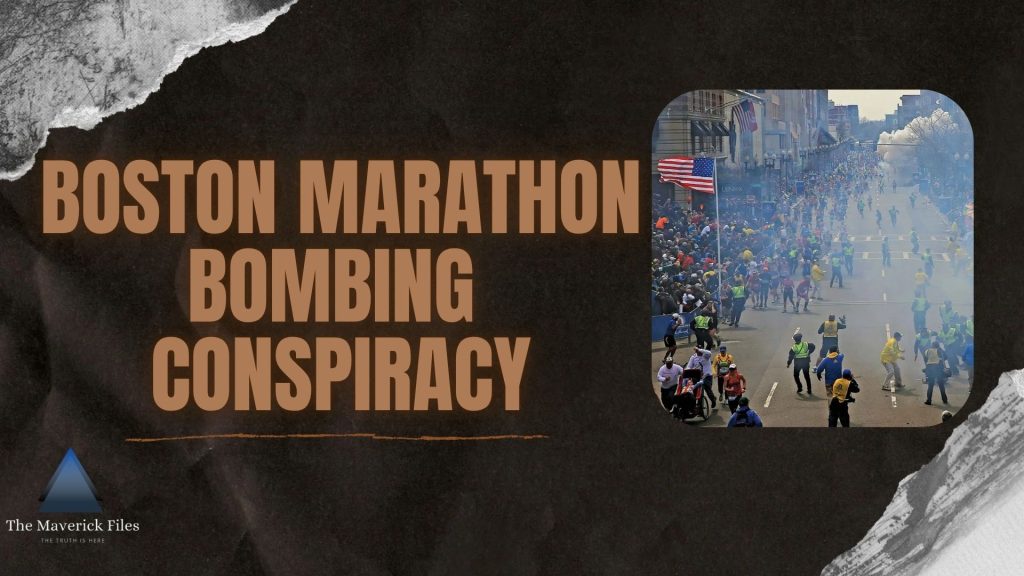
On April 15th, 2013, the annual Boston Marathon transformed from one of America’s most celebrated sporting events into a scene of chaos and horror. At approximately 2:49 PM, two homemade pressure-cooker bombs exploded near the marathon finish line on Boylston Street, killing three people and injuring hundreds more. The blasts sent smoke and debris across crowded sidewalks as spectators fled in panic and emergency responders rushed toward the destruction. Within hours, the attack became international news, and the city of Boston entered a period of fear, uncertainty, and unprecedented security lockdowns. According to the official account released by U.S. authorities, the bombing was carried out by two brothers, Tamerlan Tsarnaev and Dzhokhar Tsarnaev, ethnic Chechens who had reportedly become radicalized through extremist Islamist ideology. Tamerlan, the older of the 2, died on April 19th, 2013, at age 26, after sustaining fatal injuries during a shootout with law enforcement in Watertown, Massachusetts. Dzhokhar, who was 19 at the time, was captured alive after a massive manhunt and is currently incarcerated on death row at ADX Florence federal supermax prison in Colorado. The U.S. Supreme Court reinstated his death penalty in 2022.
Almost immediately after the bombings, however, conspiracy theories began to emerge online. The chaotic nature of the attack, conflicting early reports, the intense media coverage, and the massive police response created fertile ground for alternative narratives. Much like the conspiracy movements surrounding 9/11 and the 7/7 London bombings, skeptics questioned whether the public had been told the full truth about what happened that day. Over time, numerous theories surfaced involving intelligence agencies, private security contractors, surveillance anomalies, alleged crisis actors, and claims of foreknowledge or staged elements within the event, all the earmarks of a conspiracy.
One of the earliest and most widely discussed conspiracy theories centered around the presence of private security personnel near the finish line before the explosions. Internet investigators quickly circulated photographs showing men wearing tactical gear, military-style backpacks, and communication devices. Some online forums identified these individuals as members of a private security company called Craft International, founded by former Navy SEAL Chris Kyle. Because some of the men appeared near the blast locations before the explosions, conspiracy theorists claimed they may have been involved in placing the bombs or participating in a drill that somehow overlapped with the real attack, which seems to be their modus operandi: create confusion by conflating a drill or exercise with the real-life event around the same time. Critics of the official account argued that the heavy security presence and apparent preparedness of some personnel raised questions about foreknowledge. Authorities and independent researchers, however, stated there was no evidence linking security contractors to the bombing itself and noted that heightened security at major public events after 9/11 was standard.
Another major focus of conspiracy theories involved the backpacks allegedly used in the bombing. According to the official investigation, the bombs were pressure-cooker devices concealed inside black backpacks allegedly left near the finish line by the Tsarnaev brothers. Online investigators analyzed surveillance images frame by frame, comparing the brothers’ bags to bags seen in post-blast photographs. Some theorists claimed the backpacks shown after the explosions did not match the bags carried by the suspects in surveillance footage. Others argued the blast damage indicated a more sophisticated explosive device than homemade pressure cookers. Amateur analysts debated shrapnel patterns, smoke coloration, and the direction of debris, attempting to challenge the FBI’s conclusions. Despite these claims, federal investigators maintained that forensic evidence conclusively linked bomb fragments and explosive materials to the Tsarnaev brothers and to components later found in their apartment. I mean, how would the general public know for sure? We’re never allowed access to anything, and we have to simply take their word for it or use FOIA, but that can be timely, and what’s to say the authorities won’t redact or omit anomalous evidence?
The speed with which authorities identified the suspects also fueled suspicion among conspiracy theorists. Like with other controversial cases, within days of the bombing, the FBI released surveillance images of the Tsarnaev brothers and labeled them suspects. Critics questioned whether investigators had moved too quickly or selectively focused on the brothers while ignoring other possible leads. Early media confusion added to this distrust. In the immediate aftermath of the attack, multiple news outlets incorrectly reported arrests had already been made, while others circulated inaccurate information about foreign nationals or dark-skinned suspects. For conspiracy-minded observers, these contradictions reinforced the belief that authorities and media organizations were shaping a narrative before all evidence was fully examined.
One of the most controversial aspects of the case involved the death of Tamerlan Tsarnaev during the manhunt. According to the official account, the brothers killed MIT police officer Sean Collier, hijacked a vehicle, and later engaged police in a firefight in Watertown, Massachusetts. Authorities stated Tamerlan was shot during the confrontation and then accidentally run over by his younger brother as Dzhokhar escaped in the stolen car. Some conspiracy theorists questioned the circumstances of his death, arguing that photographs and witness statements did not align perfectly with the official timeline. Others claimed Tamerlan may have been interrogated or monitored previously by intelligence agencies because Russian authorities had reportedly warned the FBI about him years earlier. This connection became central to theories suggesting intelligence failures, prior surveillance, or possible recruitment attempts by federal agencies. Either way, they knew of him, like they always seem to know about just about every alleged suspect who is accused of the next major terrorist affiliated catastrophe before it actually occurs. Officials will always claim plausible deniability, however.
The dramatic lockdown of Boston also became a major source of controversy. In the days following the bombing, authorities conducted one of the largest manhunts in modern American history. Entire neighborhoods were shut down, armored vehicles rolled through suburban streets, and heavily armed police teams went door to door searching homes. For some Americans, the images resembled martial law. Conspiracy theorists argued that the response was disproportionate and represented a test case for expanded government control during domestic emergencies. Critics pointed to the suspension of normal public activity and the militarized appearance of law enforcement as evidence that the bombing was used to normalize aggressive security measures. Problem. Reaction. Solution. Defenders of the official response argued that authorities believed a dangerous armed suspect remained at large and acted accordingly to “protect” civilians. How convenient.
The surviving brother, Dzhokhar Tsarnaev, became another focal point of speculation. After being discovered hiding in a boat in Watertown, authorities claimed he confessed to the bombing in written notes while seriously wounded. Conspiracy theorists questioned whether his statements were obtained legally or whether key details were withheld from the public. Some argued that because he was interrogated under the “public safety exception” before being fully Mirandized or read his rights, the process lacked transparency. Others claimed the government avoided allowing broader scrutiny of evidence during the trial by controlling access to certain investigative materials. Despite these criticisms, Dzhokhar Tsarnaev was ultimately convicted on multiple federal charges and sentenced to death.
The internet’s role in the investigation also contributed to the growth of conspiracy culture surrounding the bombing. Social media users on platforms such as Reddit attempted to crowdsource suspect identification by analyzing publicly available photos and videos. In one infamous incident, online users wrongly identified innocent people as suspects, leading to harassment and widespread misinformation. This episode demonstrated how quickly speculation could spiral into false narratives during fast-moving national tragedies. Yet it also encouraged a larger online culture of amateur investigation, where thousands of individuals believed official authorities could not be trusted and that independent researchers were uncovering hidden truths.
Some of the more extreme conspiracy theories surrounding the Boston Marathon bombing claimed the event was entirely staged using crisis actors and simulated injuries. These theories often pointed to graphic photographs showing wounded victims and amputations, alleging inconsistencies in blood patterns or emergency responses. Medical professionals, journalists, and eyewitnesses overwhelmingly rejected these claims as baseless and deeply offensive to victims and first responders. Nevertheless, such theories spread widely through alternative media channels and became part of the broader conspiracy ecosystem that developed around mass casualty events in the digital age.
The bombing also became entangled in larger geopolitical and intelligence-related theories. Because the Tsarnaev family had ties to the Caucasus region and because Tamerlan had traveled to Russia before the attacks, some theorists speculated about possible connections to foreign intelligence agencies, extremist networks, or covert operations gone wrong. Others focused on reports that the FBI had interviewed Tamerlan years before the bombing after receiving warnings from Russian intelligence. Critics argued that either authorities failed catastrophically to monitor him or were concealing deeper involvement and let it happen on purpose, or made in happen on purpose. Official investigations concluded there was no evidence of a broader operational network directing the brothers. Does anyone actually believe they would confirm and admit to wrongdoing? Honestly, who cares what officials say at this point, they’ve already proven they control the narrative and can change it to however they want.
More than a decade later, the Boston Marathon bombing remains one of the defining terror attacks of post-9/11 America. The official account portrays the attack as an act of homegrown extremist violence carried out by two radicalized brothers using improvised explosive devices. Yet for conspiracy theorists, the unanswered questions, early media confusion, visible security presence, intelligence warnings, and militarized aftermath continue to fuel suspicion. The case illustrates how modern tragedies often become battlegrounds between official narratives and alternative interpretations amplified by the internet. Please share your thoughts in the comment section. Be well.