By Maverick
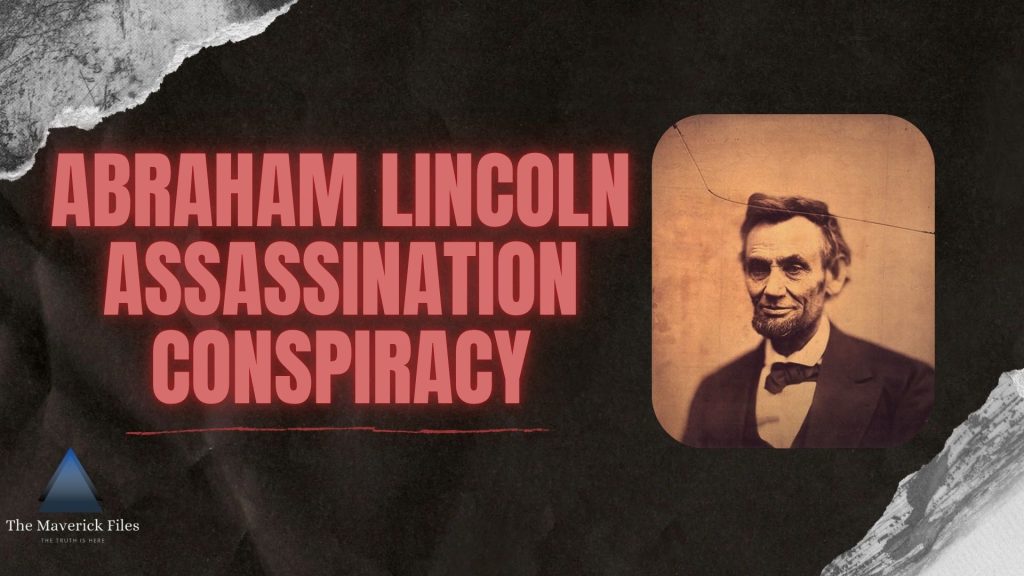
The assassination of President Abraham Lincoln on April 14, 1865, at Ford’s Theatre in Washington, D.C., was a turning point in American history. John Wilkes Booth, a well-known actor and Confederate sympathizer, was identified as the assassin and killed while evading capture. While the official narrative concludes that Booth acted with a small group of co-conspirators, various conspiracy theories have emerged over the years, suggesting more extensive plots and different perpetrators. Let’s unpack the official narrative and conspiracy theories that subsequently hatched as a result of this tragic event.
President Lincoln was shot by John Wilkes Booth during a performance at Ford’s Theatre. Booth then leaped to the stage and escaped, only to be killed 12 days later. Booth’s co-conspirators included George Atzerodt, David Herold, Lewis Powell, and Mary Surratt, among others. They were part of a broader plot to revive the Confederate cause by assassinating key Union leaders.
The Civil War’s aftermath left the nation deeply divided, fostering suspicion and distrust amongst each other. Perceived inconsistencies in the investigation and the rapid conclusion of the official narrative led to speculation. The clandestine nature of wartime operations and espionage created an environment ripe for conspiracy theories.
One of the most popular conspiracy theories about Lincoln’s assassination points to a Southern Confederacy Plot, that John Wilkes Booth and his co-conspirators were acting under orders from high-ranking Confederate officials or with their support. Booth’s connections to Confederate agents and sympathizers, and the belief that the assassination was part of a broader Confederate strategy. Skeptics claim that while Booth was a Confederate sympathizer and had contact with Confederate agents, direct evidence of an official Confederate plot remains elusive on record. Also, they mention that with the collapse of the Confederacy at the time, a large-scale coordination was least likely.
Another theory suggests that Lincoln’s assassination was a coordinated inside job by rogue elements within the government, spearheaded by the Secretary of War, Edwin Stanton, to consolidate power and for personal gain. Several allegations emerged regarding Stanton’s control over the investigation, suppression of evidence, and supposed benefits he gained from Lincoln’s death.
However, with every conspiracy theory comes a skeptic attempting to shut it down by stating that prior investigations and historical analyses have found no concrete evidence linking Stanton or other Union officials to the assassination plot, that it’s all circumstantial evidence.
Conspiracy theorists allege that the Catholic Church, specifically the Jesuits, was behind the assassination as part of a broader plot against the United States. The supporting evidence for that claim highlights Anti-Catholic sentiment at the time and claims by 19th-century anti-Catholic writers. Skeptics argue that this theory lacks credible evidence and is largely based on religious prejudice and conspiracy literature rather than factual documentation.
The final theory that conspiracy theorists mention is that this was some international conspiracy, where foreign governments, such as the British or French, conspired to assassinate Lincoln to destabilize the United States. There were diplomatic tensions and alleged foreign support for the Confederacy, but skeptics assert that there is no substantial evidence supporting the involvement of foreign governments in Lincoln’s assassination. These theories often stem from geopolitical speculation rather than concrete proof.
Despite having taken place over a century and a half ago, there has always been a particular interest by the mainstream media, historians, scholars as to what actually led to the events of that day since to many, it’s just a story as there are no longer any living eyewitnesses to the tragedy or the news that circulated about Lincoln’s death in the days and weeks that followed. People were completely in the dark back then about accessing any information they could about a specific historical event. In the present day, scholars continue to explore newly discovered documents and reanalyze existing evidence to gain a clearer understanding of the events surrounding Lincoln’s death.
The assassination of Abraham Lincoln remains a controversial topic of intense debate and investigation. While various conspiracy theories offer alternative explanations, the pursuit of truth requires careful examination of all available evidence, and proceeding with caution regarding who to trust when it comes to widespread information. Please share your thoughts in the comment section. Be well.