By Maverick
The Bank of Credit and Commerce International (BCCI) scandal was one of the most complex and significant cases of financial fraud in modern history. BCCI was implicated in a range of illicit activities, including money laundering, arms trafficking, terrorism financing, and world corruption. Its collapse in the early 1990s revealed weaknesses in international banking regulations and led to a reckoning and reformation on how banks operate across borders.
BCCI was founded in 1972 by Agha Hasan Abedi. Originally located in Luxembourg, with key operations in London and Pakistan, BCCI was marketed as a bank for the “Third World,” focusing on emerging markets, with significant operations in the Middle East, Africa, and South Asia. Its founders sought to create a renowned financial institution that served nations and clients underrepresented in the traditional banking system. In its heyday, BCCI had operations in over 70 countries with more than $20 billion in assets.
From the get-go, BCCI built a reputation for providing banking services to clients worldwide, including wealthy individuals, businesses, and governments. However, beneath the surface, the bank’s business model was riddled with illegal activities. Go figure, as that seems to be a more frequent occurrence. BCCI established numerous shell companies to hide its true activities and obscure the sources of its funds. Shell companies are essentially corporations without active business operations or significant assets. These types of corporations are not illegal for the most part, but they are sometimes used illegally, mainly as a means to disguise business ownership from law enforcement or the public to hide their shady dealings.
BCCI maintained multiple sets of accounting books, misleading regulators about its financial health. This allowed it to present itself as solvent while hiding its massive losses and illicit dealings. BCCI’s decentralized structure, with entities operating in multiple jurisdictions, allowed it to circumvent regulatory oversight. The use of tax havens (minimal or no tax liability for their bank deposits in a politically and economically stable environment) helped conceal money laundering and other illicit activities.
Agha Hasan Abedi, the founder and mastermind behind BCCI and its subsequent scandal, presented himself as a visionary banker but orchestrated the financial crimes that would lead to the bank’s collapse. Swaleh Naqvi, acting CEO of BCCI, was Abedi’s right-hand man and was deeply involved in the fraud and money laundering schemes. Robert Altman and Clark Clifford were prominent U.S. lawyers and political insiders, became tied to BCCI when they facilitated its purchase of First American Bank, a U.S.-based financial institution. Their involvement brought the scandal into the U.S. political and financial system.
The unraveling of BCCI began in the late 1980s, as international regulators, journalists, and whistleblowers began to raise concerns about its opaque operations, raising numerous suspicions. Investigations revealed that the bank was insolvent or unable to pay debts with a significant portion of its assets siphoned off through fraud and illegal activities. The U.S. initiated its first probe into BCCI’s money laundering activities, where a Miami-based investigation exposed links to drug cartels and criminal organizations. By 1991, after a series of regulatory investigations, the Bank of England, in coordination with international regulators, closed BCCI’s operations. All of its assets were frozen, and investigations revealed losses amounting to over $20 billion. On July 5th, 1991, BCCI was formally shut down by the authorities in what became known as “Black Friday” for the bank’s employees and depositors.
The BCCI scandal encompassed a wide range of criminal activities, such as laundering money for drug cartels, including the Medellín cartel led by Pablo Escobar. It became the institution for laundering billions of dollars in illicit funds. BCCI was also linked to the financing of terrorist groups, including the Abu Nidal Organization, a Palestinian militant group, one of the most notorious terrorist groups in the Middle East. The bank funneled money for groups and individuals associated with terrorism and militancy. BCCI facilitated transactions for arms deals, allowing governments, corporations, and individuals to buy and sell weapons illegally. Some of these arms deals they aided, supported regimes involved in human rights abuses and wars. BCCI was involved in corrupt dealings with political leaders across multiple countries, providing financial services to dictators and corrupt regimes. It had close ties to key figures in countries such as Saudi Arabia, Pakistan, and the U.S. BCCI defrauded depositors by creating a complex structure of subsidiaries, offshore accounts, and shell companies that made it next to impossible for regulators and investors to know the bank’s true financial figures to where billions vanished through fraudulent loans and other embezzlement schemes they had up their sleeves.
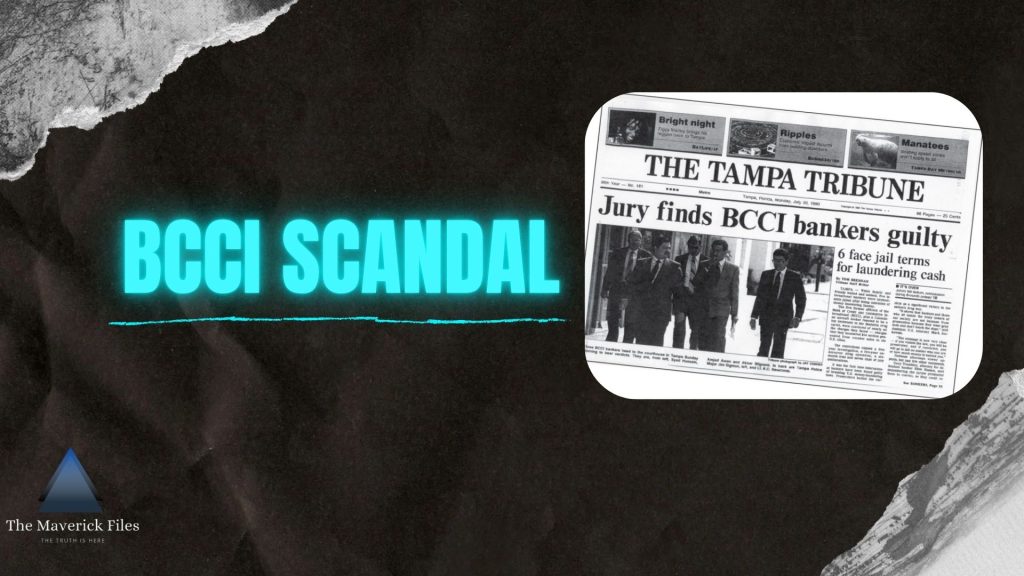
The U.S. Senate later launched a comprehensive investigation into BCCI, chaired by then Senator John Kerry. The inquiry and later Kerry Report revealed BCCI’s vast criminal network and its penetration into the U.S. financial system. Swaleh Naqvi and other top BCCI executives were convicted of fraud. Agha Hasan Abedi avoided prosecution due to his ill health and remained in Pakistan until his death in 1995. Robert Altman and Clark Clifford were indicted in the U.S. for their involvement with BCCI’s unlawful acquisition of First American Bank. Altman was acquitted, but the scandal tarnished his reputation.
BCCI’s creditors and depositors were left with massive losses. After years of litigation, settlements were reached, but many depositors received only a fraction of their investments unfortunately.
The BCCI scandal highlighted glaring weaknesses in the regulation of international banks and financial institutions. The bank’s complex structure, involving operations across multiple countries and jurisdictions, made it difficult for any single regulator to detect its illegal and unethical activities. As a result, the scandal prompted several reforms, such as tighter international banking regulations. Tighter International Banking Regulations. Countries began cooperating more closely on financial regulation, leading to stronger oversight of cross-border banking activities. Stricter laws were put in place to prevent banks from being used for money laundering and other criminal activities. There was also increased scrutiny of offshore banking and tax havens. The scandal underscored how imperative transparency in financial institutions are, prompting an arduous effort to promote corporate accountability and prevent unchecked banking practices. Please share your thoughts in the comment section. Be well.