By Maverick
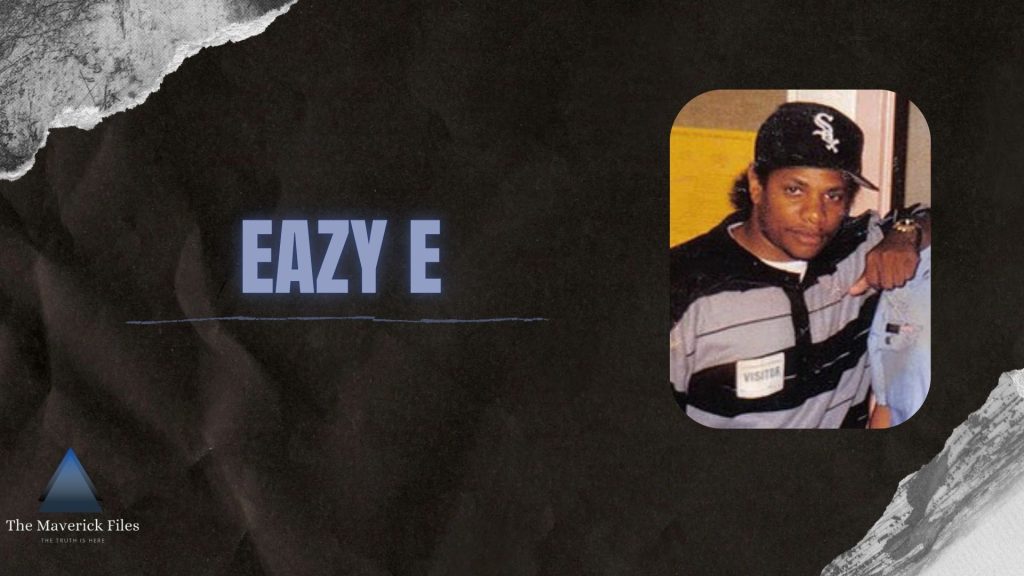
Eric Lynn Wright, known to the world as Eazy-E, wasn’t just a rapper; he was the architect of an entire culture. As the “Godfather of Gangsta Rap,” he turned the gritty reality of Compton into a global phenomenon, co-founding N.W.A and Ruthless Records. But while his life was defined by a meteoric rise, his death remains one of the most debated and controversial chapters in music history.
Eazy-E was born on September 7th, 1964, in Compton, California. He was a high school dropout who supported himself by selling drugs. He took his so-called earnings, reportedly around $250,000, and invested them in a legitimate dream: a record company labeled Ruthless Records.
Alongside artists Dr. Dre and Ice Cube, he formed N.W.A, releasing the explosive Straight Outta Compton album in 1988. With his high-pitched, menacing delivery and raw lyrics, Eazy-E became the face of a movement that challenged authority and gave a voice to the streets. Even after N.W.A’s bitter breakup, he remained a powerhouse, discovering talent like Bone Thugs-N-Harmony.
Eric was a savvy businessman, a provocateur, and a pioneer who changed the sound of the world forever. On February 24th, 1995, Eazy-E was admitted to Cedars-Sinai Medical Center in Los Angeles with what he believed was a severe asthma attack or a violent cough. The diagnosis was far more devastating, however. It was full-blown AIDS, not even HIV. On March 16th, 1995, Eazy-E released a public statement through his attorney, acknowledging his condition to warn his young fans: “I’m not saying this because I’m looking for a soft cushion wherever I’m heading… I’ve got thousands and thousands of young fans that have to learn about what’s real when it comes to AIDS.” Just ten days after his announcement, on March 26th, 1995, Eric Wright passed away from complications related to AIDS-induced pneumonia at the age of 30. It was the speed of Eric’s decline, going from seemingly healthy to deceased in just one month, that sent shockwaves through the community, giving birth to conspiracy theories that he was murdered.
The most persistent theory centers on Death Row Records mogul Suge Knight, the same Suge Knight who is alleged to have had a role in the murders of Tupac Shakur & Biggie Smalls. Yes, that Suge Knight. During a 2003 interview on the late-night talk show, Jimmy Kimmel Live!, Knight made a chilling remark about a “new technology” for killing people. He joked that shooting someone was “old school” because you go to jail, but “They get blood from somebody with AIDS, and then they shoot you with it. That’s a slow death. The Eazy-E thing, you know what I mean?” Many fans, and even Eazy’s son, Yung Eazy, believe this was a complacent confession. They point to the violent history between Ruthless and Death Row as a motive.
Rapper Frost, who was signed to Ruthless, later claimed that Eazy-E was “injected” during an acupuncture session. He suggested that an unnamed individual (widely interpreted as Suge Knight) orchestrated for the needles to be tainted with the virus. Of course, there is no tangible evidence to corroborate this allegation other than it being a he-said-she-said fiasco.
Another working theory centers around the type of lyrics Eazy would rap about in his music. It was N.W.A’s music hit “F— tha Police” that drew the scrutiny of the FBI. Some believe the government saw Eazy-E as a dangerous radical and provocateur that they couldn’t control. In this theory, his death was a state-sponsored assassination disguised as a medical crisis. Again, not much evidence to confirm it, but it has made people suspicious over the years to not trust the official narrative.
In recent years, interest in the case has spiked due to documentaries like The Mysterious Death of Eazy-E (2021). Here is what we know now: HIV specialists have pointed out that while Eazy’s death seemed “sudden,” he had been exhibiting symptoms, like a persistent cough, as early as 1994. In the 90s, without modern antiretroviral therapy, the transition from HIV to full-blown AIDS could occur rapidly if the virus had gone undiagnosed for years. That does make a lot of sense, but because Eazy was a high-profile figure, it doesn’t prevent those from perceiving that he may have been murdered.
In contemporary investigations, doctors who treated Eazy-E back in the 90s have come forward to confirm they also treated women who contracted the virus from him years prior to his death. This provides a clear, biological timeline that contradicts the “sudden injection” theory. Easy also fathered seven kids with six different women. Suge Knight could’ve just been trolling, but to say something like that makes one wonder if that’s actually a thing to shoot someone up with HIV and have it later turn into AIDS without treatment.
New evidence regarding the “deathbed marriage” to Tomica Woods-Wright has surfaced, with family members questioning his state of mind and the legality of the documents signed while he was on a ventilator, though no foul play regarding his health was legally proven. It makes sense that several people wanted Eazy-E dead or would’ve benefited from his demise in some way, shape, or form.
From an objective standpoint, conspiracy theories often arise because we find it hard to believe that our idols are mortal or that they can suddenly pass away from something unforeseen. Had Eazy been a regular dude, no one would be questioning anything; that part is certain. Skeptics try to push their own explanations and analysis by stating the idea of a “biological hit” is easier for conspiracy theorists to digest than the tragic reality of the 90s AIDS epidemic. It’s like you have to feel ashamed or tread lightly because you suspect something else is up, and that’s not the accepted narrative.
The truth is, we have no definitive proof of what happened. People may accept whichever narrative, but as long as we remain on the outside perimeter of the investigation, we’ll never have the full scope of what happened. Folks would rather just choose whatever narrative they want to believe. It’s easier to close the book on these cases and live your life by accepting the simplest explanation. However, the most powerful part of Eazy’s story isn’t the “how” of his death, but his decision to use his final breath to educate a generation. He turned a private tragedy into a public service, ensuring his legacy would be about more than just music. That’s a win in my book. Please share your thoughts in the comment section. Be well.