By Maverick
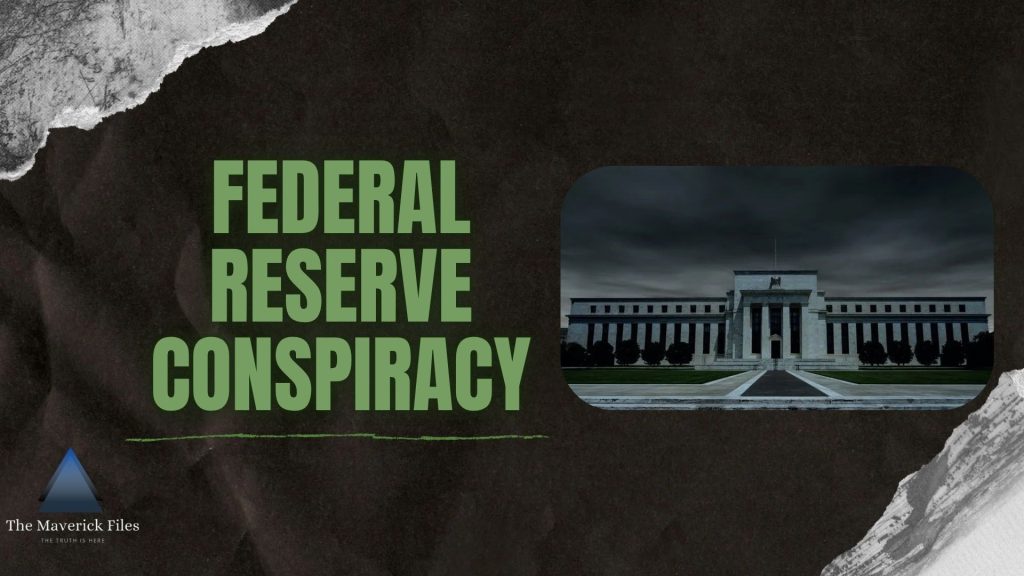
The Federal Reserve, established in 1913, is the central banking system of the United States. It was created with the Federal Reserve Act, signed and passed by then President Woodrow Wilson and the U.S. Senate to provide a safer, more flexible, and stable monetary and financial system. Under this system, the U.S. dollar operates as a fiat currency, meaning it’s not backed by physical commodities like gold or silver but derives its value from government regulation and so-called trust. So essentially, we might as well be using Monopoly money as currency since this whole money system is indeed nothing more than an enslavement tool, and the endless borrowing from the Fed is to keep the system functioning without any hiccups or major concern about ever paying back all of the debt in a timely fashion.
The gold standard, where the value of money was tied to a specific amount of gold, was abandoned during the Great Depression to allow more flexibility in monetary policy, meaning more borrowing of the dollar without worrying about having enough gold to keep up with the demand for the excess dollars being produced and spent. In layman’s terms, it means that the Fed can simply print money out of thin air and stimulate the economy like clockwork. Many conspiracy theorists argue that the creation of the Federal Reserve was not a mere financial reform but a strategic move by a secretive elite, such as the Illuminati, to hijack the monetary system.
According to these so-called theories, influential banking families like the Rothschilds and Rockefellers orchestrated the Federal Reserve’s establishment to consolidate financial power. They suggest that these elites intended to manipulate the economy and maintain control over the world’s wealth through the issuance of fiat currency. Doesn’t sound out of the realm of possibility, does it? A pivotal point in this conspiracy theory was a meeting that took place at Jekyll Island, Georgia, in 1910, where a small group of bankers and policymakers supposedly crafted the Federal Reserve Act in secrecy.
The official line is that this was a necessary step to address banking instability. Conspiracy theorists argue that this Jekyll Island meeting was actually a clandestine gathering where plans were made to centralize monetary power and exert covert influence over the world’s financial system. One major precedent to set this in motion was the Panic of 1907. The Panic of 1907 or the Knickerbocker Crisis took place in the United States over a three week period starting in mid-October of that year, when the New York Stock Exchange fell almost 50% from its peak the previous year. The panic occurred during a time of an economic recession, and there were numerous bank runs affecting banks and trust companies. The 1907 panic eventually spread throughout the nation when many state and local banks and businesses entered bankruptcy.
The primary causes of the bank run included a retraction of market liquidity by numerous banks in New York City and a loss in confidence among depositors, exacerbated by unregulated side bets at bucket shops. The panic was triggered by the failed attempt in October 1907 to corner (gain control over a stock) the market on the stock of the United Copper Company. When the bid failed, banks that had lent money to the cornering scheme suffered runs that later spread to affiliated banks and trusts, leading a week later to the downfall of the Knickerbocker Trust Company, the third largest trust in NYC. The collapse of the Knickerbocker spread fear throughout the city’s trusts as regional banks withdrew reserves from NYC banks.
The panic then extended across the nation as vast numbers of people withdrew deposits from their regional banks, causing the 8th-largest decline in U.S. stock market history. Before you know what really hit the fan, in came another banker and financier, John Pierpont Morgan, otherwise known as J. P. Morgan, who put up large sums of his own money and convinced other New York bankers to do the same to mitigate the failing banking system. By November of 1907, the financial crisis had ended, only to be replaced by a further crisis due to the heavy borrowing of a large brokerage firm using the stock of the Tennessee Coal, Iron and Railroad Company (TC&I) as collateral. The collapse of TC&I’s stock price was averted by an emergency takeover by J. P. Morgan’s U.S. Steel Corporation, approved by then-President Theodore Roosevelt.
By 1908, then Republican Senator Nelson W. Aldrich established and chaired the National Monetary Commission, established by the Aldrich-Vreeland Act of 1908 in response to the crisis. The commission’s objective was to investigate the banking and financial problems of the crisis that led to the panic and to recommend future long-term solutions. The commission’s work was a key factor in the creation of the Federal Reserve Act of 1913, which established the modern Federal Reserve system. Nelson Aldrich was the father of Abby Aldrich Rockefeller, the mother of brothers David and Nelson Rockefeller. Do you see how the dots keep connecting? Every time there’s a crisis, these rich banking cartels have always been there to save the day, as if they’re the ones who manufactured the problem to begin with and knowing exactly how to solve it, followed by the predictable reaction of a failing economy, a subsequent panic, and a solution to prevent these things from happening again, by usually giving the government more regulatory oversight.
By 1913, the Federal Reserve institution was purportedly created to stabilize the American economy and provide a central bank to manage monetary policy. But what if this institution is more than just a financial steward? Conspiracy theorists argue that the Federal Reserve is a tool used by an elite group to manipulate the economy for their benefit and maintain control over the working class, whether rich or poor. The Fed’s control over the money supply and interest rates gives it unprecedented power, which could potentially be used to orchestrate economic shifts that serve hidden agendas. Also note that the U.S. federal government has literally no control or proxy power over the Fed and how it operates. The Fed can do as it pleases without answering to any form of government.
Fiat currency is often criticized by conspiracy theorists for its lack of intrinsic value. They argue that the ability of the Federal Reserve to create money out of thin air leads to inevitable economic manipulation and inflation, benefiting those in power at the expense of the average citizen. The theory suggests that the real goal behind fiat currency was to erode individual wealth and increase dependency on the state. If one really opens their eyes and pays close attention, does that sound outlandish in any way, shape, or form?
The transition from the gold standard to fiat currency is another focal point. Conspiracy theorists argue that the abandonment of the gold standard during the Great Depression was not just a response to economic hardship but a deliberate move to sever the link between currency and tangible value. This, they claim, allowed elites to control the money supply and financial systems more effectively. That would imply that the entire monetary system is a facade designed to facilitate economic control and manipulation by a hidden government lurking in the shadows.
The Bretton Woods Conference of 1944 was a turning point in global financial history. Established to rebuild the post-World War II economy following the Great Depression, the agreement created a new international monetary system that fixed exchange rates and established the International Monetary Fund (IMF) and the World Bank. On the surface, this was a move towards economic stability and cooperation. However, there are those who believe that Bretton Woods was also a strategic maneuver by a powerful elite to control global finances. The system’s collapse came in 1971, when then President Richard Nixon took the U.S. off the gold standard, marked the beginning of an era where fiat currencies reigned supreme. This shift is viewed by some as the first step in a broader agenda to implement a global monetary system that would eventually lead to a single digital currency.
The U.S. dollar became the leading world reserve currency to the point where hot commodities such as oil have been priced and traded with other countries in U.S. dollars. This is known as the petrodollar system, which started in the 1970s after the U.S. moved off the gold standard. This has kept demand for the dollar high in the world, supporting its value and giving the U.S. significant financial, economic, and geopolitical leverage by helping fund its trade deficits and government spending.
Let’s talk about the BRICS group, which is comprised of Brazil, Russia, India, China, and South Africa. BRICS is an economic coalition that seeks to promote mutual interests and development through economic collaboration, reducing reliance on Western-dominated financial systems, ergo the dollar. BRICS represents over 40% of the world population and around a quarter of the world’s GDP. BRICS nations aim to foster economic collaboration, especially in trade, investment, and banking, while reducing dependence on the U.S. dollar. This coalition also aims to enhance their influence in world financial organizations like the IMF and World Bank, which are perceived as U.S. and Eurocentric.
BRICS nations have shown interest in reducing their reliance on the U.S. dollar, a concept often referred to as “de-dollarization.” This effort gained traction as Western sanctions against Russia, especially, highlighted vulnerabilities tied to the dollar system. Russia, for example, was largely excluded from the SWIFT system (for international payments) due to the 2022 Russian invasion of Ukraine, motivating BRICS members to consider alternative financial infrastructures.
Recently, BRICS countries have explored trading directly in their national currencies, bypassing the dollar. For instance, India has considered trading with Russia using the Indian rupee, and China has promoted the use of the yuan in international trade. BRICS has discussed creating a new currency or digital currency as an alternative reserve asset. The New Development Bank (NDB), also known as the BRICS Bank, was established in 2014 to finance infrastructure and sustainable development projects in member and partner countries. The NDB promotes financing in local currencies to reduce dollar dependency, supporting BRICS’ broader de-dollarization ambitions.
Some BRICS countries, especially China and Russia, have made strides to shift oil trades away from the dollar. China, the world’s largest oil importer, has pursued agreements with countries like Saudi Arabia to conduct oil trades in yuan, which by default diminishes the dollar’s dominance in oil markets, impacting the world demand for U.S. currency.
Reducing the role of the petrodollar would decrease the U.S. ability to influence world economics via sanctions and financial policies. Additionally, less world reliance on the dollar would in fact lead to a weakened U.S. dollar, affecting America’s borrowing power and potentially altering the balance of power in world finance.
BRICS has recently discussed adding more members, which could strengthen its influence. The addition of more oil-producing countries, such as Saudi Arabia, would accelerate moves away from the petrodollar system. Despite BRICS’ ambitious goals, challenges remain for alternatives to the dollar. National economic differences, geopolitical tensions, and infrastructure gaps could slow down BRICS’ progress toward a cohesive financial system that bypasses the dollar.
Could this all be a blueprint towards a New World Order, using only one currency, a Central Bank Digital Currency (CBDC)? Are Bitcoin and Ethereum just beta tests to get people accustomed to conducting business digitally? Perhaps that’s why everything is paid on the internet with the use of a credit/debit card, cell phone, computer, or any electronic device that conducts and facilitates business transactions. Money has seemed digital for the span of the last 30-40 years, when credit cards, ATMs, and online banking using the internet came into the mix. Proponents argue that digital currencies offer greater efficiency, transparency, and financial inclusion. Yet, skeptics believe that digital currency represents the culmination of a long-term plan to consolidate economic control.
With digital currencies, governments and central banks can track and regulate financial transactions with unprecedented precision. This could potentially lead to a scenario where every transaction is monitored, and financial freedom is significantly curtailed. In the name of security and efficiency, we might be moving towards a system where personal privacy is sacrificed for control. Basically, if one is in noncompliance with the laws, the government could emulate what China does with its social credit system, where the government can turn off your bank account if you don’t abide by the rules, essentially putting you in a “time out.” That’s the epitome of a totalitarian state.
CBDCs, in particular, are seen as the ultimate tool for centralizing financial power and are drastically changing the financial landscape. Unlike decentralized cryptocurrencies, CBDCs can be issued and regulated by central banks, giving them the ability to enforce monetary policy and potentially influence consumer behavior in ways that were previously impossible. We’re on the brink of this becoming a full-fledged reality, especially if the dollar finally crashes and CBDC rises like a deceptive phoenix from the ashes.
The origins of the Federal Reserve, fiat currency, Bretton Woods, petro dollar, and the advent of digital currencies are the breeding ground for speculation and conspiracy. Whether one views the system as a necessary evolution in economic policy or as part of a grand scheme by powerful elites to centralize power, it’s blatant that this crucial subject raises important questions about trust, control, the nature of money itself, and will make one critically assess the financial and government systems that control our lives. How would we, the taxpayers, ever actually pay back the nearly $36 trillion, including interest, that we owe to the Federal Reserve?
It just becomes more transparent that this monetary system is all an enslavement tool and we’re the plantation workers footing the bill for the excessive federal and state spending that will never get paid back in full and it becomes apparent that it’s not a dire necessity to pay it all back, just as long as we continue working to live and pay taxes against our will to keep this illusionary system in longevity. What do you think of the Federal Reserve system, fiat currency, and CBDCs? Please share your thoughts in the comment section. Be well.