By Maverick
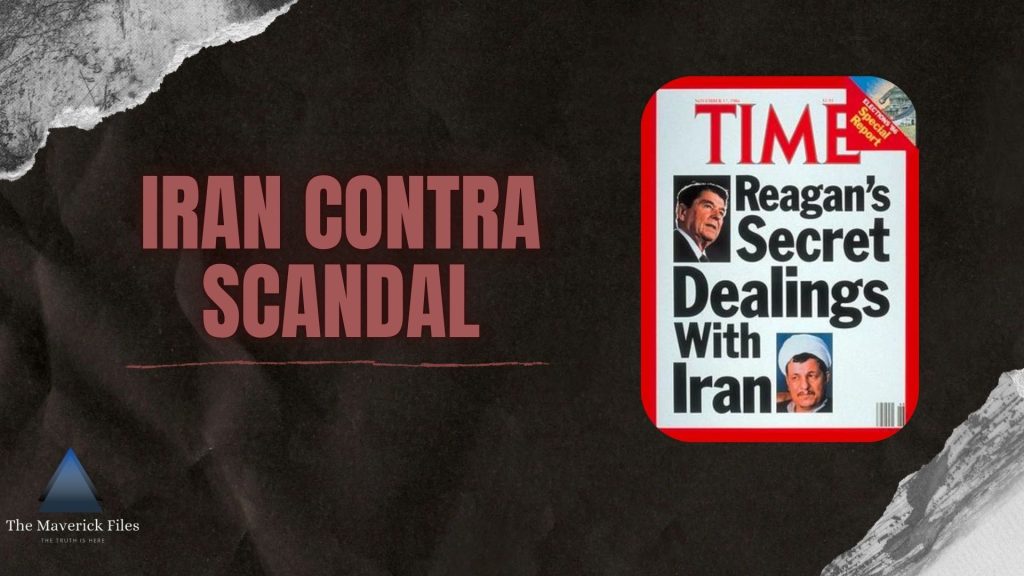
The Iran-Contra Affair, also known as the Iran-Contra scandal, was a political scandal in the United States during the Reagan administration that took place in 1986. It involved secret U.S. arms sales to Iran, which was under an arms embargo, and the illegal allocation of proceeds from those sales to support Contra rebels fighting the socialist government of Nicaragua. I’ll explain more in detail throughout this blog since it’s quite a bit to dive into and unpack.
During the 1980s, the U.S. was heavily involved in Cold War proxy conflicts, particularly in Latin America and the Middle East. The U.S. government, under President Ronald Reagan, was staunchly anti-communist and sought to prevent the spread of socialism, especially in Central America. At the same time, the Reagan administration viewed the country of Iran as a pivotal player in the Middle East despite its anti-American stance following the Iranian Revolution in 1979, which was an uprising that resulted in the toppling of the monarchy of Shah Mohammad Reza Pahlavi on February 11, 1979, and led to the establishment of an Islamic republic in Iran. The United States strongly opposed the revolution due to its being an ally with the Shah, and the Iranian rebels capturing U.S. citizens as hostages during that time. The reformed Iranian government resented the U.S. for its involvement with the Shah, in addition to helping him get medical treatment and admittance into the United States as a sort of sanctuary for him. So basically, the two countries were at odds, which led to imposed sanctions and the arms embargo against Iran by the Carter administration following the revolution and Iranian rebels taking American hostages from the U.S. Embassy during that time. Talk about a number of conflicts, right? However, that didn’t seem to stop certain high ranking officials of the U.S. government and Iran from working together behind the scenes despite all of that unfolding to increase tensions.
The Iran-Contra Affair consisted of two major illegal operations that were eventually tied together such as arms sales to Iran and funding of a left-wing Nicaraguan proxy group known as the “Contras.” In the early 1980s, Iran was engaged in a brutal war with Iraq. The Reagan administration wanted to improve relations with Iran, where the Carter administration failed, and more importantly, secure the release of American hostages held by Hezbollah, an Iranian-backed militant group in Lebanon. Despite an arms embargo against Iran, the U.S. said screw it and secretly sold weapons to Iran. In exchange, Iran promised to use its influence to help free American hostages. The deal went through intermediaries, including Israel, and was structured to hide U.S. involvement. In Nicaragua, the U.S. opposed the left-wing Sandinista government, which came to power after a revolution. The Reagan administration supported the Contras, a rebel group fighting the Sandinistas, viewing them as a means to combat communism in Central America. The U.S. Congress had passed the Boland Amendment in the early 1980s, which restricted U.S. government aid to the Contras. This meant the Reagan administration was legally barred from directly funding the Contras. To circumvent the Boland Amendment, senior officials in the Reagan administration devised a scheme to use the profits from the secret arms sales to Iran to fund the Contras covertly from 1981-1985. It didn’t really seem like a bad thing if you’re looking at it through the lens of a morally sound individual, since communism is usually never a good thing for anyone. The scandal, which surfaced in 1986, caused significant controversy and raised serious questions about the legality of U.S. foreign policy actions, leading to multiple investigations and political fallout unfortunately.
By 1985, the first arms shipments were sent to Iran in violation of the arms embargo, facilitated through Israeli intermediaries. Hostages begin to be released sporadically. In 1986, the arms for hostages deal became tied to the funding of the Contras, with funds from the arms sales being diverted to support the Nicaraguan rebels. It was sometime in 1986 that a Lebanese newspaper, “Al-Shiraa,” leaked the U.S.-Iran arms deals story to the public. Shortly after, the full scope of the operation begins to emerge, exposing the illegal funding of the Contras.
President Reagan was deeply committed to both combating communism in Central America and securing the release of American hostages in the Middle East. Though Reagan denied knowledge of the diversion of funds, the scandal cast a shadow over his administration. National Security Council staffer Oliver North became the face of the Iran-Contra scandal. He was heavily involved in the covert operations, including overseeing the arms sales and the diversion of funds. North famously testified before Congress in 1987, during which he defended his actions as patriotic. I honestly have to agree with that. Out of all of the shady and deceptive things that the U.S. government has been accused of doing and has likely done, this is one of the few things that I can agree with them on, as it was for a good cause, despite it being a covert operation, leaving the U.S. legislative branch in the dark. National Security Advisor John Poindexter was another key figure in the scandal, authorizing and overseeing the arms sales and the transfer of funds to the Contras as well as former National Security Advisor Robert McFarlane, who played a role in initiating the secret arms sales to Iran, and Secretary of Defense Caspar Weinberger, who opposed the arms sales but became implicated in the cover up.
Once the scandal broke, there were multiple investigations by the U.S. Congress and an independent counsel led by Deputy Attorney General Lawrence Walsh, known as the “Tower Commission.” The investigation led to the indictment of 14 senior Reagan administration officials on charges including perjury, obstruction of justice, and lying to Congress. Several key figures, including Oliver North, John Poindexter, and others, were convicted of these various crimes. However, many convictions were later overturned on appeal or reversed due to procedural issues. In 1992, outgoing President George H.W. Bush, who had been vice president during the Reagan administration, pardoned several individuals involved in the scandal, including Caspar Weinberger.
The Iran-Contra Affair damaged public trust in the Reagan administration and raised serious concerns about the extent to which the U.S. government operated outside of legal and constitutional limits. Many Americans were supposedly outraged by the fact that the administration had defied the checks and balances of Congress, but this is honestly nothing compared to what other administrations have been guilty of doing during the past 30 years. Please share your thoughts in the comment section. Be well.