By Maverick
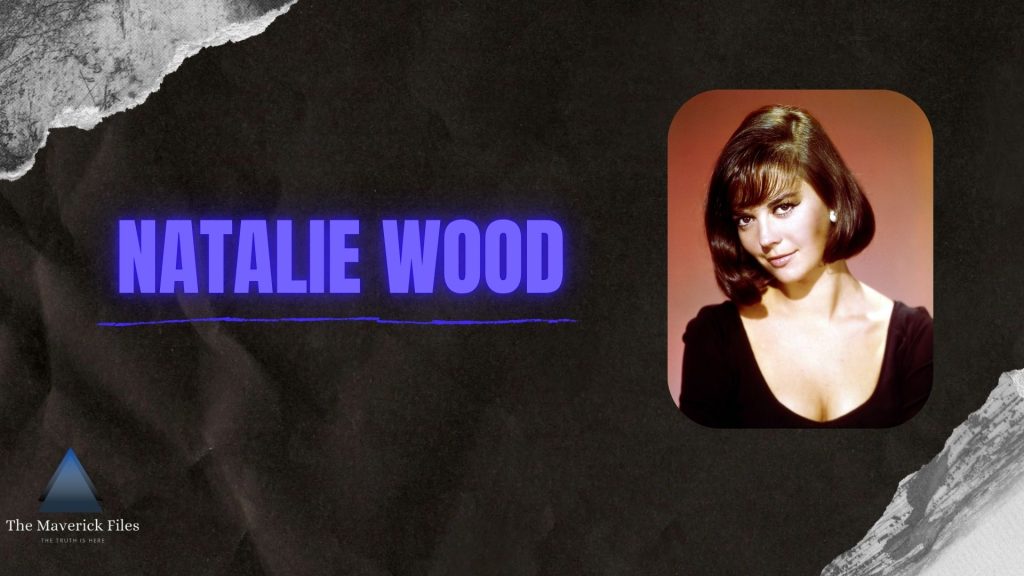
Natalie Wood was one of Hollywood’s most luminous stars, a child prodigy who grew into an Academy Award–nominated actress and a defining face of mid-century American cinema. Born Natalia Nikolaevna Zakharenko in San Francisco, California, on July 20th, 1938, to Russian immigrant parents, she entered the film industry at a young age and quickly became known for her emotional depth and vulnerability on screen. By her teens, she had already earned an Oscar nomination for Rebel Without a Cause, starring opposite James Dean. She later cemented her legacy with iconic roles in West Side Story and Splendor in the Grass, becoming one of the most celebrated actresses of her generation. But despite her glittering career, it is her mysterious death in 1981 that continues to fuel speculation, suspicion, and decades of conspiracy theories.
On November 29th, 1981, Wood was aboard her yacht, the Splendour, off Catalina Island in California. With her were her husband, actor Robert Wagner, her Brainstorm co-star Christopher Walken, and the yacht’s captain, Dennis Davern. The next morning, Wood’s body was found floating in the water near a small inflatable dinghy. The initial ruling was accidental drowning. Authorities concluded she may have slipped while trying to reboard the yacht or retrieve the dinghy.
The circumstances struck many as strange. Wood had long been known to have a fear of dark water, stemming from a childhood incident and reinforced by her mother’s superstitions about water and fate. Friends and biographers often cited her intense anxiety about being in the ocean at night. For some observers, this made the idea that she would voluntarily leave the safety of the yacht in darkness seem unlikely, fueling the first layer of conspiracy speculation.
One of the most enduring theories centers on the alleged argument that occurred that evening between Wood and Wagner. Reports emerged that tensions had flared during dinner, possibly involving jealousy over Walken, who was co-starring with Wood in Brainstorm. Captain Davern later claimed in interviews and in his memoir that he overheard heated arguments and that Wagner delayed calling authorities when Wood was discovered missing. Critics of Wagner point to bruises found on Wood’s body during autopsy, suggesting they may not have been consistent with a simple fall. Supporters argue the bruises could have resulted from attempting to climb into the dinghy or from being tossed against the yacht in rough water.
Over the years, the official narrative began to shift. In 2011, the Los Angeles County Sheriff’s Department reopened the case after Davern publicly stated that he had withheld information during the original investigation. In 2012, the cause of death was amended from “accidental drowning” to “drowning and other undetermined factors.” This change ignited renewed suspicion. In 2018, authorities named Wagner a “person of interest,” citing inconsistencies in his statements. Wagner has consistently denied any wrongdoing and has never been charged with a crime. The case remains officially unresolved.
Another conspiracy theory suggests that the entertainment industry itself may have played a role in shaping the narrative or was directly involved in her death. Some theorists argue that powerful Hollywood interests wanted to avoid a scandal involving major stars and thus encouraged a swift accidental ruling. This line of thinking often references historical patterns of studio influence and image protection in classic Hollywood. However, concrete evidence supporting an organized cover-up has never surfaced publicly.
A more speculative theory posits that Wood’s death was connected to hidden tensions involving the production of Brainstorm. At the time, the film was troubled and behind schedule. Wood’s death temporarily halted production and created insurance and contractual complications. Some theorists suggest that financial motives or conflicts related to the film may have exacerbated tensions that weekend. Yet again, no definitive proof has emerged to substantiate this claim.
There are also psychological theories that step away from foul play and focus instead on alcohol consumption and emotional volatility. Reports indicate that those aboard the yacht had been drinking heavily. Toxicology reports showed Wood had alcohol and medication in her system. Some investigators believe she may have impulsively attempted to leave the yacht after an argument, possibly to cool off, leading to a tragic accident. This explanation, while less sensational than murder conspiracies, leaves unanswered questions about why she would risk boarding a dinghy alone at night, given her fear of water.
I’ve realized that what keeps the conspiracy theories alive is the ambiguity. The amended autopsy, the evolving statements from witnesses, and the designation of a “person of interest” decades after the fact have created a vacuum where speculation thrives. Unlike many celebrity deaths that are definitively resolved, Wood’s case occupies a gray area, officially neither ruled a homicide nor fully reaffirmed as accidental.
Beyond the mystery, it’s important to remember the life behind the headlines. Natalie Wood was a complex woman who navigated fame from childhood, enduring public scrutiny, and balanced marriage, motherhood, and career in a demanding industry. Her performances continue to influence actors and filmmakers today. Whether one believes in foul play, tragic accident, or some truth still hidden beneath decades of conflicting accounts, her story reflects both the glamour and the shadows of Hollywood.
More than forty years later, the death of Natalie Wood remains one of the most discussed unsolved mysteries in entertainment history. The combination of stardom, conflicting testimony, and unanswered questions ensures that conspiracy theories will likely persist. But at its core lies a human tragedy, a gifted actress whose life ended in dark water under circumstances that, to this day, refuse to settle into certainty. Please share your thoughts in the comment section. Be well.