By Maverick
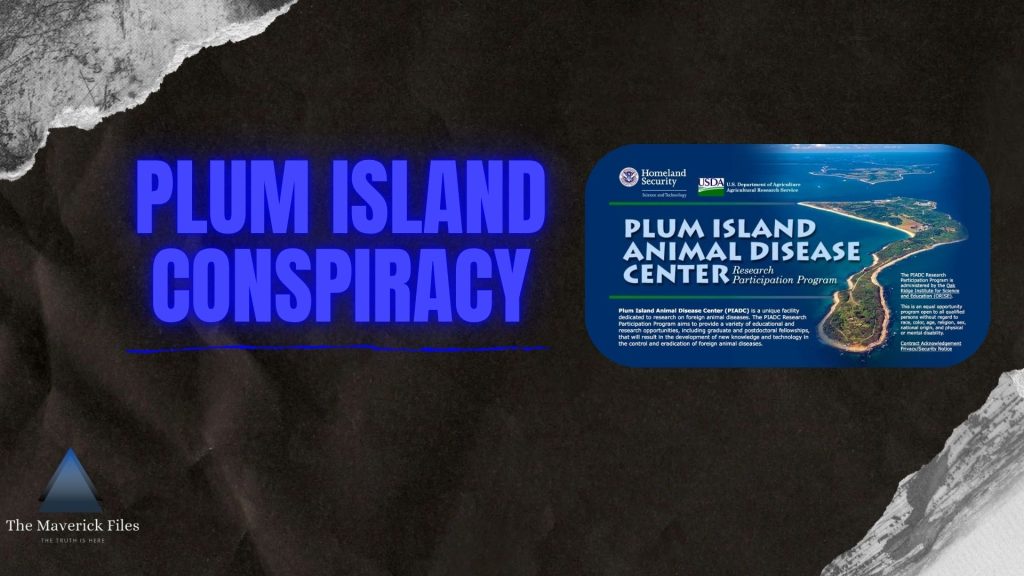
Plum Island is a small landmass off the coast of Long Island, New York, that is shrouded in mystery and speculation. Officially known as the site of the Plum Island Animal Disease Center (PIADC), where research on animal pathogens is conducted, it has also become a focal point for various conspiracy theories. From secret bioweapons research to connections with mysterious creatures, Plum Island captures the imagination of conspiracy theorists and curious minds alike.
Plum Island became established as a research facility in 1954, primarily for studying animal diseases like foot-and-mouth disease. The island’s isolated location and strict security measures have fueled speculation about the activities conducted there. While the U.S. government asserts that the research is focused on protecting livestock and public health, others believe there’s much more to the story.
One of the most pervasive theories suggests that Plum Island is a front for clandestine bioweapons research. This idea is fueled by the facility’s origins, as it was initially part of a military biological warfare program during the Cold War. Conspiracy theorists argue that the government has continued to conduct dangerous experiments in secret, potentially involving genetic modification or the development of new pathogens.
Another prominent theory links Plum Island to the outbreak of Lyme disease, which was first identified in Lyme, Connecticut, just a few miles across the water. Proponents of this theory argue that Lyme disease may have originated from ticks that escaped or were released from the island, where they were allegedly being used in experiments. While there is no direct scientific evidence to support this claim on the official record, the proximity of the initial Lyme disease cases to Plum Island has sparked ongoing speculation, while skeptics brush it off as serendipity.
Plum Island’s mystique is further enhanced by reports of strange creatures washing up on nearby shores, most famously the “Montauk Monster” in 2008. Some believe these animals are the result of genetic experiments gone awry, citing the unusual appearance of the creatures. While many experts attribute these sightings to decomposed wildlife or hoaxes, they continue to be a source of fascination and speculation.
Adding a historical twist, some theories suggest that Plum Island’s research has roots in Nazi science brought to the United States through Operation Paperclip, a program in which American intelligence recruited scientists from Nazi Germany after World War II. This theory often intertwines with claims about bioweapons research and secretive military operations. The U.S. government and other authorities have consistently denied all
of these claims, emphasizing that Plum Island’s work is focused on safeguarding against animal diseases that could impact agriculture and human health. Sounds too good to be true, right? The government just prefers that people swallow the propaganda and never question the authenticity of the information they provide or allegations they adamantly deny.
Nonetheless, the combination of restricted access, mysterious past, and occasional leaks of classified information continues to fuel public curiosity and skepticism. The planned relocation of the PIADC to Kansas and the future of Plum Island as a nature reserve only add to the speculation about what secrets, if any, the island might still hold. Plum Island remains a fascinating case study in how secrecy, history, and a bit of mystery can give rise to conspiracy theories. In this day and age, who can blame folks for doubting and questioning the government?
While many of these theories lack substantial evidence, let’s say, to prove in a court of law, they persist in popular culture and public inquiries, illustrating how places associated with secrecy can become the focal point for a range of speculative narratives. Whether viewed as a center of scientific research or a shadowy facility shrouded in mystery, Plum Island continues to intrigue and mystify. What are your thoughts about Plum Island? Please share your thoughts in the comment section. Be well.