By Maverick
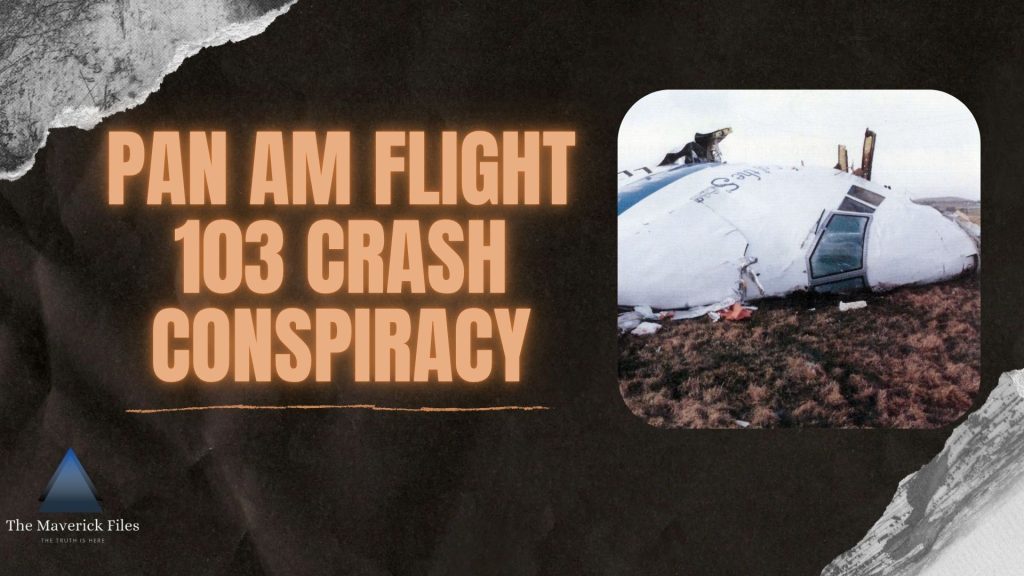
The Pan Am Flight 103 bombing remains one of the most haunting and controversial aviation disasters in modern history, not only because of the scale of the tragedy, but because of the layers of unanswered questions and competing narratives that have persisted for decades. On December 21st, 1988, Pan Am Flight 103, a Boeing 747 traveling from London to New York, exploded midair over Lockerbie, Scotland, killing all 259 people on board and 11 residents on the ground. Officially, the disaster was caused by a bomb concealed in a suitcase in the aircraft’s cargo hold, an act of terrorism that quickly became entangled in the geopolitical tensions of the late Cold War.
The investigation that followed was one of the most extensive in history. Led by Scottish authorities with assistance from the Federal Bureau of Investigation (FBI) and the Central Intelligence Agency(CIA), it eventually pointed toward Libyan involvement. The case centered on Abdelbaset al-Megrahi, head of security for Libyan Arab Airlines, director of the Centre for Strategic Studies in Tripoli, Libya, and a Libyan intelligence officer, who was accused of orchestrating the attack. After years of diplomatic standoff, Libya handed over two suspects in 1999. In 2001, Megrahi was convicted by a special Scottish court, while his co-accused, Lamin Khalifah Fhimah, a former station manager for Libyan Arab Airlines at Luqa Airport, Malta, was acquitted on January 21st, 2001, in light of evidence that he was in Sweden at the time of the bombing and therefore could not have been a participant. Abdelbaset al-Megrahi was found guilty on January 31st, 2001, by unanimous decision of the court and sentenced to life imprisonment, but later released on compassionate grounds, having always maintained his innocence. Yet from the beginning, Megrahi’s conviction was controversial. Critics argued that the case relied heavily on circumstantial evidence, questionable witness testimony, and disputed forensic findings, particularly a fragment of a timer allegedly linking the bomb to Libyan intelligence.
These uncertainties opened the door to a wide range of alternative theories. One of the most persistent claims is that Libya was not the true perpetrator, but rather a convenient scapegoat for another country, like Iran. This theory often points to the earlier Iran Air Flight 655 shootdown, an international passenger flight from Tehran to Dubai via Bandar Abbas that was shot down on July 3rd, 1988, by two surface-to-air missiles fired by USS Vincennes, a United States Navy warship. The missiles hit the Iran Air aircraft, an Airbus A300, while it was flying its usual route over Iran’s territorial waters in the Persian Gulf, shortly after the flight departed its stopover location, Bandar Abbas International Airport. All 290 people on board were killed, making it one of the deadliest airliner shootdowns of all time. This was due to the U.S. Navy misidentifying Iran Air Flight 655 as an inbound attacking F14 aircraft. The U.S. government issued notes of regret for the casualties caused by this event, but never formally apologized or acknowledged wrongdoing. Instead, the U.S. agreed to pay $131.8 million in compensation to the Iranian government, including $61.8 million to the families of the victims.
It was this incident that made some believe the Lockerbie bombing was retaliation, allegedly carried out by the Popular Front for the Liberation of Palestine-General Command (PFLP-GC), a group led by Ahmed Jibril, a Palestinian militant and political leader, and believed by some to have ties to Iranian intelligence. Notably, German authorities had disrupted a PFLP-GC cell months before the bombing that was reportedly constructing barometric bombs similar to the one used on Pan Am 103. Early intelligence reportedly pointed strongly in this direction before the investigation shifted toward Libya, a transition that remains one of the most debated aspects of the case.
Another major line of speculation involves intelligence failures, or even foreknowledge. Reports have surfaced suggesting that warnings about a potential attack on a transatlantic flight circulated before December 21st, 1988. Some individuals reportedly changed travel plans after hearing such warnings, raising questions about whether certain agencies had advance knowledge but failed to act. This has led to more controversial claims involving covert operations like false flag operations.
One theory suggests that a secret drug trafficking pipeline may have been operating along the same route, potentially involving intelligence agencies. According to this narrative, certain luggage may have bypassed standard security checks, creating an opportunity for a bomb to be introduced, either deliberately or accidentally, into the system due to the security intentionally remaining lax so drugs and other contraband could easily pass through it. In this view, the disaster could represent a catastrophic failure of an intelligence operation, followed by a cover-up.
Geopolitics also plays a central role in many interpretations. At the time, Libya, under Muammar Gaddafi, was already viewed by Western governments as a sponsor of terrorism. Some argue that assigning blame to Libya served strategic purposes, allowing for sanctions, international pressure, and further isolation of Gaddafi’s regime. It’s not like the same tactics haven’t been used many times before in both past and present events to manipulate or topple regimes. Libya later accepted responsibility and paid compensation to victims’ families, but maintained that this was a political decision rather than a direct admission of guilt. I mean, the U.S. did the same shit with the Iranian plane they shot down. There is never any real accountability or repercussions for officials high up in any government, but for us civilians, we are held to a different standard and penalization. For many, this only deepened suspicion that the official narrative may have been shaped by broader political considerations.
The case took another dramatic turn on August 20th, 2009, when Megrahi was released from prison on compassionate grounds due to having terminal prostate cancer. He later died on May 20th, 2012. His release sparked global controversy and reignited debate over the integrity of his conviction. Appeals, independent investigations, and journalistic inquiries have continued to challenge key aspects of the case, with some observers describing it as a potential miscarriage of justice. Despite decades of scrutiny, no universally accepted alternative explanation has replaced the official account, but the official account isn’t exactly etched in stone either.
In more recent years, a new figure has emerged at the center of the investigation, Abu Agila Mohammad Mas’ud Kheir al-Marimi, a Tunisian-born Libyan former military and intelligence operative accused of being the bomb maker for Libyan intelligence, who constructed the explosive devices that destroyed Pan Am Flight 103. Unlike Megrahi, Mas’ud did not become publicly associated with the case until over three decades after the bombing. U.S. prosecutors charged him in December 2020 and arrested him in December 2022. He pled not guilty in February 2023, and his trial still hasn’t commenced yet, despite it being scheduled for May 2025. It was delayed by his lawyer to April 2026, which is this month. The case against him is largely based on statements he reportedly made while in Libyan custody following the fall of Gaddafi in 2011. From an official standpoint, Mas’ud’s alleged confession strengthens the case for Libyan responsibility and fills in gaps left by earlier investigations. However, his emergence has also sparked new skepticism. Critics question the reliability of statements made by him in a politically unstable, post-Gaddafi Libya, raising concerns about coercion or fabrication. Others argue that his prosecution may serve to reinforce the existing narrative at a time when it has been increasingly challenged. In conspiracy circles, Mas’ud is viewed either as the missing link that confirms the Libyan theory or as a figure introduced to solidify it. Time will tell.
Ultimately, the Pan Am Flight 103 bombing exists at the intersection of terrorism, intelligence operations, and global politics. While the official conclusion attributes the attack to Libyan operatives, the persistence of conflicting evidence, alternative suspects, and unresolved questions ensures that the full story remains deeply contested. Whether seen as a clear-cut act of state-sponsored terrorism or as a far more complex event shaped by hidden agendas and geopolitical maneuvering, the devastation caused by the bombing of Pan Am Flight 103, continues to stand as a powerful reminder of how truth, power, and narrative can become inseparably intertwined and distorted in the aftermath of tragedy by our own “trusted” officials. Please share your thoughts in the comment section. Be well.