By Maverick
The dot-com bubble and its dramatic collapse in 2000 is often explained as a classic case of speculative mania, irrational exuberance driven by hype around the internet. But beneath the surface, many observers argue that the dot-com bust wasn’t just a natural market correction; it may have been a coordinated unwinding of a deliberately inflated system, one that transferred enormous wealth while reshaping the power structure of the digital economy. To understand the conspiracy angle, you have to start with the environment of the late 1990s, when the rise of the internet created a gold rush mentality on the NASDAQ Composite, where tech startups, many with no profits, and sometimes no real products, were being valued in the billions prematurely.
During this period, venture capital firms, investment banks, and media outlets played a crucial role in fueling the hype. Companies could go public through IPOs and see their stock prices double or triple in a single day. IPOs or Initial Public Offerings are the process by which a private company raises capital by offering shares to the public for the first time, often transitioning to a publicly traded exchange to raise capital for growth, pay off debt, or provide exit options like liquidity to early investors. Investing in IPOs carries high risk due to potential lack of public history (making valuation difficult), high price volatility, and the “hype” around new listings.
The 2000 dot-com bust saw the collapse of heavily hyped firms and internet companies like Pets.com, Webvan, Boo.com, Kozmo.com, and eToys.com, driven by unsustainable business models and low profitability. Other notable companies that failed or were acquired included Go.com, TheGlobe.com, Netscape, and various telecom firms such as WorldCom, which crashed amid scandals. Companies that were affected but survived were Amazon, Yahoo!, Cisco Systems, and Intel, which all saw their stock prices tumble but eventually rebounded, and boy did they rebound.
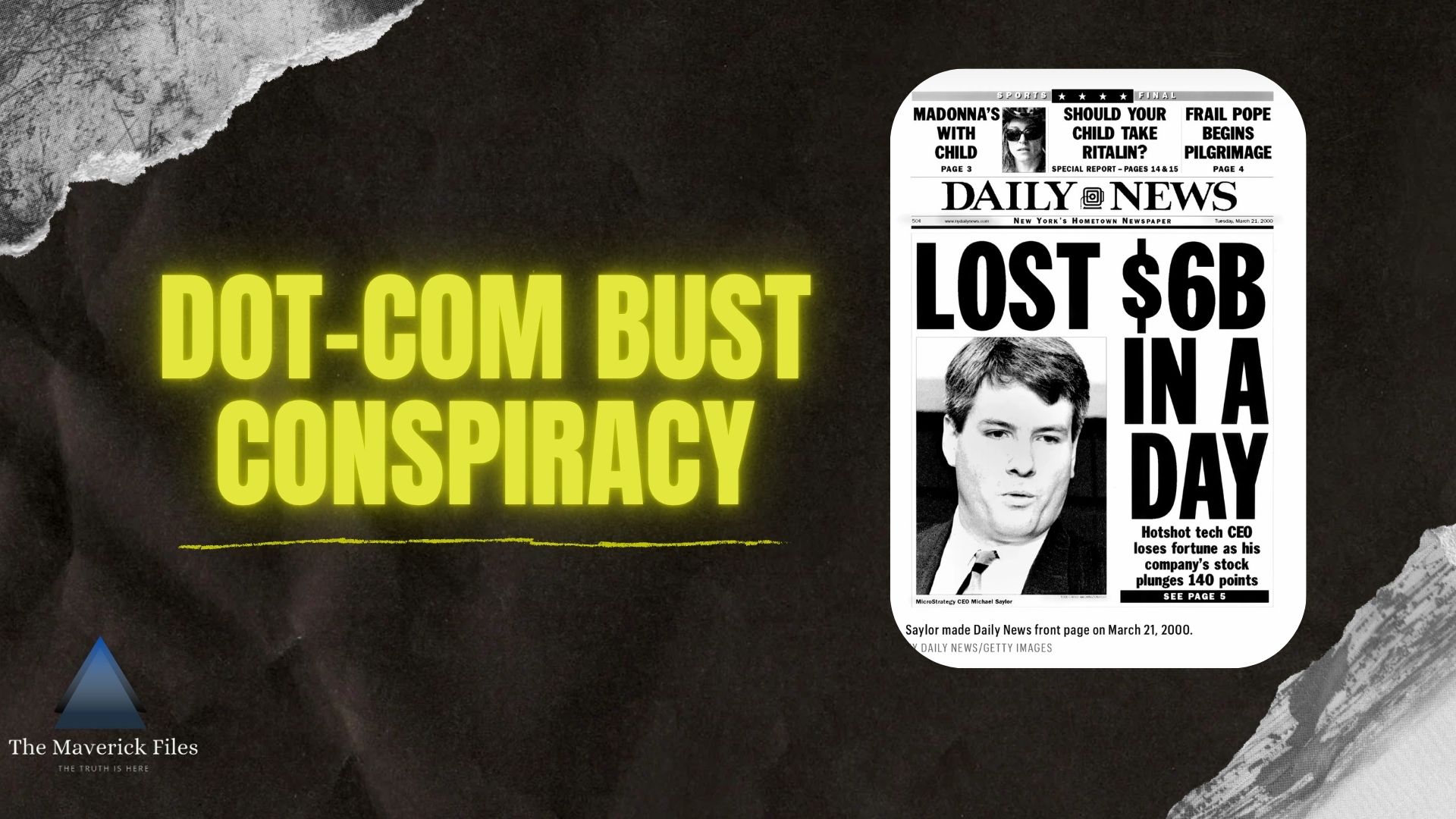
The market peak occurred on March 10th, 2000, with the NASDAQ dropping significantly soon after. The bubble bursting was largely caused by an overestimation of internet growth and too much venture capital going to companies with no real path to being lucrative. Many companies were forced to merge or were bought out for small fractions of their peak valuations.
Critics argue that insiders on Wall Street knew many of these companies were doomed from the start. Yet they continued to promote them, issuing glowing analyst reports and encouraging retail investors to pour money into the market, resulting in a nice way to fuck investors over. This raises a key question central to conspiracy theorists: Was the bubble allowed or even engineered to inflate to a breaking point so that insiders could cash out at the top? Seems the most plausible.
At the same time, the role of the Federal Reserve, led by Alan Greenspan at the time, comes under scrutiny. While Greenspan famously warned of “irrational exuberance” as early as 1996, the Fed maintained relatively loose monetary conditions during the late 1990s, which some argue helped fuel speculative investment. When the bubble began to show signs of instability, interest rate hikes and tightening liquidity may have accelerated the collapse. Conspiracy-minded analysts suggest this was not accidental, that monetary policy was used as a lever to trigger the downturn at a moment advantageous to large financial institutions.
The crash itself began in March 2000, when the NASDAQ peaked and then rapidly declined, ultimately losing nearly 80% of its value over the next two years. Trillions of dollars in market value were wiped out, and countless startups went bankrupt. But while retail investors suffered massive losses, many institutional players had already exited their positions, ergo, jumped the sinking ship. This has led to the belief that the bust was less a failure of the system and more a redistribution mechanism, one that transferred wealth from ordinary and rookie investors to those with inside access and timing. The idea is that the same entities that hyped the bubble were also positioned to profit from its collapse, either by short-selling or by reallocating capital into more stable assets. Short selling is an advanced trading strategy where an investor borrows shares of a stock they believe is overvalued, sells them at the current high price, and aims to buy them back later at a lower price to return to the lender, pocketing the difference as profit. It is a high-risk, speculative move used to profit from a stock price decline.
Another layer of the conspiracy involves the long-term strategic impact of the crash. After the dust settled, a handful of companies such as Amazon and eBay survived and eventually came to dominate the digital landscape. Some theorists argue that the bust effectively cleared out smaller competitors, allowing a new tech oligopoly to emerge. In this view, the crash wasn’t just about money; it was about the consolidation of power in the emerging internet economy, a digital monopolization. By wiping out weaker players, the market reset created conditions for a more controlled and centralized digital ecosystem.
There are also claims that regulatory bodies, including the Securities and Exchange Commission (SEC), failed to act on obvious signs of fraud and overvaluation. What a shocker! Whether due to incompetence, regulatory capture, or deliberate inaction, this lack of oversight allowed the bubble to grow unchecked. Some point to conflicts of interest within investment banks, where analysts were pressured to issue positive ratings on companies that were also clients of their firms. This blurred the line between objective analysis and marketing, further misleading investors.
In the end, the dot-com bust is officially remembered as a cautionary tale about speculation and market psychology. But from a conspiracy perspective, it represents something more calculated, a systemic event where information asymmetry, institutional power, and monetary policy intersected to produce a predictable outcome. Whether or not one believes the market was “rigged” in a deliberate sense, the patterns that emerged, insiders profiting, outsiders losing, and power becoming more concentrated, continue to fuel suspicion that what happened in 2000 was not merely a crash, but a controlled demolition of an overheated system designed to benefit those rich fucks at the top. It’s very similar to the 2008 financial crisis and every other financial crisis that we have ever had. Please share your thoughts in the comment section. Be well.