By Maverick
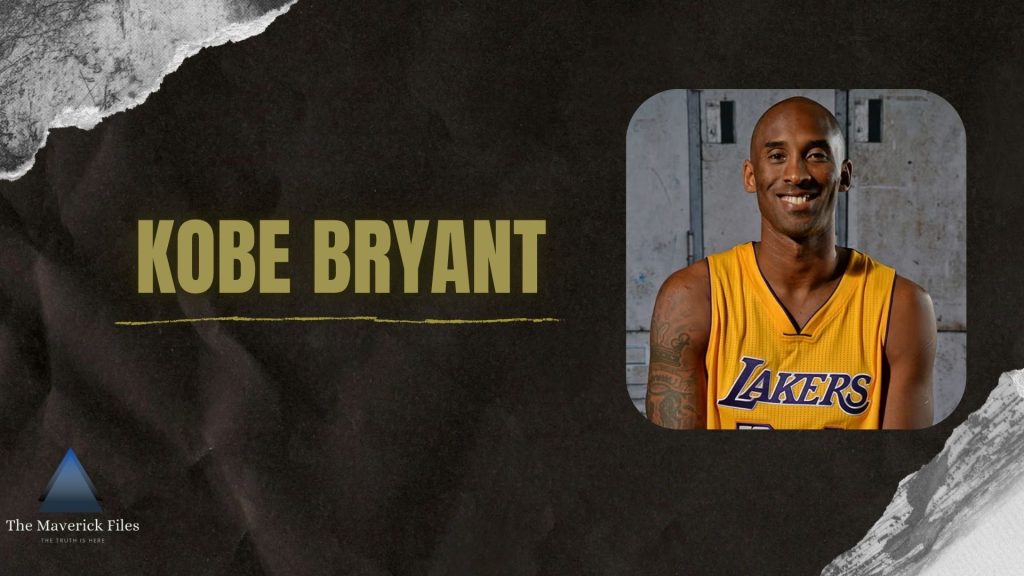
Kobe Bean Bryant was one of the most iconic and polarizing athletes of his generation, a global basketball superstar whose relentless work ethic, competitive intensity, and cultural influence extended far beyond the court. Born in Philadelphia, Pennsylvania, on August 23rd, 1978, Bryant was immersed in basketball from an early age, largely due to his father, former NBA player Joe Bryant. He spent part of his childhood in Italy, where his father played professionally, before returning to the United States and emerging as a high school phenom at Lower Merion High School. In 1996, Bryant made the rare leap directly from high school to the NBA, initially drafted by the Charlotte Hornets and immediately traded to the Los Angeles Lakers, the franchise where he would spend his entire 20-year career.
Bryant’s rise to fame was meteoric. By the early 2000s, he had become one of the league’s premier players, winning three consecutive NBA championships alongside Shaquille O’Neal. After their partnership ended, Bryant solidified his legacy by leading the Lakers to two more championships in 2009 and 2010. Known for his “Mamba Mentality”, a philosophy centered on discipline, resilience, and obsession with greatness, he became synonymous with clutch performances, including his legendary 81-point game in 2006. Off the court, Bryant built a brand that included business ventures, storytelling, and even an Academy Award for his animated short film Dear Basketball. By the time of his retirement in 2016, he was widely regarded as one of the greatest basketball players of all time.
On January 26th, 2020, Bryant died in a helicopter crash in Calabasas, California. He was 41 years old. The helicopter, a Sikorsky S-76, was traveling in dense fog when it crashed into a hillside, killing all nine people on board, including his 13-year-old daughter, Gianna Bryant. The official investigation by the National Transportation Safety Board concluded that the probable cause of the crash was pilot error, specifically spatial disorientation due to poor visibility. The pilot, Ara Zobayan, was flying under visual flight rules despite worsening weather conditions, which led to a loss of control. There was reportedly no evidence of mechanical failure, sabotage, or foul play. Kobe had flown with Ara for years and was his regular pilot, whom he trusted deeply, especially when it came to flying.
Despite the clear official findings, Bryant’s sudden and tragic death gave rise to a wave of conspiracy theories, many of which spread rapidly online. One of the most prominent theories suggests that Bryant was intentionally targeted or silenced. This idea is often tied to claims that he was involved in exposing corruption or planning major business moves that threatened powerful interests. Some versions of this theory allege that his success in the media and investment world, particularly his growing influence in storytelling, sports ownership ambitions, and youth development, may have put him at odds with unseen forces. However, there is no credible evidence that we know of, supporting any claim that Bryant was targeted or that the crash was anything other than a tragic accident.
Another widely circulated theory focuses on the timing and circumstances of the flight. Critics have questioned why the helicopter was allowed to take off in foggy conditions and why it was not equipped with certain advanced safety systems, such as terrain awareness warning systems (TAWS). While these concerns are grounded in real aviation safety discussions, they have been amplified into speculation that the flight should never have happened or that someone knowingly allowed unsafe conditions. In reality, the NTSB report addressed these issues, noting both the pilot’s decisions and the regulatory environment, but did not find evidence of intentional negligence or conspiracy.
One of the most discussed and contentious aspects of the conspiracy discourse is predictive programming. This theory suggests that elements of Bryant’s death were foreshadowed in the media before it happened. A commonly cited example is an episode of the animated show Legends of Chamberlain Heights, which featured a satirical scene involving a helicopter crash and a character resembling Bryant. Another frequently referenced piece is a commercial Bryant appeared in, where imagery involving helicopters and dark themes is retrospectively interpreted as symbolic. Some also point to older cartoons, video games, or social media posts that allegedly “predicted” a helicopter-related incident involving him.
Supporters of predictive programming theories argue that the media sometimes embeds symbolic subliminal previews of future events, either as inside jokes, coincidences, or more deliberate signals. Of course, skeptics and analysts generally attribute these connections to coincidence, selective interpretation, and hindsight bias. When a major event occurs, people often revisit past media and identify patterns that seem meaningful in retrospect, too much to be serendipitous.
There are also broader conspiracy narratives that place Bryant’s death within a larger pattern of high-profile figures dying in unexpected ways. These theories often connect unrelated events, suggesting systemic forces at play like the Illuminati. However, such narratives typically rely on circumstantial links rather than verifiable evidence, unfortunately, despite the anomalies that point to them. Aviation experts and investigators overwhelmingly agree that helicopter crashes, while rare, do occur under conditions similar to those present on the day of Bryant’s death, particularly when visibility is compromised. Why chance it, though? Ara Zobayan has held his commercial pilot’s license since 2007 and had 8,000 recorded hours of flying time, so unless arrogance, impatience, and appeasing Kobe got the better of him, I don’t see the reasoning behind it. The emotional impact of the tragedy also contributed to the spread of conspiracy theories. Bryant was not only a sports icon but a global figure whose influence spanned generations. The loss of his daughter Gianna and the other passengers added to the sense of collective grief and disbelief.
In the end, the official conclusion remains that Kobe Bryant died in a helicopter crash caused by pilot error in hazardous weather conditions. The conspiracy theories, ranging from targeted silencing to predictive programming, reflect broader patterns in how society processes sudden, high-profile tragedies. When a figure as influential as Bryant is lost unexpectedly, the human instinct to search for meaning can give rise to complex and often unfounded narratives. I do believe that isn’t always the case, and if something seems sketchy, why should anyone be deterred to look into it?
Kobe Bryant’s legacy, however, is firmly rooted in his achievements and influence. He was known for redefining dedication, inspiring countless athletes, and leaving a lasting imprint on basketball and global culture. While speculation may persist, what endures most powerfully is the memory of his impact on the game, on his fans, and on the generations he inspired to pursue greatness with relentless focus. Please share your thoughts in the comment section. Be well.