By Maverick
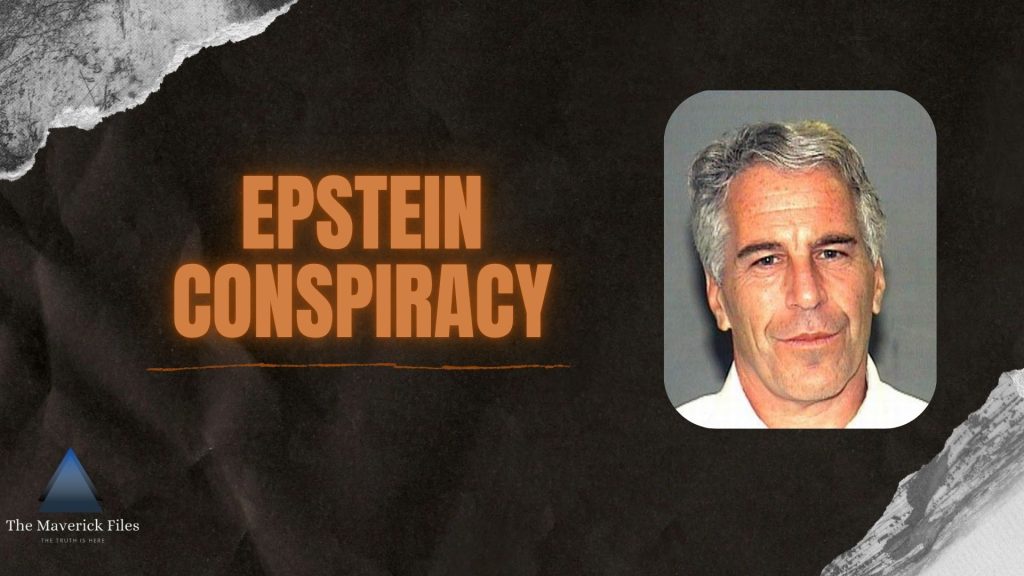
Few figures in modern history have generated as much suspicion, outrage, fascination, and conspiracy as Jeffrey Epstein. This was a man, well, hardly that, with no clear public business empire, no revolutionary invention, and no obvious source of immense wealth, yet Epstein somehow managed to surround himself with presidents, royalty, billionaires, scientists, celebrities, intelligence-connected figures, and some of the most powerful individuals on Earth.
For decades, he existed in a world where Wall Street financiers, political elites, Hollywood stars, Ivy League academics, and global power brokers all crossed paths. His private residences resembled museums and palaces. His private jet became known by critics as the “Lolita Express.” Epstein owned two private islands in the U.S. Virgin Islands: Little St. James (aka “Epstein Island”) and the neighboring Great St. James. Both islands are located in the Caribbean Sea near St. Thomas and served as a secluded compound where Epstein and his associates trafficked and sexually abused minors. His personal island in the Caribbean became the center of horrifying allegations involving the sexual exploitation of underage girls.
But who exactly was Jeffrey Epstein, and how did he gain access to the most powerful people in the world? That’s been the ruminating question running through people’s minds for decades.
Jeffrey Edward Epstein was born on January 20th, 1953, in the Brooklyn borough of New York City, to Jewish working-class parents. His father, Seymour Epstein, worked for the New York City Parks Department, and his mother, Pauline Epstein, was a school aide. The family lived in the Sea Gate neighborhood of Brooklyn, a private gated community that stood in contrast to the surrounding working-class environment.
From an early age, Epstein was described as intelligent and gifted in mathematics. He attended Lafayette High School and later enrolled at Cooper Union, an elite engineering and science school in Manhattan. He eventually transferred to New York University, where he studied mathematics and physics but never completed a degree. So despite lacking a college diploma, Epstein demonstrated an unusual ability to move into circles that normally required exceptional credentials.
In 1974, Epstein landed a job teaching mathematics and physics at the prestigious Dalton School in Manhattan, a private school attended by children of New York’s wealthiest families. This appointment was unusual because Dalton generally hired teachers with advanced academic backgrounds, yet Epstein’s charisma and confidence reportedly impressed school officials. It should also be known that former U.S. Attorney General Bill Barr’s father, Donald Barr, was the headmaster when he hired Epstein to teach math and physics, launching his career. Bill Barr was the AG under President Donald Trump’s first administration. Bill Barr also oversaw the Department of Justice during Epstein’s 2019 arrest, subsequent death, and so-called “investigations.” Do you see how the dots connect?
While teaching at Dalton, Epstein developed relationships with influential parents, including Alan “Ace” Greenberg, the chairman of the powerful Wall Street investment bank Bear Stearns. Greenberg saw “potential” in Epstein and offered him a job at Bear Stearns in 1976. The move transformed Epstein’s life.
Now at Bear Stearns, he quickly climbed the ladder by beginning as a junior assistant to an options trader and eventually worked in the firm’s special products division, dealing with wealthy clients and complex financial matters. Jeffrey Epstein left Bear Stearns in 1981 following an internal investigation into questionable trading practices. It was discovered that he had provided stock tips to a girlfriend for initial public offerings (IPOs) and made a personal loan to a classmate that may have breached federal brokerage rules. The Securities and Exchange Commission (SEC) also questioned Epstein regarding insider trading during this time. Following the investigation, Bear Stearns fined him $2,500 and placed him on a two-month suspension. Epstein denied the allegations, expressed offense at the firm’s handling of the situation, and chose to resign rather than accept the disciplinary action, which is astounding that he was still allowed to keep his job, not to mention his freedom, since no criminal charges were brought against him. He barely got a slap on the wrist and couldn’t leave it at that. That seemed to be a common issue throughout his life, always receiving the bare minimum repercussions from the justice system.
Following his departure, he took his knowledge of the financial world and Wall Street and started his own independent consulting firm, J. Epstein and Co. (later known as Intercontinental Assets Group), a firm that reportedly specialized in managing the finances of ultra-wealthy individuals. Despite the murky circumstances of his exit, Epstein maintained close relationships with top executives at Bear Stearns for decades. This is perhaps the most debated aspect of Epstein’s life. Unlike notable wealthy figures such as Bill Gates, Warren Buffett, or Elon Musk, whose fortunes were built through publicly visible companies, Epstein’s wealth appeared to emerge from private financial consulting.
He famously claimed that he only accepted clients worth over one billion dollars. However, investigators, journalists, and members of the public have long questioned how a relatively young former teacher and Wall Street employee accumulated enormous wealth and gained access to elite circles. Some theories suggest that Epstein possessed exceptional financial skills and provided sophisticated tax and wealth-planning services. In other words, he clearly knew his shit and was a master of his craft. Strange enough, he seemingly knew more about finance than his billionaire clients.
Others speculate that he may have leveraged compromising information on powerful individuals. Another long-standing conspiracy theory alleges possible connections to intelligence agencies such as the CIA, Mossad, or other intelligence organizations, suggesting he may have operated as part of a blackmail operation. As per the official record, no public evidence has conclusively proven that Epstein worked for any intelligence agency, and these allegations remain speculative at best. All the indicators point in that direction, though, based on Epstein’s ability to evade the law and actual punishment. Nevertheless, the lack of transparency surrounding his finances continues to be one of the biggest unanswered questions in the Epstein saga.
One of the most important relationships in Epstein’s rise was his connection to billionaire retail magnate Les Wexner, founder of L Brands, the parent company of Victoria’s Secret, Bath & Body Works, and other retail giants. By the mid-1980s, Epstein had become Wexner’s financial advisor and eventually gained extraordinary authority over his finances. In a highly unusual arrangement, Wexner granted Epstein power of attorney, giving him substantial control over many of his personal and financial affairs. If that isn’t peculiar as fuck, then I don’t know what is.
Epstein acquired an enormous Manhattan mansion at 9 East 71st Street, which was owned by Wexner before being transferred to Epstein. The mansion would later become one of the central locations investigated in connection with Epstein’s sex trafficking operation. Ironically, President Trump’s current Commerce Secretary and former CEO of Cantor Fitzgerald, Howard Lutnick, lived next door to Jeffrey Epstein. He was just one door down at 11 East 71st Street. Lutnick is a whole other story, but to encapsulate, he has stated that they lived next to one another for 14 years, but claimed he deliberately severed social ties in 2005 after an unsettling visit to Epstein’s home. However, recently released Epstein files and congressional testimonies have brought further scrutiny to their so-called “severed ties” since admitting that he was on Epstein’s island in 2012 with his wife and kids having lunch, nonetheless, years after he was convicted as a child predator sex offender.
Lutnick purchased the townhouse adjacent to Epstein’s in 1997, but strangely didn’t move in until around 2005 . He recounted a crude interaction in 2005 where Epstein gave him a house tour, pointed out a massage table, and made suggestive comments about daily massages. Lutnick claimed this “gross” comment made him and his wife vow never to socialize with Epstein again, and yet he did anyway. The unsealed Epstein files revealed over 100 mentions and email exchanges between him and Lutnick. Records showed they invested in a tech firm named Adfin together in 2012, and their communications continued through Epstein’s assistant as late as 2018.
It’s rather ironic that Epstein’s address number was 9 and Lutnick’s was 11. It should also be known that Lutnick miraculously survived the 9/11 attacks on the World Trade Center because he was dropping his son off for his first day of kindergarten at the Horace Mann School, even though the first day of school for most NYC schools was a week before. The global financial services firm and investment bank, Cantor Fitzgerald, had offices located on floors 101 to 105 of the World Trade Center’s North Tower, directly above the impact zone of the first plane crash. Because of his late arrival, Lutnick survived, but all 658 Cantor Fitzgerald employees who were in the office that morning were killed, including his younger brother, Gary, and his best friend Doug. A day after the attacks, Lutnick immediately cut off the paychecks of the 658 missing employees. This sparked heavy public outrage and anger from grieving families who felt abandoned and didn’t know if their loved ones were missing or deceased. Lutnick claimed that the firm was losing $1 million a day and would have gone bankrupt within days if it continued paying salaries to the deceased. What a great guy. To make amends, Lutnick pledged to give 25% of the firm’s profits for the next five years to the families of the victims. About $180 million went to the victims’ families and covered their healthcare costs for a decade. Years later, Lutnick also hired the children of employees who perished in the attacks.
Let’s get back to Les Wexner for a second. Wexner stated that Epstein had misappropriated large amounts of his money and that he severed ties with him in the mid-2000s. For many researchers and journalists, the Wexner relationship remains one of the most significant turning points in understanding how Epstein transformed from a little-known financial consultant into a man with private planes, multiple mansions, and global influence.
In the early 1990s, Epstein entered into a relationship with Ghislaine Maxwell, a British socialite who would become his closest associate for decades. Maxwell was the daughter of Robert Maxwell, a larger-than-life media tycoon who built an international publishing empire. Robert Maxwell owned newspapers and publishing companies around the world and was known as one of Britain’s most powerful media figures. His empire collapsed amid a massive financial scandal. In 1991, Robert Maxwell was found dead floating in the Atlantic Ocean near his luxury yacht, the Lady Ghislaine, near the Canary Islands. The official ruling was death by accidental drowning after suffering a heart attack.
However, Maxwell’s death immediately generated conspiracy theories. Some believed he had been murdered due to his business dealings. Others suggested possible intelligence connections, particularly allegations involving the Israeli intelligence agency Mossad. After his death, investigations revealed that Maxwell had fraudulently stolen hundreds of millions of pounds from his companies’ pension funds. The combination of his mysterious death, financial crimes, and alleged intelligence ties created decades of speculation. No definitive evidence has proven that Robert Maxwell was murdered or that his death was anything other than an accident.
After her father’s death and the collapse of the Maxwell empire, Ghislaine Maxwell moved to New York, where she entered elite social circles and eventually met Jeffrey Epstein. Their relationship became both personal and professional. Over the following years, prosecutors would later allege that Maxwell played a critical role in recruiting, grooming, and facilitating underage girls for Epstein’s sexual abuse.
Witnesses alleged that Maxwell would approach vulnerable young women, gain their trust, normalize inappropriate behavior, and bring them into Epstein’s world. In 2021, Maxwell was convicted in federal court on sex trafficking and conspiracy charges related to her role in Epstein’s abuse network and was later sentenced to 20 years in prison. The Epstein-Maxwell partnership would become one of the most notorious criminal alliances in modern history.
By the early 1990s, Jeffrey Epstein had become far more than a wealthy, financier college dropout from Brooklyn. Whether through extraordinary networking ability, financial consulting, or other still-debated means, he had successfully inserted himself into some of the most exclusive social circles in the world with access to presidents, princes, billionaires, scientists, and celebrities. Mother fucker was living the American dream, alright, and then some. His homes in Manhattan, Palm Beach, New Mexico, Paris, and the U.S. Virgin Islands became gathering places for these rich elites. To many people looking from the outside, Epstein seemed to know everyone who mattered.
Among the most well-known figures associated with Epstein was Donald Trump. During the 1980s and 1990s, the two men were frequently seen together at parties and social events in Palm Beach and New York. Numerous photographs and videos document them attending gatherings together, often surrounded by young women. In a 2002 interview with New York magazine, Trump described Epstein as a “terrific guy” and remarked that Epstein liked beautiful women just like he claimed to, especially “on the younger side.” After Epstein’s legal troubles became public, however, Trump stated that he had not spoken to Epstein in many years and said they had experienced a falling out. Several reports have suggested the relationship ended after a dispute involving access to the exclusive Mar-a-Lago club or a real estate disagreement, although the precise reason remains disputed.
Trump has stated in recent years that his falling out with Jeffrey Epstein occurred because Epstein repeatedly “stole” and poached young women who worked at the spa at Trump’s Mar-a-Lago resort. Trump publicly acknowledged that Virginia Giuffre, one of Epstein’s most prominent sex trafficking accusers, was among the workers Epstein recruited. Trump told reporters that he explicitly warned Epstein not to hire or take his employees. When Epstein did it again, Trump banned him from Mar-a-Lago. In a 2016 deposition, Giuffre stated that she worked at the Mar-a-Lago spa during the summer of 2000 as a teenager, so it corroborates what Trump was claiming Epstein was doing. Giuffre alleged that Ghislaine Maxwell recruited her from the resort to work for Epstein. To date, no court has found Trump criminally liable in connection with Epstein’s trafficking operation, and Trump has denied wrongdoing, despite his name being mentioned over 38,000 times in the Epstein files released so far.
Flight logs released by the Department of Justice (DOJ) and entered as evidence in the Ghislaine Maxwell trial show that Donald Trump flew on Jeffrey Epstein’s private planes at least seven to eight times in the mid-1990s. Trump’s children, Eric and Tiffany, were passengers on some of these flights, too. The logs show four trips in 1993, a May 15th, 1994 flight on a smaller Epstein-owned jet included Trump, his then-wife Marla, infant daughter Tiffany, and a nanny. There was another trip on August 13th, 1995, where Trump traveled with his son Eric, alongside Epstein and Maxwell, from Palm Beach to New Jersey. The majority of the listed flights took place between Palm Beach, Florida, and Teterboro, New Jersey.
Former President Bill Clinton also became one of Epstein’s most scrutinized associates. Flight logs from Epstein’s private aircraft show that Clinton flew on several trips with Epstein during the early 2000s, some of which were connected to “humanitarian work” for the Clinton Foundation. Funny how all these notable figures wanted to associate with Epstein in some way. Clinton acknowledged knowing Epstein and confirmed that he had flown on Epstein’s plane but stated that every trip was related to charitable initiatives and that he was unaware of Epstein’s criminal conduct. Yeah, we’ve heard that load of bullshit a lot, that no one had any idea of his intentions and what he was doing behind the scenes. Why would anyone believe Clinton has to say? Mr. “I did not have sexual relations with that woman.” We’ve heard that same song before, and he was caught with his pants down, literally. Of course, Slick Willie consistently denied ever visiting Epstein’s private island and has denied any involvement in or knowledge of sexual abuse. Hillary Clinton also denied being connected to Epstein or Ghislaine Maxwell, even though she was literally a plus one guest at their daughter, Chelsea’s, wedding in July, 2010. Ghislaine was supposedly dating tech billionaire and Clinton Foundation donor Ted Waitt. What a coinkydink.
Epstein’s connections extended out east to the royal family, more specifically, Prince Andrew, Duke of York. The prince became acquainted with Epstein through Ghislaine Maxwell during the late 1990s. Numerous photographs documented Prince Andrew spending time with Epstein at various locations, including Epstein’s Manhattan townhouse around 2010. One widely circulated image showed Prince Andrew with his arm around seventeen-year-old Virginia Giuffre while Maxwell stood smiling in the background. Giuffre later alleged that she had been trafficked by Epstein and Maxwell and forced to have sexual encounters with Prince Andrew on multiple occasions. Prince Andrew categorically denied the allegations, including in a widely criticized 2019 BBC Newsnight interview in which he offered explanations that many viewers found implausible because the piece of trash couldn’t lie if his life depended on it. It was even suggested that the photo might be doctored. Total and complete hogwash. In 2022, Prince Andrew reached an out-of-court settlement with Giuffre without admitting liability or wrongdoing. That’s evidence of guilt in my book. Just because it isn’t on the record doesn’t make it so. The settlement ended the civil lawsuit but did not resolve the public debate surrounding the allegations, and it shouldn’t. He’s beyond guilty, and we don’t need investigators or cunning lawyers to try to spin the story to cover up his heinous crimes.
Epstein’s social network also extended well beyond politics. He cultivated relationships with Nobel Prize-winning scientists, university professors, technology entrepreneurs, venture capitalists, Wall Street executives, prominent attorneys, media figures, and Hollywood celebrities. He donated money to scientific research, hosted intellectual gatherings at his Manhattan mansion, and positioned himself as a patron of academia. Among those who attended dinners or meetings with Epstein were leaders in artificial intelligence, genetics, evolutionary biology, and theoretical physics. Some participants later stated they had no knowledge of Epstein’s criminal conduct at the time, while others expressed regret for maintaining contact with him after his 2008 conviction. It still raises the question of how one man with such a murky financial background managed to gain extraordinary credibility among some of the world’s most accomplished individuals.
While Epstein was cultivating friendships with the global elite, prosecutors later alleged that an entirely different operation was unfolding behind the walls of his luxurious properties. According to federal indictments, police investigations, and testimony from dozens of women, Epstein developed what authorities described as a sophisticated system for recruiting underage girls. The alleged operation frequently began with promises of money for giving Epstein massages. Recruiters, many of whom prosecutors said had themselves previously been victimized, would approach girls at shopping malls, schools, neighborhoods, or through friends. The offers often seemed simple: earn a few hundred dollars for a massage at one of Epstein’s mansions. For many teenagers from financially struggling families, the opportunity appeared harmless.
According to victim testimony presented in court, the massages allegedly became progressively more sexual. Several women stated that Epstein would expose himself, ask them to touch him, or initiate sexual acts. Those who complied were allegedly offered additional money and encouraged to bring other girls in exchange for recruitment payments. Prosecutors argued that this referral system functioned much like a pyramid, allowing Epstein’s network to expand rapidly. The recruitment strategy allegedly relied on trust between friends, making it easier to lure new victims who otherwise would never have entered Epstein’s world.
Federal prosecutors later alleged that Ghislaine Maxwell played a central role in this operation. Witnesses testified that Maxwell often helped normalize the environment for young girls, introduced them to Epstein, discussed sexual topics, purchased clothing for some victims, scheduled appointments, and occasionally participated in abuse herself. Maxwell denied the allegations throughout her trial, arguing that prosecutors had unfairly scapegoated her for Epstein’s crimes. Nevertheless, after hearing weeks of testimony from victims and reviewing documentary evidence, a federal jury convicted Maxwell in December 2021 on multiple counts related to sex trafficking and conspiracy, so her pleading her so-called innocence was ultimately futile.
One of the most haunting aspects of the Epstein story is that warnings reportedly emerged years before his crimes became national headlines. Among the earliest publicly discussed allegations was the account of Maria Farmer. In 1996, Farmer, then a young artist working for Epstein, later alleged that Epstein sexually assaulted her and that Maxwell also behaved in a threatening manner. Farmer first reported Jeffrey Epstein to law enforcement on August 29th, 1996, and her corresponding official report to the FBI was filed on September 3rd, 1996. She actually first contacted the New York Police Department (NYPD) Sixth Precinct to report sexual assault, child abuse allegations, and a threat from Epstein to burn her house down. The NYPD handled the local threat but explicitly instructed her to report the broader crimes to the FBI. Maria called the FBI at least twice. During one of those calls, an agent abruptly hung up on her while she was mid-sentence, and federal law enforcement initially failed to follow up on her tips. By September 3rd, an official handwritten FBI complaint form (an FD-71 report) was logged and stamped. The case was categorized under “child pornography” and detailed how Epstein stole photographs of her underage sisters and threatened her.
The exact reasons why the FBI failed to follow up on Maria Farmer’s 1996 complaint remain unclear and are the subject of ongoing federal lawsuits and a congressional investigation, even after nearly 3 decades have passed. Total fucking clown show. The bureau took no investigative action for nearly a decade, and agents didn’t bother to formally interview Farmer, her sister Annie, or any of the other potential victims she identified. The FBI claimed they had other priorities to deal with than something of this nature. And you wonder why hardly anyone trusts the government anymore. These are our tax dollars being allocated to fund these corrupt and inept federal institutions. These agents should’ve been fired or charged for not doing their damn job. Period. Instead, we get numerous excuses, and we’re supposed to just accept it all at face value and understand.
Congressional lawmakers have raised questions about whether Epstein’s vast wealth and high-level political connections allowed him to evade law enforcement scrutiny during the 1990s. It makes a lot of sense if you think about it. The agent didn’t even let Maria explain the full situation before abruptly hanging up on her. Lawsuits suggest the scale of the institutional failure hints that a cover-up or purposeful avoidance may have taken place to shield high-profile individuals, Epstein included.
The FBI had hiddenly possessed Maria’s original FD-71 complaint form for nearly 30 years without acknowledging its existence, and several formal efforts have been launched to force the government to explain its inaction. The House Committee on Oversight and Accountability formally demanded that the DOJ Inspector General investigate the FBI’s failure to act on Farmer’s early warnings. Farmer and multiple other survivors filed active lawsuits under the Federal Tort Claims Act, alleging that the FBI’s gross negligence directly enabled Epstein to run his sex-trafficking ring unimpeded for an additional two decades. The existence of Farmer’s 1996 report was officially verified by the public when the U.S. Department of Justice released redacted investigative documents under the Epstein Files Transparency Act in 2025/2026. These records confirmed that Farmer provided the first criminal complaint against Epstein nearly a decade before state or federal law enforcement opened a formal investigation into him.
Throughout the late 1990s and early 2000s, prosecutors allege that the operation continued largely uninterrupted. No fucking shit. He was off the radar of many federal institutions, and that wasn’t by accident. Epstein’s Palm Beach mansion became a central location in later criminal investigations. Victims described arriving throughout the day, often entering through side doors or service entrances. House staff allegedly maintained schedules, while drivers transported girls to and from the property. Many victims later testified that they initially believed they were participating in legitimate massage appointments before discovering the true nature of Epstein’s intentions.
By the early 2000s, rumors about Epstein’s conduct had become increasingly difficult to ignore within Palm Beach society. Parents reportedly warned one another about him. Local residents questioned the constant flow of teenage girls visiting his mansion. He was pushing his luck too far. Some employees allegedly observed behavior they considered deeply troubling. Yet despite growing whispers, Epstein continued moving comfortably within elite social circles, attending lavish parties and maintaining friendships with influential individuals whose reputations often overshadowed the concerns being raised by young women with little social or financial power.
A major breakthrough finally came in 2005 when the parents of a fourteen-year-old girl contacted the Palm Beach Police Department after their daughter disclosed that she had been paid to give Epstein a massage. Detective Joseph Recarey launched what would become one of the most extensive investigations in the department’s history. As detectives interviewed additional witnesses, they uncovered accounts from dozens of girls describing remarkably similar experiences. The consistency of these stories led investigators to believe they were dealing not with isolated misconduct but with an organized pattern of exploitation involving numerous victims over many years.
Police ultimately recommended serious felony charges and assembled thousands of pages of evidence. Yet what happened next would become one of the most controversial chapters in modern American criminal justice. As prosecutors, defense attorneys, and federal officials negotiated behind closed doors, questions began to emerge about whether Epstein’s immense wealth, political connections, and legal team would once again shield him from facing the full consequences of the allegations. The outcome of those negotiations, the infamous 2007–2008 non-prosecution agreement, would spark outrage among victims, legal scholars, and members of Congress, setting the stage for one of the most controversial plea deals in American history.
Epstein assembled an elite legal team that included some of the country’s most prominent defense attorneys. Behind closed doors, negotiations began between Epstein’s lawyers and federal prosecutors led by then-U.S. Attorney Alexander Acosta, who later became Trump’s Labor Secretary in his first term. Rather than pursuing a sweeping federal prosecution, prosecutors reached what became known as the Non-Prosecution Agreement, commonly referred to as the “sweetheart deal.” Under the agreement, federal prosecutors agreed not to bring federal sex trafficking charges against Epstein. In exchange, Epstein pleaded guilty in Florida state court in 2008 to two relatively limited prostitution-related offenses involving minors.
The plea agreement drew immediate criticism because of the extraordinary concessions Epstein received. He was sentenced to eighteen months in the Palm Beach County jail, but ultimately served approximately thirteen months before being released. Even during his incarceration, Epstein was granted an unusually generous work-release arrangement. Six days a week, he was permitted to leave jail for up to twelve hours to work from his private office, returning only to sleep in custody. Some punishment, right? Reports later revealed that he frequently met visitors during these hours. Critics questioned how a convicted sex offender could receive privileges that appeared unavailable to ordinary inmates serving similar sentences. It’s like how could anyone continue to invest blind trust and faith into this blatantly failing system?
Perhaps even more controversial was the cherry on top, a provision of the Non-Prosecution Agreement that granted immunity from federal prosecution to potential co-conspirators. Victims later argued they had not been informed of the agreement before it was finalized, despite federal law requiring prosecutors to consult crime victims. Years later, a federal judge ruled that prosecutors had violated the victims’ rights by secretly negotiating the agreement without notifying them. Although that ruling criticized the government’s conduct, the plea agreement itself remained in place. How the fuck is that not proof that the system was clearly blanketing Epstein?
Following his release, Epstein was required to register as a sex offender, like that even fucking mattered. Many observers assumed his criminal career had effectively ended. Instead, investigative journalists continued digging into the case. In late 2018, the Miami Herald published Julie K. Brown’s groundbreaking investigative series, “Perversion of Justice.” Drawing upon court records, interviews, and previously overlooked evidence, the reporting reconstructed how Epstein had secured his unusually favorable plea deal and highlighted numerous women who said they had never truly received justice. The series generated enormous public outrage and renewed pressure on federal authorities to reopen the investigation.
On July 6th, 2019, federal prosecutors in New York arrested Epstein after his private jet landed at Teterboro Airport in New Jersey. The indictment charged him with sex trafficking of minors and conspiracy to commit sex trafficking, alleging that he had abused dozens of underage girls between approximately 2002 and 2005 in New York and Florida, which barely scratches the surface in terms of the timeframe, and God only knows how many. During searches of his Manhattan townhouse, investigators reportedly recovered large quantities of photographs, compact discs, cash, diamonds, and other evidence that prosecutors believed was relevant to the investigation. This time, the federal government appeared “determined” to pursue a much broader case than the one that had ended with the 2008 plea agreement. This was also Trump’s DOJ at play here during his first term as President.
Epstein initially sought release on bail, proposing that he remain under house arrest in his Manhattan mansion while awaiting trial. Prosecutors opposed the request, arguing that his immense wealth, multiple passports, private aircraft, and extensive international connections made him an extraordinary flight risk. A federal judge denied bail, ordering Epstein detained at the Metropolitan Correctional Center in Manhattan, a federal jail already criticized for overcrowding and staffing shortages.
Only weeks into his detention, Epstein was found injured in his cell with marks around his neck. Reports differed regarding what had occurred. Some accounts suggested a suicide attempt, while others raised the possibility of an assault by his cellmate. Officials did not publicly determine the exact cause of the injuries. As a precaution, Epstein was placed on suicide watch for several days before eventually being removed after mental health evaluations.
On the morning of August 10th, 2019, correctional officers found Epstein unresponsive in his cell. He was transported to a nearby hospital, where he was pronounced dead. The New York City Office of the Chief Medical Examiner concluded that Epstein died by suicide by hanging. The U.S. Department of Justice Inspector General later conducted an extensive investigation into the circumstances surrounding his death and likewise concluded that the available evidence supported suicide while documenting numerous failures by Bureau of Prisons personnel.
Even before the official findings were released, Epstein’s death ignited one of the most widespread conspiracy debates in recent history. The timing alone fueled public suspicion. Epstein had not yet stood trial. Many believed he possessed information capable of implicating powerful individuals. His death, therefore, eliminated the possibility of a public criminal trial during which additional evidence and testimony might have emerged.
Much of the public skepticism centered not on direct evidence of homicide but on the remarkable number of procedural failures surrounding the night of Epstein’s death. Investigators determined that two correctional officers assigned to monitor Epstein had fallen asleep for substantial portions of their shift, failed to conduct required inmate checks approximately every thirty minutes, and later falsified records indicating they had completed those rounds. Both officers were charged federally with making false records, though prosecutors eventually dismissed the charges after the officers fulfilled deferred prosecution agreements involving community service and cooperation.
It gets even better than that. Additional scrutiny focused on surveillance footage from the jail. Early reports generated widespread confusion after prosecutors disclosed that one video recording from outside the housing area contained a gap because of technical issues. That announcement led to extensive online speculation that crucial evidence had disappeared. Subsequent investigations concluded that the missing footage did not come from inside Epstein’s cell itself, that there was no camera inside the cell, but questions about equipment failures and recordkeeping contributed to public distrust. For many observers, these administrative failures reinforced the perception that the Bureau of Prisons had catastrophically failed in its responsibility to safeguard one of the highest-profile inmates in the country.
The medical evidence also became a subject of intense debate. Dr. Barbara Sampson, New York City’s Chief Medical Examiner, ruled the manner of death a suicide. However, forensic pathologist Dr. Michael Baden, who had been retained by Epstein’s brother, Mark Epstein, observed the autopsy and later stated publicly that he believed certain injuries, including fractures involving the hyoid bone and other structures in the neck, were, in his opinion, more consistent with homicidal strangulation than suicidal hanging. Other forensic pathologists strongly disagreed, noting that fractures of the hyoid bone and thyroid cartilage can occur in suicidal hangings, particularly among older adults. To date, no official investigation has concluded that Epstein was murdered, and the Department of Justice has maintained that the evidence supports suicide. Nevertheless, Baden’s differing opinion remains frequently cited by those who question the official findings. Mark Epstein has consistently argued that he does not believe his brother died by suicide, citing what he views as inconsistencies in the evidence and shortcomings in the government’s investigation. His skepticism has been echoed by many members of the public, although no conclusive evidence establishing homicide has emerged.
Epstein’s death did not end public demands for accountability. Instead, attention shifted toward identifying others who may have participated in or facilitated his crimes. Court records, flight logs, address books, deposition transcripts, and investigative files were gradually unsealed over the following years. Public discussion is increasingly centered on the so-called “Epstein list,” a phrase widely used online but often misunderstood. In reality, there is no single official “client list.” The released records include names of people who flew on Epstein’s aircraft, appeared in contact books, attended social events, worked for him, or were mentioned in witness testimony. Inclusion in those records does not by itself establish criminal conduct as per how the system works, yet public interest remained intense because of Epstein’s extensive network of high-profile acquaintances, which also included Hollywood celebrities. Many suspected his associates of being involved in his sex trafficking network. Don’t even get me started on Trump’s DOJ in his now second term, that completely whitewashed everything and revealed nothing burgers.
By the time the 2024 presidential campaign began, demands for the release of the so-called “Epstein files” had become one of the most unusual bipartisan issues in modern American politics. Throughout the 2024 election cycle, numerous prominent Republicans publicly supported releasing additional Epstein records. Donald Trump himself stated during interviews that he would consider releasing more Epstein-related files if elected, although his comments varied in their degree of commitment. During a September 2024 interview with Lex Fridman, Trump stated that he would “take a look” at releasing additional Epstein files and suggested he would have “no problem” reviewing their release. Other figures in Trump’s political orbit were considerably more forceful. Vice President-elect J.D. Vance publicly supported releasing the files, arguing that Americans deserved to know the truth about who may have been involved with Epstein’s criminal network. Future FBI Director Kash Patel repeatedly argued that transparency was necessary and suggested that the American people had been denied important information for too long. Conservative commentator and future FBI Deputy Director Dan Bongino similarly advocated for the release of Epstein-related materials and frequently discussed the case on his media platforms. To many supporters, these statements created an expectation that a second Trump administration would finally reveal the full scope of the Epstein investigation. Of course, in the end, we all know that they concluded that Epstein committed suicide and that there was never a client list of co-conspirators. In other words, they all simply backpedaled and proved to be untrustworthy lying sacks of shit.
Among many Republicans and Trump supporters, a common argument emerged regarding allegations against Trump himself. Their reasoning was straightforward: if Donald Trump had participated in Epstein’s criminal conduct, then President Biden’s Department of Justice, which had prosecuted Trump in multiple other cases, would have released evidence of that involvement or pursued criminal charges. Supporters argued that the absence of such charges served as evidence that Trump was not implicated in Epstein’s crimes. Critics countered that the absence of charges against any particular individual does not necessarily prove innocence, while others noted that criminal prosecutions require evidence meeting a very high legal standard.
Nevertheless, this argument became one of the central talking points among conservatives defending Trump from allegations arising from his documented social relationship with Epstein during the 1980s and 1990s. There was nothing to release on Trump because if there was, Trump and his cronies would’ve had ample opportunity to discard all evidence before and during his first term as President. Like the late comedian George Carlin used to say, “It’s a big club and you ain’t in it.” That’s indicative that the elites protect each other despite differing political parties. Bush, Obama, and Biden all serve the same puppet masters as Trump and Epstein. They’re all aligned with the cabal. That’s why there hasn’t been anything released on Trump’s guilt, despite his name being plastered all over the files, and even Epstein himself once said that Trump will always tell you what you want to hear.
It was revealed in the Epstein files that in 2003, for Epstein’s 50th birthday, Trump wrote him a card that featured a hand-drawn outline of a curvaceous woman and a message that read “Enigmas never age, We have certain things in common, and Happy Birthday — and may every day be another wonderful secret.” Trump, of course, denied writing and sending it, but it was verified to be an authentic letter. Trump filed a $10 billion defamation lawsuit against the Wall Street Journal, its parent company News Corp., and Rupert Murdoch. In April 2026, a federal judge dismissed the original lawsuit, finding that Trump’s legal team had not adequately demonstrated “actual malice” as required in a defamation case. A month later, Trump’s legal team refiled the $10 billion lawsuit in the U.S. District Court for the Southern District of Florida, submitting an amended complaint to meet the necessary legal standards.
After Trump’s inauguration in January 2025, expectations among supporters grew rapidly. Then, on February 21st, 2025, newly appointed Attorney General Pam Bondi made what would become one of the most controversial statements in the entire Epstein saga. During an appearance on Fox News, Bondi was asked whether the Department of Justice would release the Epstein client list. Her response electrified the public: “It’s sitting on my desk right now to review.” Bondi further stated that reviewing the Epstein files had been a directive from President Trump. Within hours, social media erupted with speculation that explosive revelations were imminent. Millions of Americans believed that decades of questions about Epstein’s network might finally be answered.
What followed, however, only deepened public suspicion. The initial release of Epstein documents in February 2025 contained little new information and largely consisted of previously known material. Bondi herself later expressed frustration, stating publicly that she believed there had to be additional records that had not been provided to her office. Reports subsequently emerged describing disputes within the FBI and Department of Justice over the scope and handling of Epstein-related records. Critics argued that the government had overpromised and underdelivered, while supporters of the administration argued that bureaucratic resistance within federal agencies was slowing the process.
As the months passed, public frustration grew. One of the most frequently asked questions remained remarkably simple: if Epstein trafficked dozens of underage girls over decades while associating with some of the world’s most powerful people, why had so few individuals besides Epstein and Ghislaine Maxwell ever been criminally prosecuted? To many observers, the lack of additional arrests became one of the strongest arguments that important information was still being withheld. Federal prosecutors repeatedly responded that association with Epstein, flying on his plane, appearing in his address book, or attending his social events did not itself establish criminal conduct and that prosecutions require evidence proving individual crimes beyond a reasonable doubt. Nevertheless, many Americans remained unconvinced. They believed Epstein had blackmail tapes on these alleged co-conspirators. Whatever paper trail may have existed on co-conspirators is either being hidden or has been destroyed.
In November 2025, after months of political pressure from both parties, President Trump signed legislation requiring broader disclosure of Epstein-related records, often referred to publicly as the Epstein Files Transparency Act. The law mandated that the Department of Justice release additional unclassified records while protecting legitimate privacy interests, grand jury secrecy rules, and the identities of victims. Critics, however, argued that the legislation contained numerous exceptions that could permit agencies to continue withholding substantial amounts of information. When the Department of Justice failed to meet portions of the law’s deadlines after 30 days, lawsuits followed, and federal judges eventually ordered the government either to release additional materials or explain precisely why they remained withheld. To this day, not much more has come of this.
The handling of the releases generated further controversy because of the nature of the redactions themselves. Critics argued that some documents appeared to heavily redact names of alleged perpetrators or investigative subjects while information about victims had, in some cases, already become publicly known through litigation and media reporting. Government officials responded that redactions were necessary to protect privacy rights, preserve ongoing investigations, and avoid publishing unverified allegations against individuals who had never been charged with crimes. Yet the priority to protect victims was absent here since their names weren’t redacted initially. The dispute fueled a growing belief among some Americans that powerful people continued to receive special treatment.
By mid-2025, tensions surrounding the issue had become increasingly visible within Trump’s own political coalition. During a press exchange in July 2025, Trump appeared visibly irritated when asked about Epstein, responding, “Are you still talking about Jeffrey Epstein? This guy’s been talked about for years. Are people still talking about this creep?” He further suggested that the country’s attention should be focused on other issues. The comments generated immediate controversy because they contrasted sharply with months of public promises and expectations surrounding the release of Epstein records. Critics accused Trump of attempting to distance himself from an issue he had previously supported, while supporters argued. They even went as far as to suggest that he was covering up his own potential crimes.
The continuing controversy over the Epstein files became even more complicated after reports emerged that the Department of Justice had concluded that no single organized “client list” existed in the form many people had imagined. Officials argued that the public had conflated flight logs, address books, contact lists, witness testimony, photographs, financial records, and investigative files into the idea of a master document identifying criminal participants. For many members of the public, however, this explanation only increased suspicion. If there was no official client list, they asked, then what exactly had Pam Bondi been referring to when she said it was sitting on her desk? She said she meant the files were on her desk, not a single client list. Perhaps she should’ve chosen her words more carefully, or she was straight-up lying. Many believe the latter.
Beyond the politics, many researchers and conspiracy theorists have continued exploring other mysterious aspects of Epstein’s life. One of the most intriguing episodes involved a series of interviews Epstein conducted with Steve Bannon, the former White House’s chief strategist under Trump’s first term, for 7 months before Trump fired him, in the years before Epstein’s death. Bannon reportedly spent extensive time interviewing Epstein as part of a proposed documentary project. According to accounts of those conversations, Epstein discussed topics ranging from financial systems and globalization to genetics, artificial intelligence, and scientific advancement. Epstein reportedly expressed fascination with concepts such as transhumanism, genetic engineering, cloning, eugenics, cryonics, and human enhancement technologies. He had previously funded scientific research, hosted prominent academics at private gatherings, and reportedly entertained controversial ideas involving human reproduction and genetics.
Epstein’s Zorro Ranch was a 7,600-acre, heavily fortified compound in Stanley, New Mexico, that he owned from 1993 until his death. For the first time, law enforcement and the state Attorney General searched the secluded property and launched legislative investigations into long-standing allegations of sex trafficking and assault. At least 10 women and young girls have alleged that Epstein used the ranch’s extreme isolation to groom and sexually assault them, with abuse dating back to the mid-1990s. Despite the extensive allegations, the FBI and federal prosecutors never thoroughly investigated or searched Zorro Ranch while Epstein was alive, closing a prior state probe at federal request. Jeffrey Epstein’s plans to impregnate 20 women at his Zorro Ranch were part of an unexecuted “baby ranch” or eugenics scheme. He wanted to transform the ranch into a massive controlled-breeding and transhumanism facility, a eugenics compound essentially.
While unsealed files and depositions indicate he confided the ambition to associates, there is no credible evidence that the plan was implemented or that any children were conceived that way. Johanna Sjoberg testified in a deposition that Epstein asked her to be the mother of his child during a 2005 visit, and she refused. State lawmakers formed an “Epstein Truth Commission” to investigate claims surrounding the property, including reviewing a 2019 encrypted email from a former staffer that alleged two foreign girls were strangled to death and buried on the property. The email also claimed the victims were killed during “rough, fetish sex,” and despite the search, authorities have not confirmed finding any human remains, leaving it a cold case.
Also featured in the Epstein/Bannon interview, Epstein also discussed broader economic systems, including fractional reserve banking and the structure of international finance. These conversations have fueled speculation among some researchers about Epstein’s relationships with powerful financial families and institutions. Over the years, numerous claims have circulated regarding Epstein’s connections to members of the Rockefeller family, the Rothschild family, and global policy organizations. One persistent story alleges from Epstein himself that David Rockefeller once offered Epstein a position connected to the Trilateral Commission, a globalist think tank. While Epstein certainly moved within elite financial and political circles, many specific claims about formal roles or institutional affiliations remain disputed or unverified.
At the same time, some of the most extraordinary conspiracy theories surrounding Epstein have persisted despite a lack of supporting evidence. One theory claims that Epstein never died in prison at all and instead escaped through a covert operation involving intelligence services. Another theory suggests that Epstein is secretly living under a new identity, with some internet users promoting the nickname “Palm Beach Pete” to describe an alleged posthumous identity for someone who looks like him, a 71-year-old man named Peter Simel, who claims to have lived near him in Florida. What are the odds? Others speculate that Epstein relocated to Israel, often citing long-standing allegations about intelligence connections involving Epstein and Ghislaine Maxwell’s father, Robert Maxwell. To date, however, no “credible evidence” other than internet buzz has emerged demonstrating that Epstein survived his death in federal custody. The one picture online showing what appeared to be him lying on a stretcher, taken from the side, does not match Epstein’s ear and nose profile, so of course, conspiracy theories metastasized from that.
Ultimately, almost seven years after Jeffrey Epstein’s supposed death, the public remains divided not over whether he committed horrific crimes, that fact has long been established, but over the larger questions his life and death continue to raise. How did one ordinary Jewish Brooklyn man gain access to presidents, princes, billionaires, celebrities, scientists, and intelligence-connected figures? That remains a mystery. Why was he given one of the most favorable plea agreements in modern criminal history? Why have so few people besides Epstein and Ghislaine Maxwell faced criminal prosecution? Why is it that the Trump administration and the DOJ are showing little to no interest in additional suspects, making it as though it was just him and Ghislaine heading up this pedophile sex trafficking network? How much information remains hidden in government files? And perhaps most importantly, will the public ever receive answers that satisfy decades of suspicion, speculation, and distrust? I honestly believe all this has been a distraction, like anything else, a shit show to flaunt in our faces that they got away with this, and nothing will actually come of it, no justice for the innocent children these pieces of garbage have sexualized, abused, and raped. It’s all just fucking circus theater at this point. All his associates who have been questioned by Congress, like the Clintons, Bill Gates, Les Wexner, Leon Black, Trump, and many others, all deny involvement and only claim to be guilty by association, but shed no light on whether they knew what Epstein was really doing behind the scenes.
For millions of people around the world, the Jeffrey Epstein story never truly ended on August 10th, 2019. In many ways, they believe, it may still be unfolding. Did the network stop just because Epstein was dead? I’m guessing not. Even years after his death, Jeffrey Epstein remains at the center of one of the most polarizing debates in modern America. Official investigations have concluded that he died by suicide, yet a substantial portion of the public remains unconvinced. Whether that skepticism stems from the extraordinary failures inside the jail, Epstein’s unparalleled connections to powerful people, the unusual plea agreement he once received, or broader distrust of institutions, the result is the same: the Epstein case continues to occupy a unique place where documented criminal conduct, institutional failures, political controversy, unanswered questions, and public speculation intersect. Until every credible lead has been fully investigated and the historical record is as complete as possible, many people believe the final chapter of the Epstein story has yet to be written. I can attest to that based on years of ongoing research on the case. The whole truth has yet to be revealed. Please share your thoughts in the comment section. Be well.