By Maverick
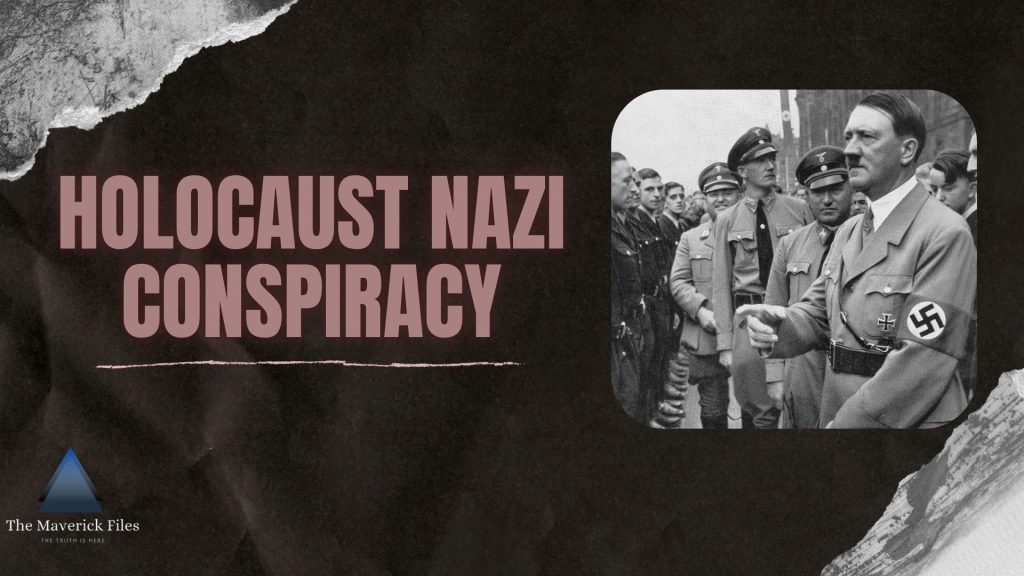
Few events in modern history have had a more profound impact on humanity than the rise of Adolf Hitler, the emergence of Nazi Germany, and the catastrophic consequences that followed. The story of Hitler and the Third Reich is not merely a history of war and politics; it is also a cautionary tale about economic collapse, political extremism, propaganda, authoritarianism, and the devastating effects of hatred and conspiracy theories. To understand how Nazi Germany came to power, one must first understand the world into which Adolf Hitler was born and the circumstances that allowed one of history’s most destructive dictatorships to emerge.
Adolf Hitler was born on April 20th, 1889, in the Austrian town of Braunau am Inn, near the German border. His father, Alois Hitler, was a customs official known for his strict and authoritarian personality, while his mother, Klara Hitler, was described as affectionate and protective. Hitler’s childhood has been the subject of extensive historical analysis and psychological speculation, though historians caution against oversimplifying the factors that shaped his worldview. As a young man, Hitler aspired to become an artist and twice applied to the Vienna Academy of Fine Arts, only to be rejected. He spent several years in Vienna, Austria, living in poverty, during which he absorbed the extreme nationalist, racial, and antisemitic ideologies that circulated widely in parts of European society during the late nineteenth and early twentieth centuries.
The outbreak of World War I in 1914 profoundly affected Hitler. He volunteered to serve in the German Army and fought on the Western Front, where he was wounded and decorated for bravery. Like many German soldiers, Hitler experienced profound shock and anger when Germany surrendered in November 1918. The end of the war brought not only military defeat but also political revolution, economic instability, and national humiliation. Many Germans believed they had been betrayed by politicians and civilian leaders rather than defeated militarily, a false belief that became known as the “stab-in-the-back” myth. This conspiracy theory would become a cornerstone of Nazi propaganda.
The Treaty of Versailles, signed in 1919, imposed severe territorial losses, military restrictions, and financial reparations on Germany. While historians continue to debate the treaty’s precise economic impact, there is little dispute that many Germans viewed it as a profound national humiliation. The newly established Weimar Republic struggled to maintain legitimacy amid political violence, attempted coups, economic crises, and hyperinflation. During the early 1920s, millions of Germans saw their savings wiped out as inflation spiraled out of control, creating fertile ground for extremist political movements.
It was in this atmosphere of instability that Hitler entered politics. In 1919, he joined the German Workers’ Party, a small nationalist organization that he would soon transform into the National Socialist German Workers’ Party, better known as the Nazi Party. Hitler quickly distinguished himself as an extraordinarily effective public speaker. He possessed a remarkable ability to identify public grievances and redirect them toward political enemies, including communists, liberals, Jews, and the democratic institutions of the Weimar Republic.
Central to Nazi ideology was a toxic combination of ultranationalism, racial pseudoscience, antisemitism, anti-communism, and authoritarianism. Hitler argued that history was a racial struggle in which the so-called “Aryan race” needed to dominate other peoples. These ideas were not based on legitimate science but rather on racial myths, social Darwinist distortions, and long-standing prejudices that existed throughout Europe. The Nazi worldview framed Jews not merely as a religious or ethnic group but as a vast international conspiracy, a subhuman group, allegedly responsible for Germany’s problems. Historians have extensively documented that these claims were false and served as propaganda tools to justify discrimination, persecution, and eventually mass murder.
In November 1923, Hitler attempted to seize power in Bavaria through a coup known as the Beer Hall Putsch. Inspired in part by Benito Mussolini’s march on Rome, Hitler believed he could overthrow the German government through force. The coup failed, resulting in several deaths and Hitler’s arrest. During his imprisonment, Hitler wrote much of what would become his political manifesto, “Mein Kampf,” or “My Struggle” in English. The book outlined his ideological vision, including extreme nationalism, antisemitism, territorial expansion, and dictatorship. Although the book sold modestly at first, it later became one of the most influential and dangerous political texts of the twentieth century.
After his release from prison, Hitler changed strategy. Rather than attempting another violent revolution, he sought to gain power through legal political means. Throughout the late 1920s and early 1930s, Germany experienced growing political instability, culminating in the Great Depression after the 1929 stock market crash. Mass unemployment, poverty, and political paralysis created conditions in which extremist parties gained support. The Nazi Party expanded rapidly, using modern propaganda techniques, mass rallies, emotional appeals, and carefully crafted messaging to attract millions of voters.
By 1932, the Nazi Party had become the largest political party in Germany. Although Hitler never won a majority in a free election, political maneuvering among conservative elites ultimately led to his appointment as Chancellor of Germany on January 30th, 1933. Many of Germany’s traditional political leaders mistakenly believed they could control Hitler and use his popularity for their own purposes. This proved to be one of the most consequential political miscalculations in modern history.
One of the most controversial and heavily debated events of Hitler’s rise to dictatorship occurred just weeks after he became Chancellor: the Reichstag Fire. On February 27th, 1933, the German parliament building, known as the Reichstag, was engulfed in flames. Dutch communist Marinus van der Lubbe was arrested at the scene and ultimately executed for the crime. The Nazi government immediately blamed the fire on a broader communist conspiracy and used the incident to justify emergency powers, suspend civil liberties, arrest political opponents, and suppress dissent.
Historians continue to debate aspects of the Reichstag Fire. The dominant scholarly view is that van der Lubbe likely acted alone. However, some historians and researchers have argued that the Nazis either assisted in setting the fire or exploited the event as a pretext to consolidate power, hence a false flag event, by blaming it on another individual or party when the one placing blame was behind the incident. While definitive evidence of a Nazi-organized false flag operation has never been established, there is broad agreement that Hitler and the Nazi leadership capitalized on the fire to destroy democratic institutions and establish a dictatorship. It sure as hell worked in their favor, whether they were behind it or not.
The Reichstag Fire marked the beginning of the end for German democracy. Within months, political opposition parties were banned, labor unions were dismantled, the press was censored, and Adolf Hitler transformed Germany into a totalitarian state. The foundations of the Third Reich had been laid, setting the stage for one of the darkest chapters in human history.
To understand what happened next- the implementation of Nazi racial policies, the persecution of Jews and other minorities, the Holocaust, and the outbreak of World War II- it is necessary to examine not only the decisions of Adolf Hitler and his inner circle but also the broader social, political, and economic conditions that enabled such atrocities to occur.
In March 1933, the German parliament passed the Enabling Act, which granted Hitler the authority to enact laws without parliamentary approval. Although presented as a temporary emergency measure, the Enabling Act became the legal foundation of Hitler’s dictatorship and marked the death of the post-WWI Weimar Republic.
The Nazi regime’s consolidation of power, a process known in German as Gleichschaltung, or “coordination,” involved bringing every aspect of German society to its knees and under state control. Political parties other than the Nazi Party were outlawed. Labor unions were dissolved and replaced with state-controlled organizations. Newspapers, radio stations, universities, cultural institutions, and civic organizations were systematically purged of dissenting voices. By the end of 1933, Germany had become a one-party state in which loyalty to Adolf Hitler superseded all other political, social, and legal obligations.
Central to the Nazi state was an extensive apparatus of surveillance, intimidation, and violence. Among the most feared organizations was the Schutzstaffel, better known as the SS. Originally established as Hitler’s personal bodyguard unit, the SS evolved under the leadership of Heinrich Himmler into one of the most powerful and brutal institutions in history. The SS oversaw concentration camps, racial policies, internal security operations, and, ultimately, the implementation of the Holocaust. Closely associated with the SS was the Gestapo, Germany’s secret state police force. Contrary to popular portrayals, the Gestapo was relatively small in size, but it maintained enormous power through widespread surveillance, informant networks, and the cultivation of fear.
Another important Nazi paramilitary organization was the Sturmabteilung, or SA, commonly known as the Brownshirts. The SA had played a critical role in Hitler’s rise to power by intimidating political opponents and disrupting democratic processes. However, by 1934, Hitler viewed SA leadership as a potential threat to his authority. During the “Night of the Long Knives” in June 1934, Hitler ordered a purge of the SA leadership and numerous other perceived enemies. The operation resulted in dozens, and perhaps hundreds, of deaths and demonstrated that Hitler was willing to use murder to maintain power.
When German President Paul von Hindenburg died in August 1934, Hitler merged the offices of president and chancellor, declaring himself Führer, leader of Germany. Members of the military were required to swear personal loyalty oaths not to Germany or its constitution, but directly to Adolf Hitler himself. This move solidified Hitler’s position as the unquestioned ruler of the Third Reich or empire.
At the heart of Nazi ideology was an elaborate and pseudoscientific racial worldview. The Nazis believed that humanity was divided into hierarchical racial categories and that history was fundamentally a struggle among races for survival and dominance. According to Nazi doctrine, Germans belonged to a superior “Aryan” race that was entitled to expand territorially and politically. Jews were falsely portrayed as a dangerous international conspiracy seeking to undermine nations, economies, and civilizations. These ideas were not supported by science or evidence; rather, they represented a combination of longstanding European antisemitic prejudices, racial pseudoscience, nationalist mythology, and political propaganda.
The Nazi regime targeted numerous groups for persecution. Jews represented the primary target of Nazi racial ideology, but many others suffered as well, including Roma and Sinti populations (ethnic groups of Indo-Aryan descent, widely recognized as Europe’s largest marginalized community that share a common heritage rooted in migration from northern India), people with disabilities, homosexuals, political dissidents, Jehovah’s Witnesses, Slavic populations, prisoners of war, and others whom the regime deemed undesirable. In 1935, the Nuremberg Laws (named after the city in Bavaria, Germany) formally stripped German Jews of citizenship and prohibited marriages and sexual relationships between Jews and non-Jews. These laws were antisemitic and racist laws enacted by Nazi Germany in 1935 and laid the legal groundwork for the Holocaust.
Throughout the 1930s, antisemitic propaganda became a constant feature of German life. Newspapers, films, educational materials, and public speeches portrayed Jews as enemies of the German nation. Businesses owned by Jews were boycotted. Jewish professionals were excluded from numerous occupations. Jewish children faced discrimination in schools. The Nazi government systematically isolated Jews from German society while simultaneously convincing many Germans that such measures were justified.
One of the most significant turning points occurred during Kristallnacht, or the “Night of Broken Glass,” on November 9th and 10th, 1938. Following the assassination of a German diplomat by a Jewish teenager in Paris, France, Nazi authorities orchestrated a nationwide wave of violence against Jewish communities. Synagogues were burned, businesses were destroyed, homes were vandalized, and thousands of Jews were arrested and sent to concentration camps. Kristallnacht marked a transition from discrimination and exclusion toward widespread organized violence.
The first major step toward war occurred in 1938 when Germany annexed Austria in an event known as the Anschluss. Later that year, European leaders met at the Munich Conference, where Britain and France agreed to allow Germany to annex portions of Czechoslovakia in hopes of avoiding war. This policy of appeasement temporarily delayed conflict but ultimately emboldened Hitler. In March 1939, Germany occupied the remainder of Czechoslovakia, demonstrating that Hitler’s ambitions extended far beyond the promises he had made to European leaders.
World War II officially began on September 1st, 1939, when Germany invaded Poland. The invasion employed a military strategy that became known as Blitzkrieg, or “lightning war,” involving rapid coordinated attacks by tanks, aircraft, artillery, and infantry. Two days later, Britain and France declared war on Germany. Within weeks, Poland had been defeated and partitioned between Nazi Germany and the Soviet Union under the terms of the Molotov-Ribbentrop Pact.
During 1940, Germany achieved a series of astonishing military victories. Denmark and Norway quickly fell, followed by the invasions of Belgium, Luxembourg, and the Netherlands. In May and June 1940, German forces overwhelmed France in a campaign that shocked the world. Paris fell, and France surrendered after only six weeks of fighting. For a time, Nazi Germany appeared nearly unstoppable.
Following the fall of France, Hitler turned his attention toward Britain. The Battle of Britain, fought primarily in the skies during 1940, became the first major military defeat of Hitler’s war machine. The German Luftwaffe attempted to destroy Britain’s air defenses and force the country into submission. However, British resistance, aided by radar technology, effective leadership, and determined pilots, prevented a German invasion and demonstrated that the Third Reich was not invincible.
Despite this setback, Hitler’s greatest ambition remained the conquest of Eastern Europe and the destruction of the Soviet Union. On June 22nd, 1941, Germany launched Operation Barbarossa, the largest military invasion in human history. More than three million Axis troops crossed into Soviet territory. Initially, German forces advanced rapidly, capturing vast territories and millions of prisoners. However, logistical problems, fierce Soviet resistance, and the immense size of the Soviet Union gradually slowed the offensive.
Operation Barbarossa represented a turning point not only militarily but also ideologically. Hitler viewed the war against the Soviet Union as both a territorial conquest and a racial war. German occupation policies resulted in mass executions, starvation campaigns, forced labor, and the expansion of the Holocaust throughout Eastern Europe. Entire villages were destroyed, and millions of civilians perished.
Another pivotal event occurred on December 7th, 1941, when Japan attacked Pearl Harbor, Hawaii. Four days later, Hitler declared war on the United States, bringing America’s enormous industrial and military power fully into the European conflict. Many historians regard Hitler’s declaration of war on the United States as one of his greatest strategic errors.
By late 1941 and early 1942, the Nazi leadership had moved toward what became known as the “Final Solution to the Jewish Question,” a coordinated plan to systematically murder Europe’s Jewish population. The Wannsee Conference, held near Berlin in January 1942, brought together senior Nazi officials to coordinate the logistical implementation of this genocide. Although Jews had already been murdered on a massive scale, the conference formalized plans for industrialized extermination.
The Nazi regime established extermination camps in occupied Poland, including Auschwitz-Birkenau, Treblinka, Sobibor, Belzec, Chelmno, and Majdanek. Unlike conventional prisons or labor camps, extermination camps were specifically designed to kill large numbers of people efficiently. Victims were transported in overcrowded cattle cars, often traveling for days without food or water. Upon arrival, many were selected immediately for execution in gas chambers disguised as shower facilities. Their bodies were then cremated or buried in mass graves.
The Holocaust resulted in the systematic murder of approximately six million Jews, representing roughly two-thirds of Europe’s Jewish population. Millions of other victims, including Soviet prisoners of war, ethnic Poles, Roma, disabled individuals, political prisoners, and others, were also killed by the Nazi regime. Historians have documented these crimes through extensive evidence, including German government records, military documents, photographs, architectural plans, physical remains of camps, eyewitness testimony, and the confessions and testimony of perpetrators themselves.
As the war continued, Germany’s fortunes deteriorated. The Battle of Stalingrad, fought between 1942 and 1943, became one of the bloodiest battles in human history. After months of brutal urban combat, the German Sixth Army was surrounded and ultimately surrendered. Historians widely regard Stalingrad as the decisive turning point on the Eastern Front. Simultaneously, Allied victories in North Africa and later in Italy further weakened the Axis powers.
On June 6th, 1944, Allied forces launched the D-Day invasion of Normandy. This massive amphibious operation opened a Western Front in Europe and marked the beginning of the liberation of Nazi-occupied territories. As American, British, Canadian, and other Allied forces advanced from the west, Soviet armies pushed relentlessly from the east.
By early 1945, Germany faced total military collapse. Allied bombers had devastated German cities and industrial infrastructure. Soviet forces approached Berlin while Western Allied armies crossed the Rhine. Nevertheless, Hitler refused to surrender and ordered increasingly unrealistic military operations that ignored the reality of Germany’s situation.
In January 1945, Adolf Hitler retreated to the Führerbunker beneath the Reich Chancellery in Berlin. There, surrounded by a shrinking circle of loyal aides and officials, he continued issuing orders while the Soviet Army encircled the city. Witnesses later described Hitler as physically deteriorated, emotionally unstable, and increasingly detached from reality.
On April 29th, 1945, Hitler married his longtime companion, Eva Braun. The following day, April 30th, according to eyewitness testimony and subsequent investigations, Adolf Hitler committed suicide in the Führerbunker. Most historical accounts conclude that Hitler shot himself while Eva Braun ingested cyanide poison. Their bodies were reportedly carried outside the bunker entrance, doused with gasoline, and burned according to Hitler’s instructions.
Despite the overwhelming historical consensus regarding Hitler’s death, numerous conspiracy theories emerged almost immediately after the war. Some claimed that Hitler escaped to Argentina aboard a submarine. Others suggested he fled to Antarctica, lived secretly in South America, or was assisted by hidden Nazi networks. These theories have remained popular in books, documentaries, and popular culture.
Several factors contributed to these conspiracy theories. Soviet authorities initially issued conflicting statements regarding Hitler’s death, fueling speculation. In addition, many high-ranking Nazis did escape Europe using clandestine escape networks known as “ratlines,” which transported former Nazi officials to countries such as Argentina, Paraguay, and Brazil. The fact that some Nazi fugitives successfully escaped justice made it easier for some people to believe that Hitler himself had done the same.
However, historians and forensic investigators have concluded that the evidence overwhelmingly supports the conclusion that Hitler died in Berlin on April 30th, 1945, by suicide. He basically Epstein’d himself. Eyewitness testimony from bunker personnel, Soviet investigations, dental records, forensic examinations, and later historical research all support this conclusion. While debate continues in popular culture, there is no “credible evidence” demonstrating that Hitler escaped Germany.
On May 7th, 1945, Germany formally surrendered to the Western Allies, and on May 8th, widely known as Victory in Europe Day, the war in Europe officially ended. The Third Reich, which Hitler had claimed would last a thousand years, had survived only twelve years. The aftermath of Nazi Germany revealed the staggering scale of destruction. World War II resulted in the deaths of approximately 70 to 85 million people, making it the deadliest conflict in human history. Europe lay in ruins. Entire cities had been leveled and destroyed, millions had been displaced, and the full horrors of the Holocaust became increasingly apparent as Allied forces liberated concentration and extermination camps.
Following the war, the Nuremberg Trials sought to hold surviving Nazi leaders accountable for crimes against peace, war crimes, and crimes against humanity. For the first time in history, political and military leaders were prosecuted before an international tribunal for atrocities committed under state authority. The trials established legal precedents that continue to influence international law today.
The rise and fall of Adolf Hitler remains one of history’s most important warnings. It demonstrates how economic crisis, political instability, propaganda, conspiracy theories, racism, antisemitism, authoritarianism, and the erosion of democratic institutions can combine to produce catastrophic consequences. The collapse of Nazi Germany did not simply mark the end of a war; it revealed the devastating human cost of hatred elevated to state policy.
In the decades following World War II, numerous conspiracy theories and denial movements emerged attempting to minimize, distort, or deny the Holocaust.
The historical evidence for the Holocaust, the systematic murder of about six million Jews by Nazi Germany and its collaborators, along with millions of other victims, is pretty overwhelming and supported by documents, photographs, eyewitness testimony, perpetrator records, forensic evidence, and decades of scholarly research.
The main conspiracy theories center around the idea that “The Holocaust never happened.” This is contradicted by extensive Nazi records, survivor testimony, camp remains, and perpetrator admissions. While I’m all for digging up and unraveling these hidden truths, the truth is prevalent in this case. The Nazis were subhuman scum. Other skeptics have touted that the number of Jews killed was massively exaggerated. Historians derive estimates from multiple independent demographic and archival sources, and the scholarly consensus remains about six million Jewish victims, but it wasn’t inflated to that degree. Others have also claimed there was no extermination policy and argue that most deaths were only due to disease, starvation, or wartime chaos, which could’ve also been possible because of the harsh and extreme living conditions these people had to face back then.
However, evidence shows deliberate mass murder through shootings, gas chambers, starvation, forced labor, and other policies directed by the Nazi regime. Theories also emerged about the gas chambers being impossible or fake. These claims have been repeatedly examined and rejected by historians, engineers, chemists, and courts; physical remains, blueprints, documents, and testimony support the existence and use of gas chambers for mass murder.
There was even talk of this conspiracy theory extrapolating to other countries and known allies that may have staged the evidence, including the photographs, films, and camp liberations, that the sole purpose was to pump out as much propaganda as possible. This would require a vast, implausible conspiracy involving multiple countries, journalists, soldiers, survivors, and former Nazis, with no credible evidence supporting it. Not saying it is totally impossible, just implausible in this particular case. The Nazis were pure evil, hated the Jews, and there is more than enough evidence to corroborate that.
Other theories revolved around the Nazi perpetrators themselves and that they only admitted to committing crimes due to extreme torture, not because they were guilty or anything. Historians evaluated each testimony critically, and the overall case rests on many independent sources, including contemporaneous Nazi documents and records created before Germany’s defeat. There were also attempts to separate Hitler from the genocide in that he had no idea it was occurring. Historians continue to debate some decision-making details, but the consensus is that Hitler was aware of and central to the regime’s anti-Jewish policies that led to inhumane, diabolical genocide.
Lastly, there isn’t a theory centered around a secret group or shadow government fabricated the story for political or financial gain, mainly Jewish organizations or governments that invented or exaggerated the Holocaust. It’s been alleged that members of the Rothschild banking family secretly played a role in financing or facilitating Adolf Hitler’s rise to power, arguing that powerful international banking interests manipulated political events behind the scenes for their own benefit. Variations of this theory often allege that despite Hitler’s public antisemitic rhetoric and persecution of Jews, influential financial elites allegedly viewed him as a useful instrument to achieve broader geopolitical or economic objectives.
Proponents of this theory point to supposed connections between German industry, international banking networks, and prewar financial transactions. However, historians have found no credible evidence that the Rothschild family orchestrated Hitler’s rise to power (go figure), and these claims are generally regarded as unsupported conspiracy theories rather than conclusions supported by the historical record. I tend to lean more towards this theory because it’s pretty obvious how much power, wealth, and influence that family has, just like the Rockefellers and all the other elite bloodlines.
The Holocaust remains one of the most extensively documented genocides in human history. Understanding how ordinary institutions, governments, professionals, and citizens participated in these crimes continues to serve as a warning about the dangers of authoritarianism, racial hatred, propaganda, and political extremism. Please share your thoughts in the comment section. Be well.