By Maverick
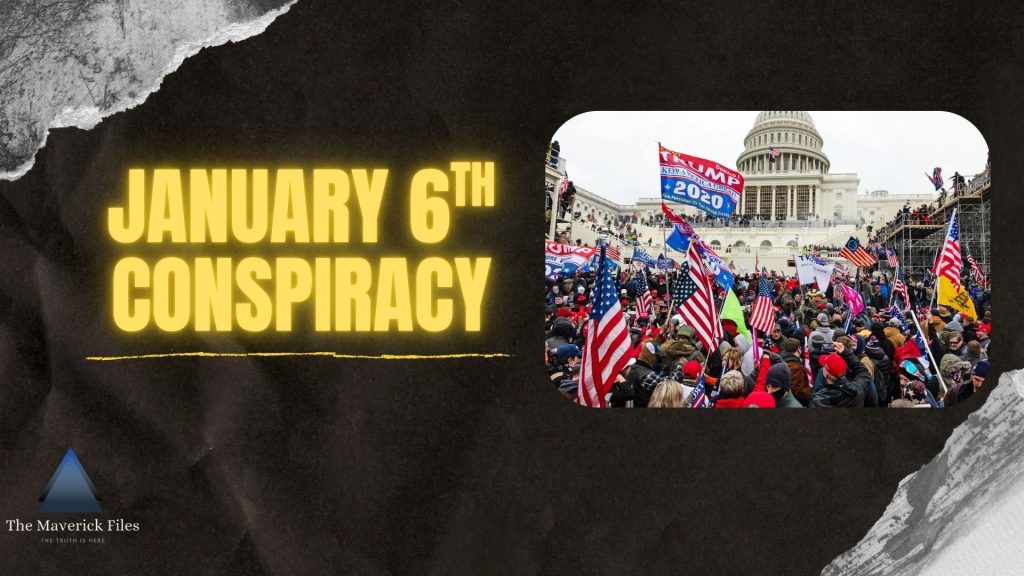
The events of January 6th, 2021, remain among the most controversial and heavily investigated incidents in modern American political history. On that day, thousands of supporters of then-President Donald Trump gathered in Washington, D.C., to protest the certification of the 2020 presidential election. The gathering culminated in a breach of the United States Capitol while Congress was meeting to certify the Electoral College vote that would formally confirm the election of Joe Biden as President.
In the weeks leading up to January 6th, claims of election fraud had spread widely across social media, news outlets, podcasts, and political circles. Numerous lawsuits challenging election results were filed in multiple states. Courts across the country generally rejected these cases due to a lack of evidence, procedural issues, or both. Nevertheless, many Americans remained convinced that the election had been stolen. This belief became the driving force behind the “Stop the Steal” movement.
On the morning of January 6th, thousands attended a rally near the White House. Speakers, including President Trump and several allies, repeated allegations of election irregularities and urged supporters to march toward the Capitol. As Congress convened, crowds moved toward the Capitol grounds. Some demonstrators remained peaceful, while others breached barricades, clashed with police, broke windows, forced entry into the building, and entered congressional offices and chambers.
The attack resulted in injuries to more than 140 law enforcement officers and led to several deaths connected to the events of that day and its aftermath. During the attack, officers from the United States Capitol Police and the Metropolitan Police Department of the District of Columbia were punched, kicked, struck with poles, batons, and other objects, crushed in doors and against barricades, sprayed with chemical irritants, and subjected to verbal abuse. Among the most severely injured was Michael Fanone, who was dragged into the crowd, beaten, shocked multiple times with a stun gun, and suffered a heart attack and traumatic brain injury. Daniel Hodges became widely known after a photograph showed him being crushed in a doorway while being attacked by rioters. Brian Sicknick responded to the riot and collapsed the next day after suffering two strokes; the District of Columbia chief medical examiner ruled his death was from natural causes, though the medical examiner also stated that the events of January 6th played a role in his condition. Four officers who responded to the attack later died by suicide in the following days and months.
The attack interrupted the certification process for several hours. Lawmakers were evacuated or sheltered in secure locations. Members of Congress, Capitol Police officers, journalists, and staff found themselves in dangerous and chaotic circumstances. The National Guard and additional law enforcement agencies were eventually mobilized. Congress reconvened later that evening and completed the certification of the election in the early hours of January 7th.
The federal government launched one of the largest criminal investigations in American history. Thousands of individuals were identified through surveillance footage, social media posts, cellphone data, and public tips. Hundreds were charged with offenses ranging from trespassing to assaulting law enforcement officers and seditious conspiracy. Several members of far-right extremist militia groups such as the Proud Boys and Oath Keepers were convicted of serious crimes related to their roles in the attack.
The U.S. House of Representatives established the January 6th Select Committee to investigate the events. The committee conducted hearings, interviewed witnesses, obtained documents, and produced a lengthy final report. The committee concluded that Donald Trump played a central role in efforts to overturn the election and in encouraging the events that unfolded on January 6th. Critics of the committee argued that it was politically biased and failed to fully investigate alternative explanations or security failures.
One of the most common conspiracy theories is that the attack was orchestrated by the FBI. According to this theory, federal agents or confidential informants infiltrated the crowd and encouraged violence in order to discredit Trump supporters. Supporters of this theory often point to the presence of FBI informants among extremist groups. However, investigations have found evidence that informants were present but have not produced “sufficient evidence” that the FBI organized or directed the attack itself. Then what the hell were these informants doing there in the first place? Government reviews and court proceedings have also not substantiated claims of a federal plot. Go figure.
Another conspiracy theory centers on Ray Epps, an Arizona man who was filmed encouraging people to enter the Capitol grounds the day before the riot. Videos of Epps circulated widely online, leading some to claim he was a federal operative. These allegations became one of the most discussed January 6th theories. Multiple investigations and court filings have not found evidence that Epps worked for the FBI or other federal agencies. Epps himself denied the allegations and later sued media figures who repeated the claims despite him actually being on camera provoking people to engage in an uprising. Why would the government out themselves and determine that they were involved in said crime? That’s how it works in the government: they’ll investigate themselves and find no wrongdoing. It’s like internal affairs scrutinizing themselves and finding no corruption in their department. The objectivity and integrity go out the window at that point.
Antifa, or Antifascist, is a far-left-wing political movement in the United States composed of independent groups and individuals. It functions as an ideological network focused on opposing far-right extremists, white supremacists, and neo-Nazis. People have compared them to a terrorist organization. The central theory surrounding Antifa argues that members disguised themselves as Trump supporters and infiltrated the crowd to provoke violence. Early rumors spread rapidly online, identifying various participants as antifa members. Subsequent investigations generally found that many of these claims were based on mistaken identities, fabricated social media posts, or unsupported speculation. While individuals with a variety of political backgrounds may have been present in Washington that day, investigators found that the overwhelming majority of those publicly identified with pro-Trump causes or election-fraud narratives.
Most Trump supporters aren’t typically violent, though, except maybe for far-right extremists, but then that’s how it is with the left, too. During the summer of 2020, you had Black Lives Matter and Antifa burn down neighborhoods of businesses throughout the U.S. to avenge the deaths of George Floyd, Breonna Taylor, Rayshard Brooks, and other people of color, who had fallen victim to the hands of police arrests going terribly wrong. When those folks acted like pure terrorists, that was deemed acceptable and justified by the left-wing media and their supporters. The media classified those riots as “mostly peaceful protests.” Clearly, a double standard bias exists within the government, and corporate media, or it’s just all pretend to bifurcate the general public. Most of the time, it really seems like that is the true intention, like it’s all just soap opera drama between grown folks in Washington.
Some theorists argue that January 6th was not an insurrection but rather a protest that spiraled out of control. Advocates of this interpretation point to the fact that many participants were unarmed and that no organized military-style takeover of government occurred. Critics counter that the legal and historical definition of insurrection does not necessarily require firearms or a realistic chance of success. They emphasize the intent of many participants to disrupt the constitutional transfer of power is just that. Anyone who partook in any violent or destructive behavior was definitely in the wrong, but to avoid how the opposition pulls the same kind of crap, just confirms this never-ending double standard and hypocrisy.
Another area of controversy concerns Capitol security failures. Critics have questioned why security preparations appeared inadequate despite warnings of possible unrest. Reports later identified intelligence-sharing problems, communication failures, and confusion regarding National Guard deployment. These documented failures have fueled theories that officials intentionally allowed the breach to occur. Then you had the footage from that day throughout the Capitol grounds, showing U.S. Capitol Police escorting protesters and rioters during the so-called attack. This footage became widely known in March 2023, when then-House Speaker Kevin McCarthy granted exclusive access to over 40,000 hours of internal surveillance footage to Fox News, which was covered extensively by Tucker Carlson.
The most prominent video shows two Capitol Police officers escorting Jacob Chansley, aka “QAnon Shaman”, through the halls of the Capitol. The footage also shows officers trailing him as he walked near the Senate chamber, with the officers at one point opening a locked door to allow him inside the chamber itself. Similar surveillance clips showed police calmly following or accompanying other individuals through various corridors and areas throughout the building. These literally appeared like tour guides, but of course, the U.S. Capitol Police and federal prosecutors stated this was a deliberate, hands-off de-escalation tactic, that officers were heavily outnumbered and utilized trailing methods to avoid inciting violence and guide protesters toward exits. I don’t see that as a valid excuse. What if any one of these folks had a bomb on them or a more serious weapon? However, investigations generally attributed the shortcomings to bureaucratic and operational failures rather than evidence of a deliberate plan.
Conspiracy theories also emerged regarding the timing of the National Guard deployment. Some alleged that military assistance was intentionally delayed for political reasons. Investigations found that confusion among multiple agencies, legal concerns, and communication breakdowns contributed to delays. Debate continues regarding which officials were responsible and whether decisions could have been made more quickly.
Then there is the issue regarding former Speaker of the House Nancy Pelosi’s actions that day. Theories emerged, suggesting that Pelosi had prior intelligence about the Capitol breach and intentionally downplayed security to politically damage Donald Trump or to fabricate a narrative. Others take it even further and suggest both Trump and Pelosi had foreknowledge and allowed this to happen to cause a political rift amongst the parties. Multiple official inquiries and fact-checks have supposedly debunked these claims. Under Capitol protocols, the Speaker does not control day-to-day security operations or have the authority to unilaterally deploy the National Guard. Security decisions are managed by the Capitol Police Board and the Sergeants-at-Arms, neither of whom reports directly to the Speaker. It doesn’t mean she didn’t have foreknowledge, though, despite her being excused of causing a stand down.
Questions have also been raised about pipe bombs discovered near the headquarters of both the Democratic National Committee and the Republican National Committee. The bombs were found on January 6th, but the identity of the individual who placed them remains unresolved years later. The lack of an arrest has fueled speculation about intelligence involvement, political motives, or a broader plot. To date, no public evidence has confirmed any of these theories. This unresolved mystery has become one of the strongest sources of speculation. Conspiracy researchers ask how someone could allegedly plant devices in highly monitored areas and avoid identification despite extensive surveillance systems. The lack of an arrest has generated theories ranging from foreign involvement to intelligence operations.
The death of Ashli Babbitt became another focal point for competing narratives. Babbitt, a Trump supporter and Air Force veteran, was shot by a Capitol Police officer while attempting to climb through a broken door leading toward a protected area. Supporters viewed her as a martyr, while others viewed the shooting as a justified use of force given the circumstances. Multiple investigations cleared the officer of wrongdoing, though controversy remains.
Social media companies also became central to conspiracy discussions. Some observers argued that platforms amplified election-fraud claims, contributing to radicalization. Others argued that technology companies later censored legitimate questions about election integrity and January 6th investigations. This debate expanded into broader concerns about free speech, misinformation, and the power of large technology corporations.
January 6th continues to function as a political Rorschach test (a projective psychological assessment in which subjects are shown symmetrical inkblots and asked to describe what they see) in American society. To some, it represents a direct attack on democratic institutions and the peaceful transfer of power. To others, it represents a protest movement that has been exaggerated by political opponents and media organizations. Between these poles exists a wide spectrum of interpretations involving government failures, intelligence questions, political polarization, and competing narratives about the state of American democracy.
More than any single conspiracy theory, the enduring significance of January 6th may lie in how it exposed deep mistrust among Americans toward elections, government institutions, law enforcement agencies, media organizations, and one another. The event remains a defining episode in modern U.S. history, one whose consequences continue to shape political discourse years later.
Some observers believe January 6th became a defining symbol because it represented a genuine threat to constitutional government. Others believe political institutions, media organizations, and intelligence agencies amplified the event because it provided justification for expanded surveillance, censorship efforts, and political investigations, which is indeed what became of this.
Perhaps the deepest conspiracy theory surrounding January 6th is not about who entered the Capitol. It is about why the event continues to dominate political discourse years later. These competing interpretations continue to shape public opinion. January 6th has become a battle over who controls the narrative of what happened, why it happened, and what it ultimately means for the future of the United States. Please share your thoughts in the comment section. Be well.