By Maverick
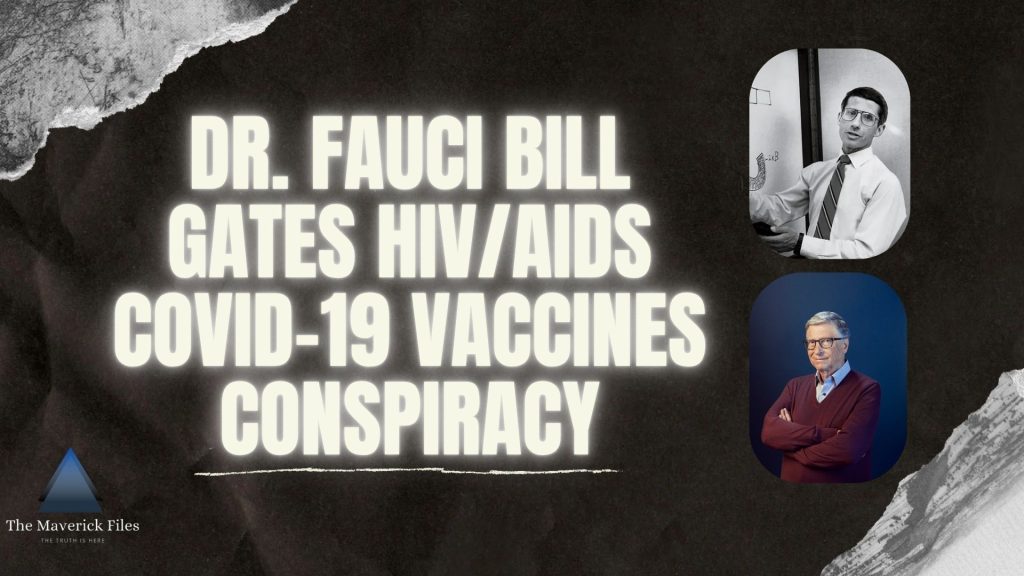
Few figures became more controversial during the COVID-19 era than Dr. Anthony Fauci and Bill Gates. To supporters, they represented science, public health, and efforts to combat infectious diseases. To critics and conspiracy theorists, they became symbols of a powerful global network that allegedly exerted enormous influence over governments, media, pharmaceutical companies, and public health policy. The debate surrounding these men, their organizations, and the pandemic remains one of the most contentious political and social controversies of the 21st century. Let’s start this off with Dr. Fauci.
Dr. Anthony Fauci served as director of the National Institute of Allergy and Infectious Diseases (NIAID) from 1984 until 2022. During his tenure, he advised seven U.S. presidents and became heavily involved in government responses to HIV/AIDS, SARS, Ebola, H1N1, and COVID-19. Critics argue that this extraordinary longevity gave Fauci immense influence over public health policy and scientific funding.
One of the most frequently cited controversies involves comments Fauci made in January 2017, shortly before Donald Trump took office. During a speech on pandemic preparedness, Fauci stated that the incoming administration would face a “surprise outbreak” of an infectious disease. Now, how the hell could he know that? How can one predict, like a weather forecast, when the next worldwide pandemic would be if it wasn’t planned? It wasn’t like he said it could happen at any point in the not-too-distant future; he mentioned a specific time, during the Trump Administration.
When COVID-19 emerged several years later, conspiracy theorists claimed this statement demonstrated foreknowledge. However, Fauci’s defenders note that infectious disease experts had long warned that a major pandemic was inevitable due to globalization, increased travel, population growth, and the history of recurring outbreaks such as SARS, MERS, H1N1, and Ebola. It just seemed too convenient to be serendipity.
Nevertheless, the timing of those comments became a cornerstone of numerous conspiracy theories. Many skeptics asked how Fauci could be so confident that a significant outbreak would occur during the Trump administration. Supporters responded that epidemiologists had been warning of such an event for decades and that the statement reflected probability rather than prediction. All the good that did considering somehow no one was prepared to handle something of this magnitude, but the technocrats wouldnt shut the hell up about it and the potential of a pandemic forming.
Another major area of controversy concerns Fauci’s role during the AIDS epidemic of the 1980s and 1990s. Critics argue that early public health responses were inadequate and that government agencies moved too slowly. Some activists accused health authorities of delaying treatments and clinical trials. Fauci individually faced intense pushback from LGBTQ+ activists over slow drug trial rollouts, and has since faced conspiracy theories regarding the origins of the epidemic.
When the epidemic began, the gay community was heavily stigmatized, and the federal response was largely viewed as inadequate. Activists who were spearheaded by groups like ACT UP targeted Fauci because he was the federal government’s lead on AIDS research. Fauci and the FDA were also accused of bureaucratic red tape that prevented terminally ill patients from accessing experimental drugs like early versions of AZT. Early clinical trials excluded women and minority groups, sparking protests from that as well.
Over time, however, many AIDS activists who initially clashed with Fauci eventually credited him with listening to patient groups and changing the clinical trial process. Fauci began meeting directly with groups like ACT UP and helped design the parallel track mechanism that allowed patients who did not qualify for clinical trials to access experimental treatments. He also altered NIAID policy to include people living with HIV/AIDS, women, and minorities directly on the committees that developed drug trials.
Even so, critics continued to argue that mistakes made during the AIDS era demonstrate the dangers of concentrating too much authority in public health institutions. Supporters contend that Fauci’s work ultimately accelerated HIV research and treatment development. Decades later, during the COVID-19 pandemic, Fauci became the target of renewed scrutiny, with anti-vaccination advocates and conspiracy theorists, most notably Robert F. Kennedy Jr., resurrecting criticisms of his HIV/AIDS tenure. These theories stipulate that Fauci intentionally pushed a toxic drug (AZT) knowing it was lethal. When AZT was introduced in the late 1980s as the first HIV/AIDS treatment, it was proven in clinical trials to reduce mortality and extend survival. However, because it was initially administered in very high doses, it frequently caused harsh side effects such as bone marrow suppression and severe anemia. In rare cases, toxicities like lactic Public health officials did damage control by maintaining that AZT was the first available breakthrough and the best science had to offer at the time, despite its later-proven long-term toxicity. Conspiracy theorists also argue that Fauci was somehow involved in manufacturing the virus or the broader HIV/AIDS crisis, a claim that public health and LGBTQ+ organizations classify as a falsehood.
Bill Gates transitioned from technology entrepreneur to philanthropist after reducing his day-to-day involvement with Microsoft. Through the Bill & Melinda Gates Foundation, Gates became one of the world’s largest funders of vaccine initiatives, disease eradication programs, and public health projects. Proponents argue that Gates helped fund efforts against malaria, polio, tuberculosis, and other infectious diseases, while critics argue that a private billionaire should not possess such influence over global health policy. Not to mention, he doesn’t have a background or qualifications in medicine whatsoever.
The Gates Foundation’s extensive relationships with governments, universities, pharmaceutical companies, Non-Governmental Organizations (NGOs), and international organizations led some observers to question whether too much decision-making power had become concentrated among unelected actors. These concerns intensified during COVID-19 because Gates had spent years warning being a prophet, stating that the world was unprepared for a major pandemic.
One of the most cited conspiracy claims involving Gates stems from a 2010 TED Talk in which he discussed population growth and public health. Conspiracy theorists frequently quote Gates discussing vaccines and population reduction, claiming he advocated depopulation. The controversy centers on Gates’s argument that improved health care and lower childhood mortality can reduce population growth rates because families tend to have fewer children when survival rates improve. I don’t see how that makes the slightest bit of actual sense, since lower childhood mortality sustains population growth just as if parents were to have additional kids. It just sounds like gaslighting 101, where anything is said to override the reality of what was heard and interpreted. It’s nonsensical. Anyway, these were his exact words from the conference: “The world today has 6.8 billion people. That’s headed up to about 9 billion. Now, if we do a really great job on new vaccines, health care, reproductive health services, we could lower that by, perhaps, 10 or 15%.” In short, he’s saying there are too many people, so there are things needed to be done to ensure this could happen. Critics interpret his comments as evidence that vaccines are intended to reduce the population because of the side effects that could arise in the short or long term. Supporters stated that Gates was describing a demographic phenomenon observed across many countries, where improved health outcomes correlate with lower birth rates over time. Again, that doesn’t add up since improved health outcomes would allow living children to be healthy, but perhaps there are parents who inadvertently or plan to have additional kids and expand their families. The explanation just reeks of bullshit. The disagreement has become one of the most enduring controversies surrounding Gates because both sides often interpret the same remarks in dramatically different ways. What do you think he meant by that?
On October 18th, 2019, only months before COVID-19 became a global crisis, the Johns Hopkins Center for Health Security, the World Economic Forum, and the Bill & Melinda Gates Foundation conducted a pandemic simulation called Event 201. The exercise involved a hypothetical coronavirus outbreak and examined how governments, businesses, and health organizations might respond, which would include lockdowns. Sound familiar? Just a few months later, the COVID-19 pandemic happened, and somehow, the world was still unprepared. I mean, what are the odds of how closely timed this exercise was conducted around the same time the pandemic graced us with its presence? Just another coinkydink, right?
When COVID-19 emerged shortly afterward, many conspiracy theorists viewed the timing as suspicious. They argued that the simulation appeared too similar to what later occurred. Doesn’t seem that far-fetched, does it? Organizers maintained that Event 201 was simply one of many preparedness exercises conducted over the years and explicitly stated that it was a fictional training scenario rather than a prediction. The question that should be asked is why anyone would believe for a second that these folks would ever admit the truth if they are lying? Johns Hopkins has repeatedly said the exercise was designed to explore weaknesses in pandemic preparedness and was not intended to forecast COVID-19. For skeptics, however, Event 201 became evidence that powerful institutions knew what was coming and either made or let it happen on purpose. For public health officials, it demonstrated that experts had been warning for years that a severe pandemic was likely and that governments failed to prepare adequately.
I mean, I didn’t intend on writing this blog solely about COVID-19, but I’m sure we all know the story about the Wuban lab leak and the chimera being worked on with gain-of-function technology, making what became COVID-19 and enhancing a baseline coronavirus, ultimately making it infectious to humans. It didn’t originate as a natural zoonotic spillover from a wet market or in some bat soup in Wuhan, China. This was all planned out and manufactured by rogue elements in government and the military. Read into Operation Lockstep by the Rockefeller Foundation that came about in 2010, stipulating that we needed to have worldwide lockdowns, bring society and the global economy to a halt, instill fear and bring forth acquiescence, and government overreach due to a global pandemic.
COVID-19 transformed Fauci and Gates from relatively well-known public figures into central characters in global political battles. Critics questioned lockdowns, mask mandates, vaccine mandates, school closures, censorship policies, and changing public health guidance. They argued that officials often spoke with excessive certainty despite incomplete and changing information. Fauci faced criticism for changing recommendations as new evidence emerged. First, he said masks aren’t effective to double and triple mask if you have to, meanwhile, he was caught at a baseball game congregating with his face diaper down, exposing the lies and hypocrisy. He wasn’t the only one not following his own rules and guidelines, as several politicians in government were caught with no masks, having parties with big gatherings, and going to hair appointments when other places of business were getting fines for trying to open up. It was draconian and an abuse of power. Supporters argued that evolving guidance is normal during a rapidly developing crisis. Critics viewed some changes as evidence that authorities were unreliable and, not to mention, untrustworthy.
The vaccine rollout produced another wave of controversy. Supporters pointed to reduced rates of severe disease and death. Critics focused on side effects, vaccine injuries and deaths, pharmaceutical industry influence, liability protections, government mandates, and the suppression of dissenting views. Bill Gates became a frequent target because of his foundation’s involvement in vaccine programs worldwide. Numerous online theories claimed vaccines contained tracking technology, microchips, or hidden population-control mechanisms. He even mentioned one time during an interview that COVID-19 was just the test or “Pandemic 1” and that “Pandemic 2” would be far worse in fatalities, yet the media just brushed those comments off as if he meant something different or harmless
One of the most significant controversies surrounding Fauci involves funding for research connected to coronaviruses. As I mentioned above pertaining to the origin of the virus, many skeptics, including medical experts, questioned whether U.S. funds indirectly supported research that may have contributed to the emergence of COVID-19. The debate often centers on the definition of “gain-of-function” research and whether certain experiments performed through international partnerships should fall under that label. Supporters of Fauci argue that critics often misunderstand complex scientific terminology and overstate the evidence. Critics argue that public officials were not transparent enough about research funding and laboratory risks.
The origins of COVID-19 remain a subject of intense investigation and debate to this day, connecting EcoHealth Alliance and Fort Detrick through a mix of scientific inquiry, congressional scrutiny, and geopolitical disinformation. EcoHealth Alliance, a New York-based non-profit, has been at the center of the debate because it funneled United States taxpayer dollars (via the NIH and NIAID) to the Wuhan Institute of Virology in China to study bat coronaviruses.
Investigations conducted by the U.S. House Subcommittee on the Coronavirus Pandemic revealed that EcoHealth failed to report dangerous experiments and routinely ignored oversight. This prompted the Department of Health and Human Services (HHS) to officially debar EcoHealth Alliance and its former president, Peter Daszak, from receiving federal funding. It was even said that COVID-19 originated at Fort Detrick, a U.S. Army biodefense facility located in Maryland. In response to international scrutiny and investigations into the Wuhan lab, the Chinese government and state media actively promoted conspiracy theories claiming that the coronavirus originated at Fort Detrick to seemingly deflect and take the heat off of them, as it appeared. Nonetheless, the issue remains heavily debated among scientists, journalists, politicians, and investigators.
Conspiracy theories frequently portray Fauci and Gates as partners in a coordinated effort to reshape society through public health emergencies. Many people thought of the term “New World Order” when COVID-19 began to change the political and socio-economic landscape. These theories generally focus on overlapping interests in vaccines, pandemic preparedness, and global health initiatives. Documented reality shows that both men supported vaccine development and pandemic preparedness efforts, maybe a little too much to be just out of the goodness of their hearts. They further enriched themselves as a result and helped the pharmaceutical industry gain a lucrative return on these mRNA vaccines, which were conveniently developed in record time, when in reality, it takes years to develop vaccines, not to mention years added on for human trials. Critics view this alignment between the two as evidence of an elite network exercising excessive influence. COVID-19 was the modern-day 9/11, but on a global scale, affecting all facets of society and putting society through one of the biggest tests they’ve ever faced.
The controversies surrounding Fauci, Gates, COVID-19, vaccines, AIDS, and Event 201 represent one of the defining political and cultural conflicts of the modern era. Some concerns raised by critics involve legitimate questions about transparency, accountability, scientific uncertainty, and institutional power. Other claims venture into speculation without strong supporting evidence. The result is a landscape in which documented facts, genuine controversies, political disagreements, and conspiracy theories often become intertwined, making it difficult for many people to distinguish truth from lies. I often feel like that level of confusion and uncertainty is manufactured by design. Please share your thoughts in the comment section. Be well.